Semiconductors
Accelerating semiconductor innovation in Virginia
Accelerating semiconductor innovation in Virginia
Virginia offers semiconductor companies a rare combination of research strength, manufacturing capability, and workforce depth. From memory and microelectronics to equipment and materials, the Commonwealth provides the assets needed to expand with confidence. VEDP serves as a strategic partner, helping companies evaluate locations, navigate resources, and move projects forward faster.
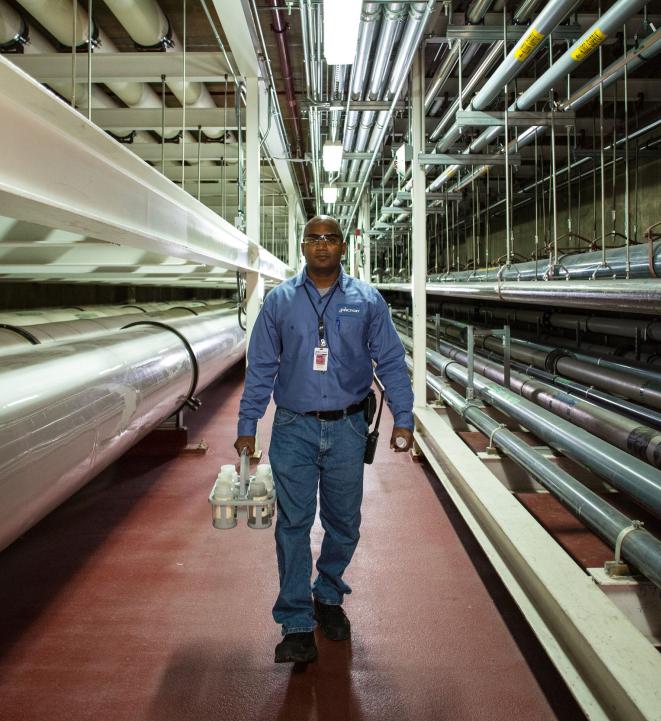 Micron, Manassas
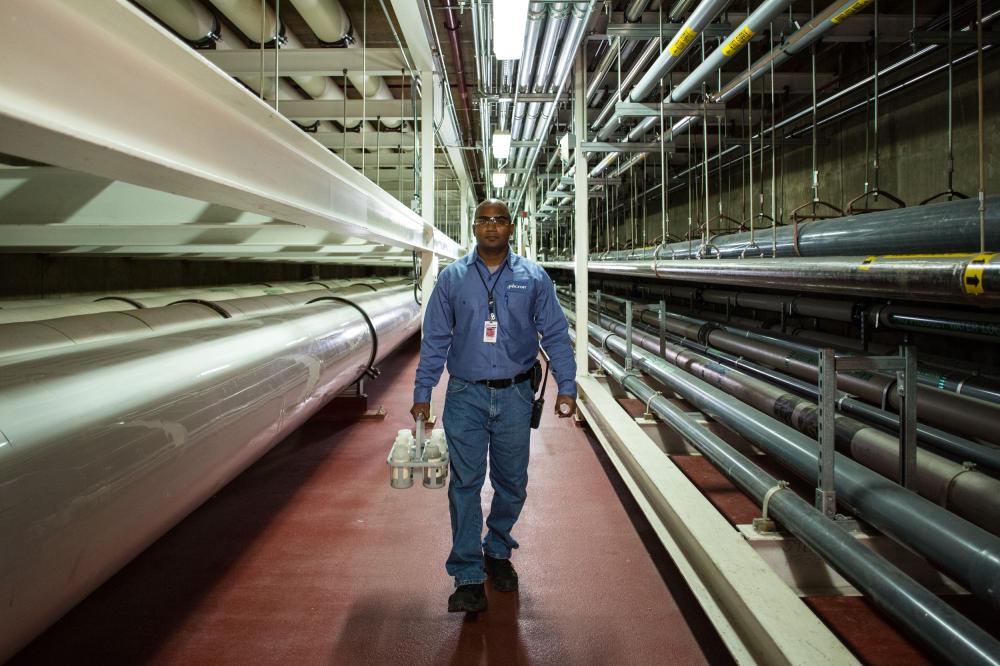 Micron, Manassas
Where research & manufacturing
work together
Virginia’s semiconductor strength comes from the way research institutions, talent development, and industry innovation connect. Companies can tap into a network of universities, industry groups, and public-private initiatives working across chip design, microelectronics, advanced materials, and manufacturing. That includes an existing manufacturing presence, major university research activity, and statewide efforts to expand lab access, workforce training, and commercialization support.
 Micron Technology, Inc., Manassas
Why global semiconductor
leaders choose Virginia
Why global semiconductor
leaders choose Virginia
Virginia offers the mix of assets semiconductor companies look for: strong university partnerships, a growing R&D base, an established manufacturing presence, and access to the broader customer and talent markets of the East Coast. The result is a location that supports both innovation and long-term production.








A workforce pipeline built for semiconductor growth
A workforce pipeline built for semiconductor growth
Virginia combines a highly educated population with a large tech workforce and strong adjacent talent in engineering, advanced materials, and manufacturing. That gives semiconductor companies access to both specialized expertise and the broader workforce needed to support growth.
140,520
workers in semiconductor and related occupations
Source: Lightcast 2026.1

BAE Systems, Fairfax County
15,731
tech-related degrees and certificates awarded annually in areas ranging from computer science to modeling and simulation
Source: Lightcast 2026.1

Virginia Tech
9
# of universities in VMEC

Norfolk State University
The nation’s largest investment
in tech talent
Virginia is investing more than $2 billion to expand its tech talent pipeline through the Tech Talent Investment Program, targeted philanthropic gifts, corporate partnerships, and K-12 computer science initiatives. That effort is helping double the number of graduates each year in computer science and related fields.
 George Mason University
SUCCESS STORIES
Why companies succeed
in Virginia
We believe that diversity and inclusion leads to a more innovative environment. Our site in Virginia is represented with 55 different nationalities. This diversity of talent promotes a culture of innovation and is a key contributor to our success, and we love that.

University-industry partnerships strengthening Virginia’s semiconductor pipeline
Virginia’s semiconductor talent strategy is built on collaboration across universities, industry, and state government. Today, those efforts are expanding hands-on semiconductor and microelectronics lab and equipment training, growing the pipeline of STEM graduates, and creating faster on-ramps into semiconductor careers through targeted workforce certifications.
 Virginia Tech Institute for Advanced Computing
Virginia Tech: a semiconductor innovation leader
Virginia Tech: a semiconductor innovation leader
Virginia Tech’s $1 billion, 1 million-square-foot Institute for Advanced Computing positions researchers and industry partners near the nation’s capital, major employers, and a dense tech corridor. Its semiconductor-related work includes chip-scale integration, microelectronics, AI, machine learning, and related engineering fields that support future chip innovation and commercialization.
 University of Virginia
Virginia Alliance for Semiconductor Technology
Virginia Alliance for Semiconductor Technology
Led by Virginia Tech in partnership with the University of Virginia, George Mason University, Virginia Commonwealth University, Norfolk State University, and Northern Virginia Community College, the Virginia Alliance of Semiconductor Technology (VAST) is expanding fast-track certifications, cleanroom and lab access, and curriculum developed with industry partners. The goal is to connect more students and workers to semiconductor careers faster.
 Fairfax County
Virginia Innovation Partnership Corporation (VIPC)
Virginia Innovation Partnership Corporation (VIPC)
VIPC helps strengthen Virginia’s semiconductor and advanced technology pipeline by supporting entrepreneurs, investing in commercialization, and backing faculty and research efforts. Through venture funding and grant programs such as Virginia Venture Partners (VVP) equity investment funds and Commonwealth Commercialization Fund (CCF) grant fund, it helps move promising technologies closer to market.
 Virginia Commonwealth University
Virginia Microelectronics Consortium (VMEC)
Virginia Microelectronics Consortium (VMEC)
VMEC supports semiconductor talent and research through faculty initiatives, student internships, and seed funding for university-industry collaboration. Since 1997, it has supported 327 scholars and funded over 75 seed projects with grants totaling $1 million.
Programs preparing the next generation of semiconductor talent
Programs preparing the next generation of semiconductor talent
Virginia’s universities provide semiconductor companies with access to programs in electrical engineering, computer engineering, nanotechnology, microelectronics, advanced manufacturing, and applied research. Together, they help create a statewide talent and research pipeline that supports both R&D and production.
The Department of Electrical and Computer Engineering offers bachelor’s, master’s, and doctoral programs in electrical and computer engineering. UVA also supports semiconductor-related research through initiatives focused on intelligent storage and processing in memory, along with laboratory capabilities tied to nanotechnology, microfabrication, and nano computing.
VCU offers bachelor’s, master’s, and doctoral programs in electrical and computer engineering. Its Virginia Microelectronics Center supports research and fabrication in micro- and nano-devices, including nanoelectronics, nanophotonics, flexible electronics, microfluidics, and bioelectronics.
Virginia Tech offers semiconductor-relevant degree pathways in electrical and computer engineering, with study areas that include chip-scale integration, micro/nano systems, and photonics. Its MEMS Lab and Micro and Nano Fabrication Laboratory support research in nanotechnology, microelectronics, biosensing, photonics, and related applications.
George Mason’s engineering programs include semiconductor-relevant work in microelectronics and nanoelectronics. Research strengths include semiconductor devices, sensors, analog and digital circuits, integrated circuits, and the manufacturing technologies needed to support them.
Norfolk State offers engineering programs with a microelectronics and photonics track and supports semiconductor-related research through the Center for Materials Research. The university also plays a leadership role in nanotechnology education and workforce development.
Old Dominion offers undergraduate and graduate degrees in electrical and computer engineering. Its research strengths include advanced manufacturing, microelectronics, nanoelectronics, nanotechnology, and MEMS-related work through interdisciplinary research teams.
A business climate semiconductor companies
can plan around
Semiconductor projects require long timelines, major capital commitments, and confidence in the operating environment. Virginia offers the kind of predictability companies value when making those investments, including right-to-work status, a stable 6% corporate income tax rate in place since 1972, a long-standing AAA bond rating, and tax exemptions that support manufacturing and R&D activity.
 Micron Technology Inc., Manassas
Meet your
industry partners

Swanka Burnette helps aerospace and defense companies evaluate Virginia’s workforce, sites and ecosystem, connecting their needs to the resources that support long-term growth.

Antje advises international companies on how best to expand operations into the U.S. in general and Virginia in particular, providing expert guidance on key topics, from site selection to tax incentives. She oversees VEDP’s offices in Europe, Korea, Japan, and Taiwan.