Preparing Virginia for the Future of Flight
Virginia leads in testing critical advanced air mobility technologies
Virginia has long been known as a leader in air transport technology from its work testing and deploying unmanned aerial vehicles (UAV). The Commonwealth is working to integrate other promising technology into its skies to enhance transportation of people and crucial goods.
Beyond traditional airplanes, advanced air mobility (AAM) offers another promising way to move people and goods. The emerging sector includes electric and hybrid-electric aircraft, drones, and increasingly autonomous aircraft designed for short and regional trips. These vehicles could eventually carry passengers over congested highways, connect remote communities, streamline business, and facilitate public services, such as the delivery of medical supplies during emergencies.
Virginia’s proximity to the federal government in Washington, D.C., a strong defense and aerospace presence in the Hampton Roads region, and a mix of urban and rural environments provide ideal conditions for testing and scaling AAM technologies. Furthermore, the Commonwealth’s highest-traffic airport, Washington Dulles International Airport, is one of a handful of U.S. airports with significant capacity for growth, owing to its sprawling physical campus with room for further utilization. In August, the Metro Washington Airports Authority board approved a $19.9 billion overhaul plan for Dulles.
These selling points have the potential to drive investment — advanced air mobility could generate $16 billion in new business activity in Virginia, produce $2.8 billion in local, state, and federal tax revenues, and create more than 17,000 full-time jobs by 2045, according to a 2024 report from the Commonwealth Center for Advanced Logistics Systems. But much of that economic potential depends on an industry which has yet to reach commercial scale.
Virginia isn’t waiting for the industry to mature before preparing for it. The Commonwealth has spent years upgrading airports and developing low-altitude flight systems as researchers test new routes and Virginia-based companies develop aircraft designed to use them. But hurdles remain before AAM can be commercially deployed, from certifying new aircraft and building supporting infrastructure to proving autonomous operations can work safely alongside conventional aviation.
We’d like to be able to move these things into a more standards-based, regulated environment that allows these economies to scale up.Kyle Ellis
Deputy Director for Projects, NASA Langley Research Center Aeronautics Research Directorate
Pre-Flight Preparations
At the Virginia Department of Aviation (DOAV), preparation for AAM has started with infrastructure already on the ground.
Starting in 2022, when DOAV began talking with aircraft manufacturers about what they would need to operate AAM in Virginia, companies said they expected to initially use existing public airports. That would give them access to terminals, parking, weather services, and other infrastructure without requiring an entirely new network of facilities.
But many airports lacked key components aircraft need to run. Roughly 20 of Virginia’s public-use airports didn’t have three-phase electrical power, broadband access, or both when the department first surveyed them, according to Scott Denny, DOAV’s first advanced air mobility program manager. Three-phase power is needed to charge electric aircraft, while broadband supports communications systems.
In 2024, the Virginia Aviation Board made up to $200,000 available to each interested airport for those improvements, with the state covering 95% of eligible project costs, according to DOAV. Due to this investment, as of August 2026, nearly 90% of public-use airports in Virginia now have adequate infrastructure.
Virginia is also investing in the systems needed once the aircraft leaves the ground. The Commonwealth’s fiscal 2025 budget included $1 million to establish a test site supporting AAM development, according to the Virginia General Assembly. The funding is intended to help Virginia identify where and how emerging aviation technologies can be tested.
One place Virginia is putting that approach into practice is the Stafford Regional Airport near Fredericksburg, where the Commonwealth has established an AAM test site equipped with sensors and other technology necessary to safely integrate drone and unmanned aircraft into busy airspace environments. With no federal funding currently available for that infrastructure, DOAV is using existing budget funds and working with the Virginia Innovation Partnership Corporation to support the pilot, with plans to seek dedicated funding from the General Assembly to expand the effort.
‘Roadways in the Sky’
Beyond upgrading airports with new infrastructure, advanced aircraft also need efficient ways to reach them.
The question of efficiency is at the center of Virginia Tech’s Smart Airspace project. Led by Virginia Tech’s Mid-Atlantic Aviation Partnership (MAAP), an FAA-designated unmanned systems test site, and the Virginia Department of Aviation, the project aims to develop the infrastructure and flight procedures needed to safely integrate new types of aircraft into the Commonwealth’s airspace.
One bottleneck is that the procedures pilots follow when approaching and departing airports were designed for conventional airplanes. Those procedures can require aircraft to travel roughly 10 miles or climb as high as 10,000 feet. For electric aircraft with limited range and battery capacity, those extra miles and altitude can eat into the energy available for the actual trip, according to MAAP Director Tombo Jones.
MAAP and DOAV are developing new procedures designed around those constraints. Jones said researchers have designed approaches that can shorten a roughly 10-mile route to about two miles while keeping aircraft around 2,000 feet so they don’t need to climb substantially higher.
“We’re trying to build the roadways in the sky that accommodate these aircraft,” Jones said.
Researchers on the project have successfully tested those roadways in flight. In September, a Textron Aerosonde and an Electra EL2 Ultra Short prototype aircraft flew newly developed routes through commercial airspace as part of the inaugural flights for the Virginia Tech-led Smart Airspace program. The route network connects new vertiports at the Virginia Tech Transportation Institute, Roanoke-Blacksburg Regional Airport, and Allen C. Perkinson Airport in the Nottoway County town of Blackstone.
Blackstone is the location of the 38,000-sq.-ft. Textron UAS Center of Excellence, home of the Aerosonde from production to assembly to testing and training. In 2023, Blackstone Army Airfield received the country’s first conditional FAA approval of a vertiport, backed by Floyd County-based air navigation services company Navos Air.
The next step is turning those tested routes into established procedures that commercial operators can use repeatedly. Doing so could give AAM manufacturers and operators a ready-made environment to test and eventually deploy their aircraft in Virginia.
In July, DOAV completed the nation’s first demonstration under the FAA’s eVTOL Integration Pilot Program. Several subsequent demonstrations have taken place since, showcasing a variety of AAM aircraft and practical use cases throughout Virginia.
From Experiment to Enterprise
One startup’s decision to locate in Hampton Roads provides a glimpse into how Virginia’s AAM investments could translate into economic gains.
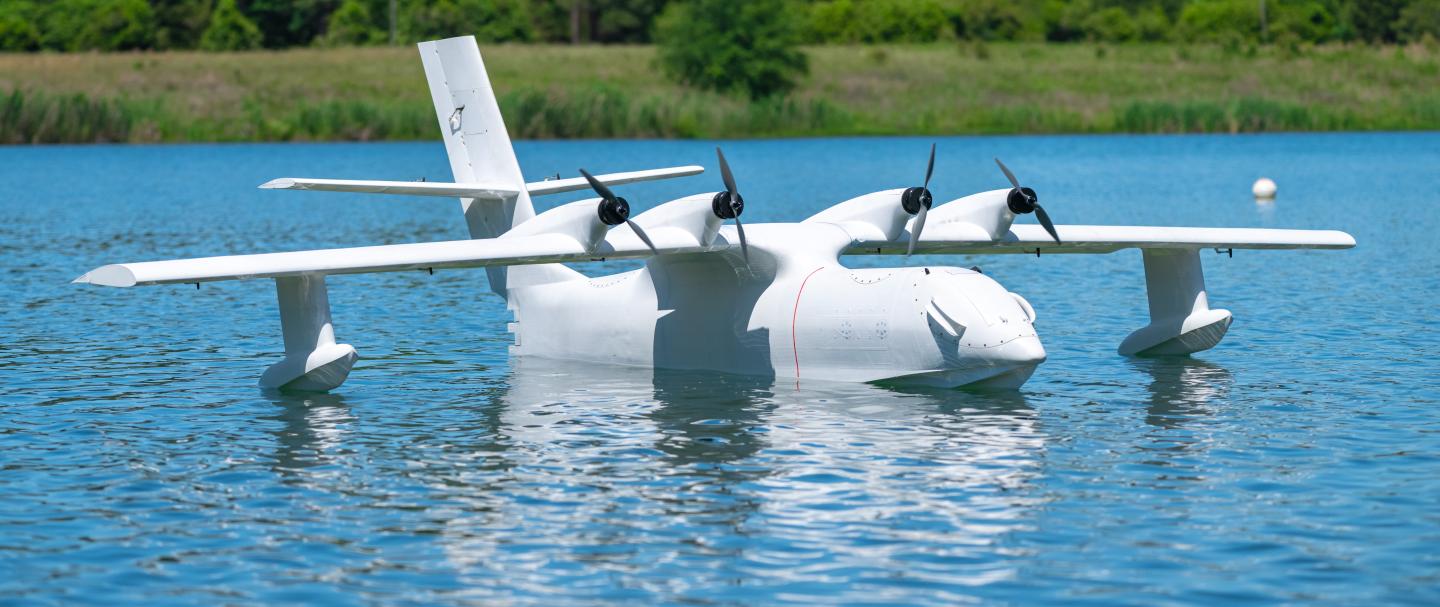
When the founders of Tidal Flight began their national search for a home for their hybrid-electric seaplane startup, none had ties to Virginia. Jude Augustine, Tidal Flight’s co-founder and CEO, said the company chose the city of Chesapeake in the Hampton Roads region for its aerospace and naval engineering expertise, manufacturing capabilities, and waterways for flight testing. The region’s defense industry also put the company near potential military customers.
“We looked nationwide for where we thought made the most sense to build what we’re building,” Augustine said.
Founded in 2023, Tidal Flight is developing Polaris, a hybrid-electric seaplane initially aimed at commuters and defense missions. Its design combines electric propulsion with jet-fuel generators, extending its range beyond what a fully electric aircraft could offer. Because it can take off and land on water, Polaris provides direct access to the heart of communities by landing on local waterways and without requiring conventional runways or further burdening airport infrastructure.
Tidal Flight has flown three subscale prototypes and is now building full-scale systems. It raised $4 million in 2025 and won a $1.25 million U.S. Air Force contract, according to Virginia Business. The company says letters of intent from 12 airlines represent more than 150 aircraft and $980 million in potential orders. The next major hurdle is securing FAA certification for Polaris, including its novel hybrid-electric powertrain.
“Our goal is to have aircraft in the hands of customers by 2031,” Augustine said. “In 2031, we want to have aircraft in the hands of customers flying commercial routes.”
Scaling Safely
Before AAM can be deployed, new aircraft and technologies must prove they can operate safely.
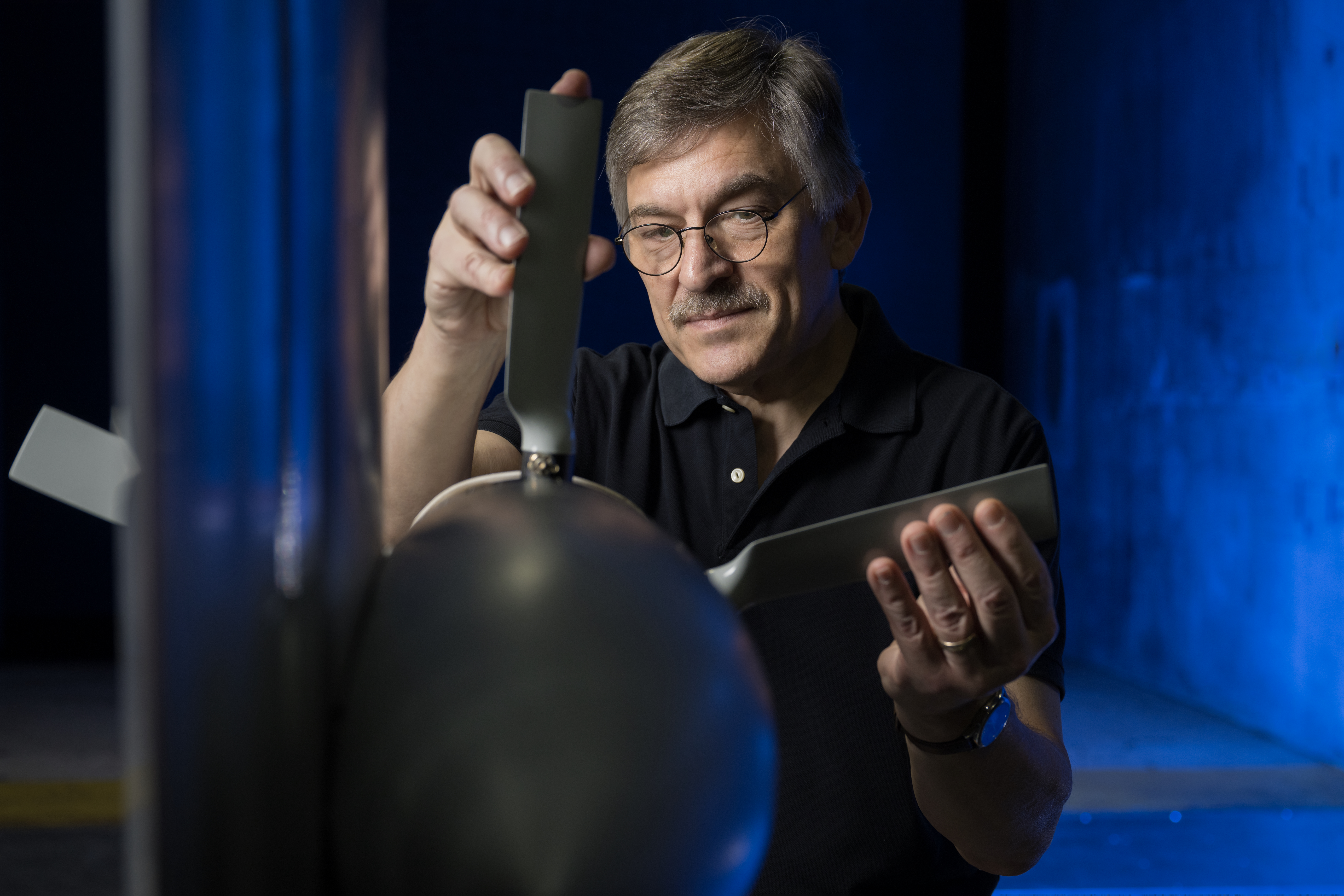
NASA’s Langley Research Center in Hampton is helping do that through simulations, wind-tunnel experiments, and flight tests that allow researchers to evaluate new designs and systems before they reach commercial operations.
Researchers are also testing how increasingly autonomous aircraft handle real-world risks. Aircraft must reliably detect and avoid other traffic, navigate changing weather, and respond safely to equipment failures or emergencies. Langley has tested autonomous detect-and-avoid software and systems that can identify a safe place to land if something goes wrong.
One example came in June, when Langley, Richmond-based United Network for Organ Sharing, and LifeNet Health of Virginia Beach transported human kidneys donated for research by drone beyond visual line of sight, meaning the aircraft flew beyond the operator’s physical view. The test explored whether drones could eventually make organ transportation faster and more efficient.
As aircraft incorporate more sophisticated autonomy and AI, however, ensuring those systems behave reliably introduces another safety challenge. John Koelling, Langley’s director of aeronautics research, said traditional methods for verifying aviation software can break down when applied to AI systems, whose behavior can be less predictable.
“When applied to software with AI and machine learning, the tried-and-true methods that we have used in the past to assure that software inside of flight vehicles is safe literally break,” Koelling said. “They don’t work at all.”
Turning these kinds of technologies into routine operations will also require new regulatory standards.
“We’re not just hoping to do things under waivers forever,” said Kyle Ellis, deputy director for projects in Langley’s aeronautics research division. “We’d like to be able to move these things into a more standards-based, regulated environment that allows these economies to scale up.”
Preparing for Commercial Takeoff
There is no single date when advanced air mobility will arrive in Virginia. Cargo drones, medical deliveries, and passenger aircraft face different technical and regulatory hurdles, and each could reach commercial use on a different timeline.
For Virginia, that uncertainty is precisely why the work is happening now. The state is using existing airports, building new flight routes, and supporting research so that infrastructure can grow alongside the industry, rather than trying to predict exactly what AAM will look like a decade from now.
The payoff, Denny said, could extend beyond aviation itself, from connecting rural communities to creating new jobs and attracting companies to the Commonwealth. Whether those benefits materialize will depend on how quickly the technology and regulations mature. But Virginia’s bet is that when commercial AAM is ready for takeoff, the Commonwealth won’t be starting from scratch.