Taking Flight
Next-generation defense tech companies are accumulating investment and making moves across Virginia
Much of the discussion surrounding the defense industry focuses on the legacy prime contractors, who have direct contractual relationships with the federal government and execute high-profile contracts on splashy military and research technology.
But next-generation defense tech companies — or even startup subsidiaries operating within much larger firms — have the advantage of being able to move nimbly, often executing on investment before the ink dries on the press release.
Add a business-friendly environment like the Commonwealth’s — complete with streamlined permitting, a robust economic development apparatus, and a thriving innovation ecosystem — and fresh investment can transform into new state-of-the-art facilities and technologies right before your eyes.
Virginia’s on-the-rise defense companies are orchestrating headline-making moves that prove being smaller comes with its own advantages — namely, outmaneuvering the bogeys that often doggedly pursue traditional growth.
Upending Inertia
Take GRVTY, which focuses on nonkinetic effects or, in other words, cybersecurity, space systems, and “jamming satellites in contested areas,” said Ben Ingham, vice president of marketing and communications at the Fairfax County-based company.
The company launched in 2025 with a headcount of under 400 and has since surged past 1,200.
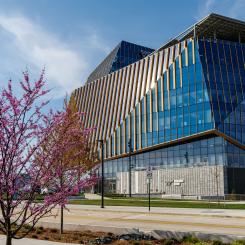
“It’s continual growth,” Ingham said, with the latest expansion announced in February 2026: a new $8 million, 22,000-sq.-ft. Tysons headquarters complete with the hire of 200 highly skilled engineers, technologists, scientists, and corporate staff.
GRVTY is wasting no time in expanding its orbit inside and outside the Commonwealth.
Ingham stated that the company was taking a “buy and build” approach to its growth, making “continual investment to build and scale the workforce.”
“I think the tie that binds everything is communications,” he added.
GRVTY is especially keen on acquiring emerging technologies in the defense space, product and intellectual property development, and being a strong community partner.
“Virginia is clearly a state that’s important for our defense industrial base,” Ingham said.
Breaking Away, Building Up
One strategy for rapid expansion is for global defense enterprises to deploy a right-sized U.S. presence — and get growing.
This is the case with Avio, a leading space propulsion company headquartered outside Rome. In 2022, the manufacturer of space launchers and military tactical missiles spun off its U.S. subsidiary in Crystal City in Arlington County, with eyes on a much bigger prize.
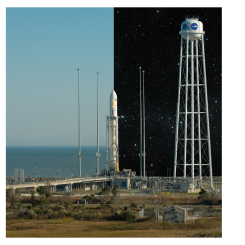
And then in February 2026, Avio shared the news: a $500 million investment that would establish an 860,000-sq.-ft. solid rocket motor manufacturing facility in the Southern Virginia Multimodal Park in Pittsylvania County.
Avio, which possesses working agreements with Raytheon and Lockheed Martin, will begin production in the new facility in 2028 before becoming fully operational in 2029.
“The site selection process was extensive,” said Vice Admiral (Ret.) James Syring, CEO of Avio USA, who described a process of starting out with 400 to 500 locations spread across all lower 48 states before homing in on Southern Virginia.
“What Virginia and VEDP brings...is much better than any other state I saw,” Syring said. “I think Virginia is one of the best-kept secrets in the world at this point. What set Virginia apart was their workforce development and training capability,” he added.
The long-term plan is for the new facility to become Avio USA’s new headquarters, while keeping the Northern Virginia location as a satellite office.
From shuttling hires back and forth to Italy, to partnering with local schools to create relevant new curriculum, and leveraging Danville’s nearby Institute for Advanced Learning and Research, the training plan is extensive.
The sheer volume and quality of graduates emerging from nearby high schools and colleges was a big attraction for Avio.
“Our view is that if someone is tech-inclined...tailoring that to solid rocket motor engineering is fairly easy,” Syring said, adding that solid rocket manufacturing is all about process in a very controlled environment. “You don’t graduate with the degree...you learn that trade on the job.”
Skills such as mechanical and electrical engineering, as well as welding, will be in high demand.
The facility, which began preconstruction in September, will rely on an ecosystem of local contractors and talent whenever possible, Syring said, whether it’s for earthmoving or hiring up for security.
“You just don’t build a rocket motor company without a sustaining ecosystem of support,” Syring said.
As for getting manufacturing fully online, Syring sees the short-term needs, but hasn’t lost focus on the big picture.
“Yes, we feel the urgency. Yes, we are developing a very critical capability for the nation,” he said. “Longer term, what we’re really bringing to the nation is an alternative source for rocket motors...not just for capacity, but for price.”
While solid rocket motor production is manual and relies on time-tested processes, Syring said the innovation will manifest in the factory itself; the company will leverage AI and data to create workforce and production efficiencies.
“That’s where our innovation will be, leveraging big data relationships,” he said.
Finally, while the decision and early moves to build up in Pittsylvania spanned two gubernatorial administrations, Syring said the transition was seamless.
“It’s been bipartisan in a very good way for us,” he said. “We’ve been able to transcend administrations because of what this means for the nation.”
Norwegian technology company KONGSBERG followed a similar roadmap, albeit earlier. The company deployed its U.S. presence, KONGSBERG US, in 2005 to focus on defense and aerospace. Now with eight locations — including a $71 million, 150,000-sq.-ft. facility under construction in James City County — the company plans to leverage the maritime military assets and ready workforce of the Hampton Roads region.
“2028 is really the milestone we’re looking at for production,” Heather Armentrout, president and general manager of KONGSBERG US, said of the new James City County facility, which will provide additional production capacity, sustainment, and in-country tech refresh capabilities for two state-of-the-art cruise missiles being procured by the Department of War (DoW).
I think Virginia is one of the best-kept secrets in the world at this point. What set Virginia apart was their workforce development and training capability.
Vice Admiral (Ret.) James Syring
CEO, Avio USA
Leaps and Bounds
It’s also possible to traverse the high growth curve in the defense industry without being tethered to a larger organization.
This is the case for Forterra, which provides software and hardware for autonomous mission systems and defense technologies.
“We call ourselves a 20-plus-year startup,” said Forterra spokesperson Kelsey Szablowski.
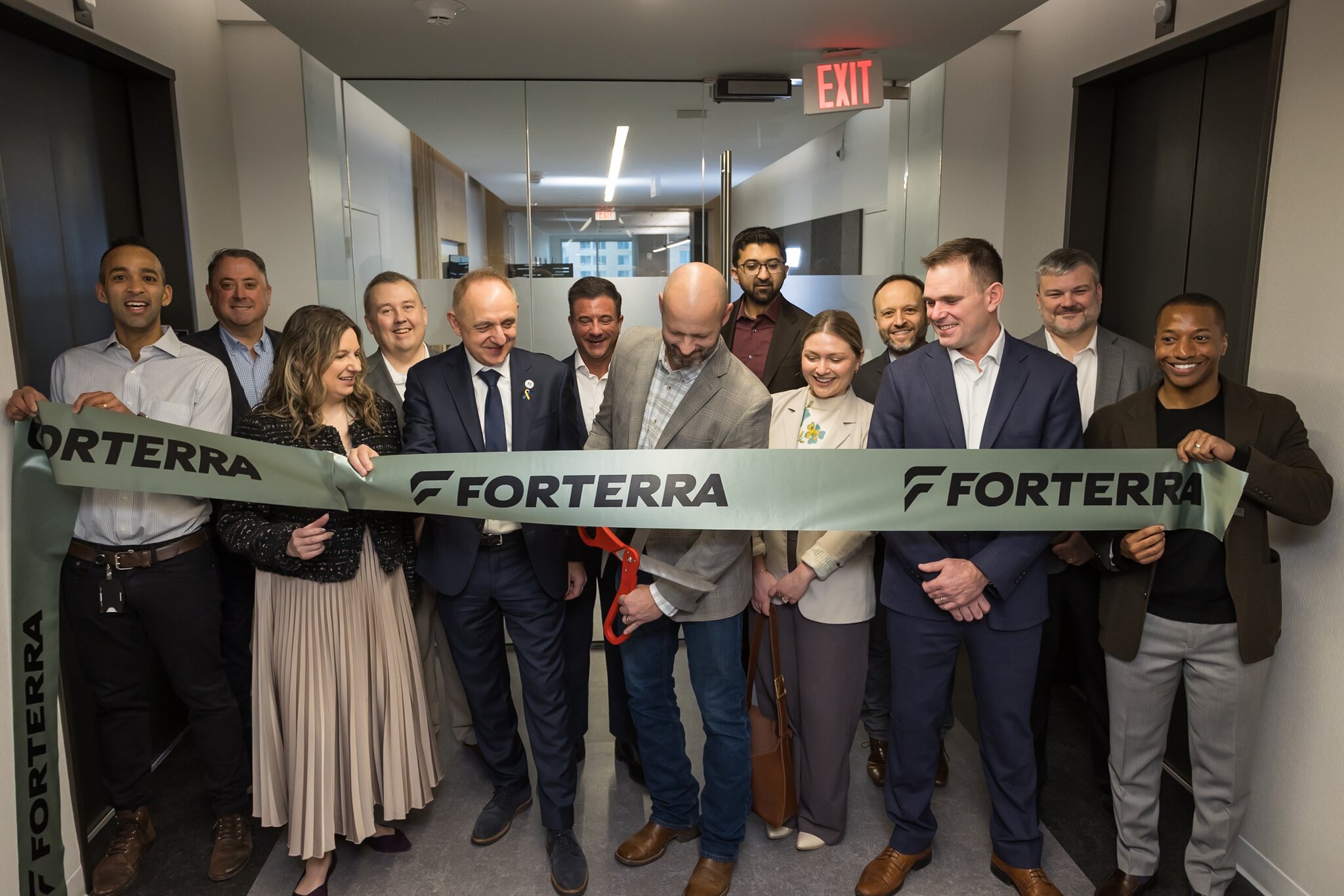
Headquartered in Maryland, the outfit expanded its footprint to Arlington County in February to be closer to the Pentagon. The company, which aims to exceed 650 employees by year’s end, collected $238 million in Series C funding in November 2025 — a round anchored by returning investors betting on where the company is headed.
“We’re expanding into Virginia because this is where the Department of War sets its direction and where great engineering talent lives. Arlington puts those two things under one roof for Forterra,” said Forterra Chief Growth Officer Scott Sanders. “Being close to the DoW means we stay congruent with the Pentagon’s strategy, and since our soldier end users are located around the world, our job is to make sure nothing gets lost between what they need and what we build here.”
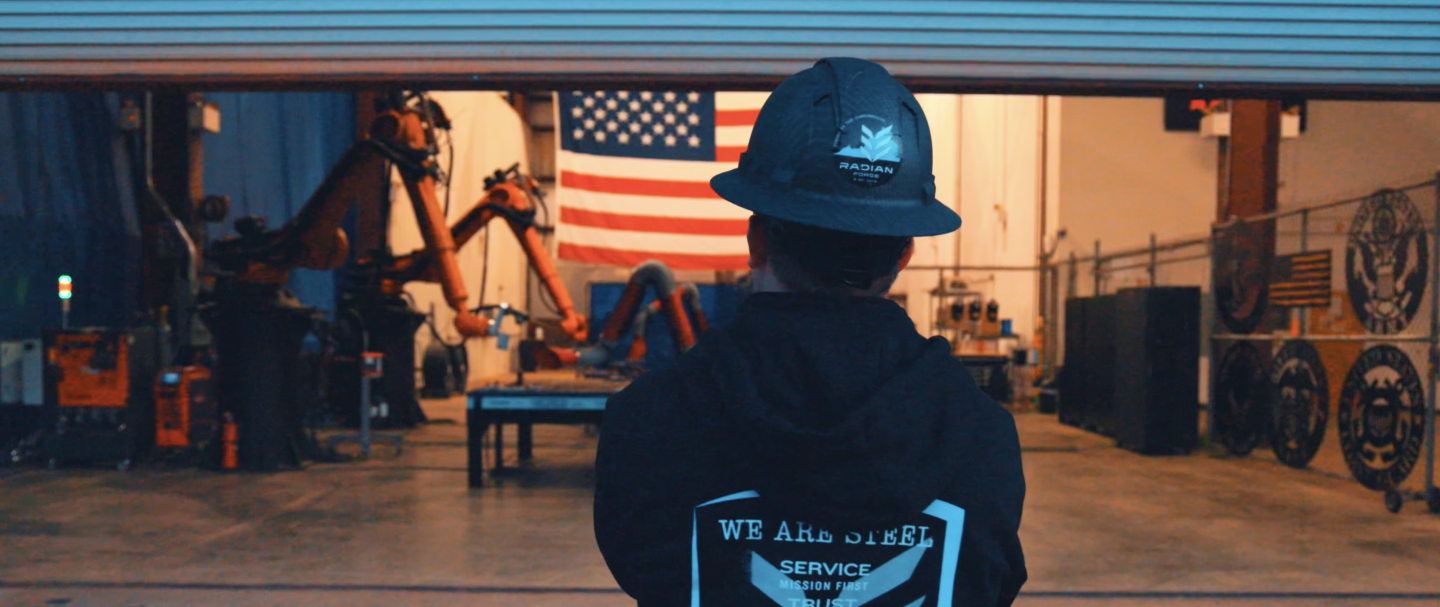
Then there’s Radian Forge, which launched in the Hampton Roads city of Portsmouth to 3D print large-scale precision-grade maritime parts, primarily for the U.S. Navy.
“Hampton Roads is the largest untapped resource of naturally skilled people,” CEO Jeff Yeager said.
Already, the company has announced plans to invest $10.5 million in its operation, boosting its workforce by 50-plus. Yeager sees this growth as a momentum-builder for his company.
“Our goal has always been to be a large manufacturer with capacity on all the major coasts,” he said. And when that capacity is combined with the adaptability of smaller contractors and the resources of the federal government, great things happen.