The Place for Space
Federal partners, top-notch facilities, state investment, and top-notch workforce attract commercial space companies to Virginia
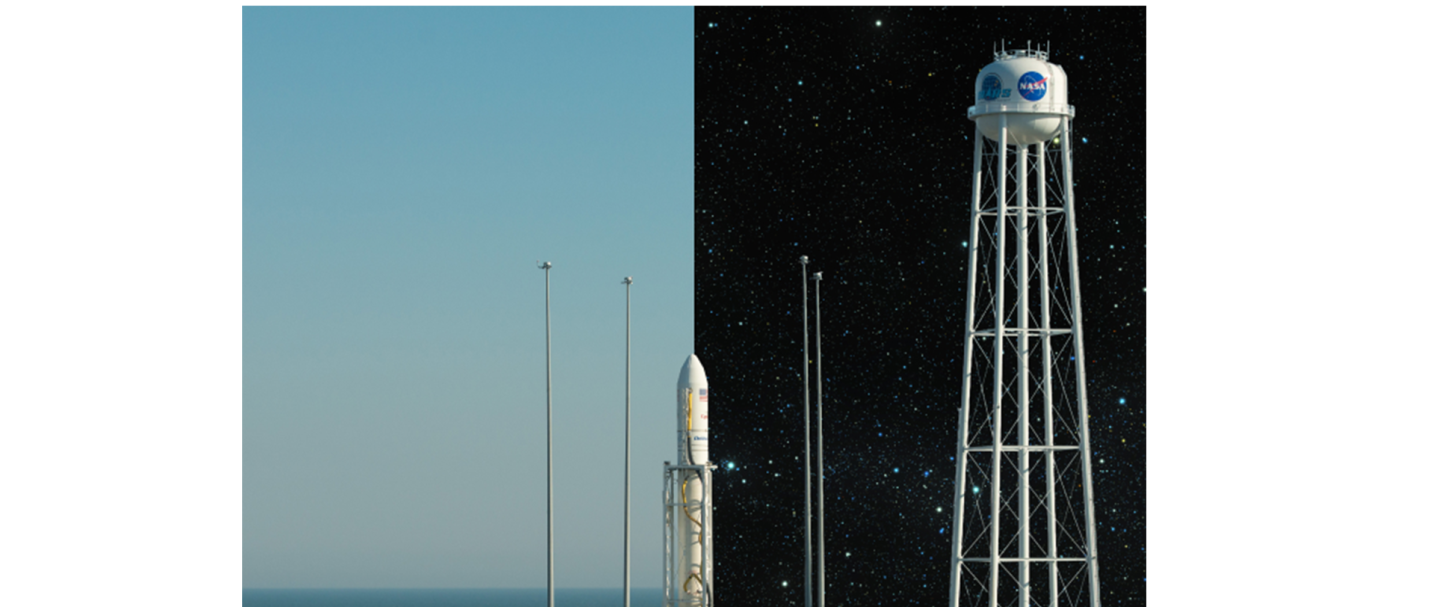
The water tower is the most prominent feature of the new space launch pad at Virginia's Mid-Atlantic Regional Spaceport (MARS), located on NASA’s Wallops Flight Facility on Eastern Shore. The tower stands 283 feet tall, dominating the nearby shoreline. When the time comes, it will unleash 200,000 gallons of water to quell the fury of the launch of a new rocket: Rocket Lab’s Neutron.
The water tower is one of two at MARS, a spaceport owned and operated by the Virginia Spaceport Authority (VSA), which has supported launches of Rocket Lab’s smaller Electron rocket since 2023. Electron, with a reusable first stage, can send just over 650 pounds of payload to low Earth orbit. But Neutron represents a step change for the company. The world’s largest carbon composite rocket with a reusable first stage, Neutron has an expected payload capacity of over 28,000 pounds to low Earth orbit, bringing the largest orbital launch capacity in Eastern Shore history.
Rocket Lab is just one of many companies that have sprung up around a burgeoning aerospace ecosystem in Virginia. The boom is fueled by ambitious new federal priorities, VSA’s launch infrastructure, NASA’s facilities in Virginia, and the ongoing commercialization of space that lets NASA and other government customers do more with less.
“We’ve really benefited from being in Virginia,” said Josiah Gruber, chief executive of Scout Space, a Fairfax County-based company developing sensors and systems for space domain awareness. His own company will soon launch its flagship sensor, Owl, aboard a rocket built by Blue Origin, another space company with a Fairfax County office.
“There’s really no substitute for the concentration of talent and expertise in this region,” said Jason Mallare, general manager of mission solutions for Umbra, a California-based space technology company that delivers data and designs, manufactures, and operates satellite systems and components with an expanding presence in Virginia. “Virginia sits at the intersection of the space, technology, defense, and national security communities.”
A Legacy of Aerospace Innovation
The National Advisory Committee for Aeronautics, NASA’s predecessor agency, launched the first rocket in 1945 from the Accomack County site that became known as the Wallops Flight Facility. MARS is one of only four public spaceports licensed by the Federal Aviation Administration for vertical lift to orbit in the United States, and one of only two spaceports on the East Coast.
In addition to four launch pads, MARS consists of a payload processing facility and the MARS UAS Airfield located on Wallops Flight Facility through an enhanced use lease agreement between VSA and NASA, along with other support facilities adjacent to Wallops.
Today, Wallops hosts a growing number of suborbital launches, while MARS launches orbital and even lunar missions, as well as unmanned aircraft.
The VSA has acquired a new launch team maintenance facility, expanding operational and office space while providing additional capacity to support customers and future capabilities. VSA has also acquired a 600-acre addition to its MARS Industrial Complex. Site development and master planning for both are underway.
“Our robust partnerships with companies like Rocket Lab, Firefly, and Northrop Grumman — and academia, and creating this expanded launch capability at Wallops — are essential to meeting the nation’s space ambitions,” said David Pierce, former director of the Wallops Flight Facility, who retired in 2026.
Northrop Grumman, headquartered in Fairfax County, has partnered with Texas-based Firefly Aerospace to co-develop Eclipse, the successor to Northrop Grumman’s Antares rocket. Eclipse has a planned capacity of more than 35,000 pounds to low Earth orbit, and, like Antares, will send supplies to the International Space Station from MARS. But it will also serve other government and commercial customers.
Meanwhile, a facility with an even longer history — NASA’s Langley Research Center in Hampton, established in 1917 — has not been standing still. In 2026, Langley opened a new $57 million wind tunnel for testing airframe designs. The tunnel, called the Flight Dynamics Research Facility, combines and enhances the capabilities of two older Langley wind tunnels. Kevin Rivers, director of the NASA Langley Space Technology and Exploration Directorate, says the new tunnel will play a starring role in developing next-generation spacecraft designed for atmospheric reentry — on Earth and beyond.
Supporting a Growing Industry
NASA Langley and its facilities support research for industry as well as for NASA itself. “NASA Langley is far more than a federal research center,” said Lena Pascale, regional partnerships lead at NASA Langley. “It’s a national resource for innovation and aerospace excellence. Companies can access our expertise, facilities, and capabilities that would be difficult or cost-prohibitive to replicate on their own.”
Both Wallops and Langley also serve an educational mission, fostering the next generation of aerospace engineers and technicians, again not just for NASA. “Virginia offers a pipeline of talent through its exceptional colleges and universities, and we’re committed to cultivating that talent not only for NASA and the Commonwealth, but also for the nation,” Rivers said. “We just welcomed our newest class of interns to NASA Langley. The curiosity and energy they bring is a wonderful reminder of the importance of investing in our future workforce.”
For aerospace companies in Virginia, it all adds up to a critical mass of talent, customer contacts, and partnership opportunities. “Our Virginia presence puts us close to many of the government customers and partners we work with every day,” Mallare said. “That proximity matters when you’re supporting critical national security missions. It enables closer collaboration, faster iteration, and a deeper understanding of what our customers need.”
Not incidentally, the growing space ecosystem also enhances Virginia’s appeal as a place to call home, according to Gruber. “I think D.C. and Northern Virginia have a lot to offer in the way of quality of life and activities...there’s always something going on,” he said. “The other thing that has kept me here is the quality and type of people that live here. Very smart people, very talented people, people doing a lot of interesting things, whether in government or in the private sector. You never know who you’re going to meet and what their story is and what they’re working on.”
Our Virginia presence puts us close to many of the government customers and partners we work with every day. That proximity matters when you’re supporting critical national security missions. It enables closer collaboration, faster iteration, and a deeper understanding of what our customers need.
Jason Mallare
General Manager of Mission Solutions, Umbra
The Future of Space in Virginia
“As commercial space expands, Virginia is well-positioned to capture additional opportunities in manufacturing, payload processing, in-space services, and other emerging space technologies,” said Maj. Gen. Roosevelt Mercer Jr., VSA’s CEO and executive director. “Continued investment in spaceport infrastructure, land, workforce development, and industry partnerships will help attract new companies and investment to increase launch activity, create high-skilled jobs, and strengthen Virginia’s position as a national leader in commercial space.”
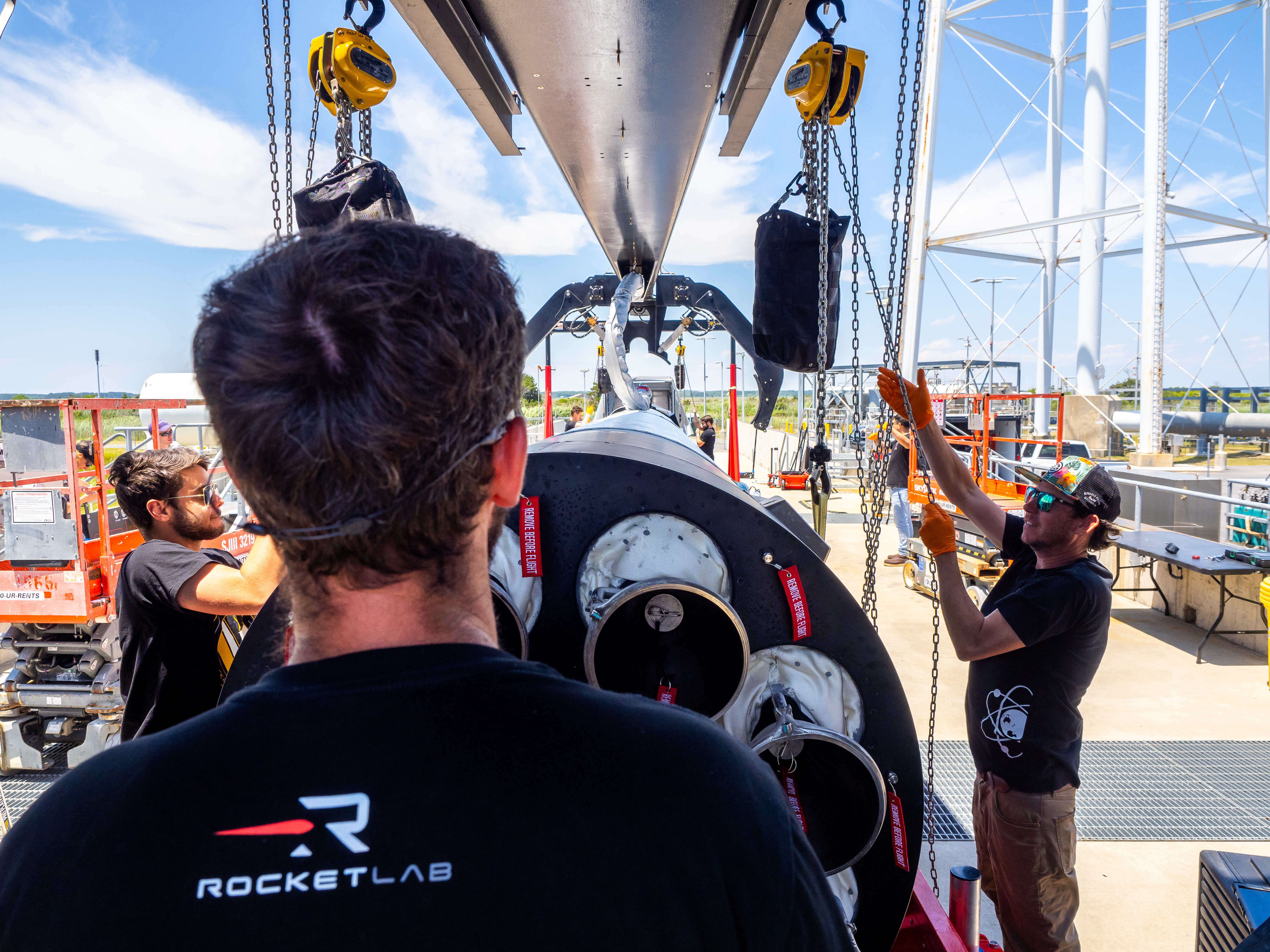
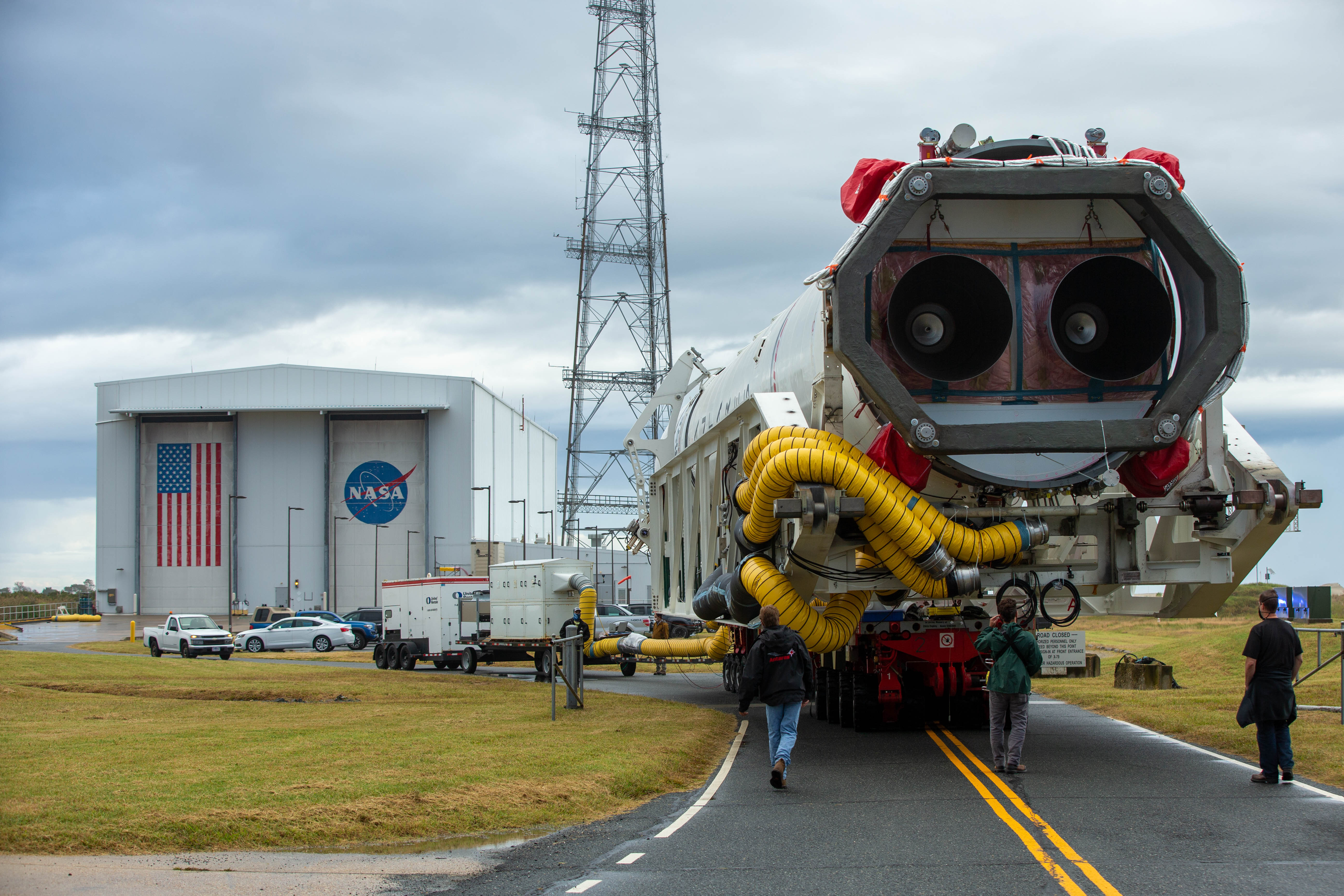
The major components of Rocket Lab’s Neutron rocket began arriving at MARS for integration in early 2026. First in was what the company calls its Hungry Hippo faring. In a commercial aerospace first, the faring will open in space to release the rocket’s expendable second stage and attached payload, and close back up for the return to Earth. Incorporating the faring into the structure of the first stage will allow more of the rocket to be recovered more easily for reuse via an offshore landing platform.
Following static firing of the first- and second-stage engines and full integration at MARS, Rocket Lab plans to launch the first Neutron on a test flight in 2027. A successful launch will unlock revenue-producing flights already contracted for by the U.S. Space Force, the Air Force, NASA, and multiple companies, including Toronto-based Kepler Communications.
Rocket Lab’s example highlights the range of activity within reach of space companies in Virginia. “For years, we’ve talked about the space value chain in three key verticals,” Rocket Lab founder and CEO Peter Beck said in his company’s Q2 2026 earnings call. He described the verticals as:
- Launching satellites and other spacecraft
- Building the spacecraft themselves
- Generating revenue from communications and other space-based capabilities
With Rocket Lab’s acquisition of communications satellite company Iridium, announced in 2026 and expected to consummate in 2027, Rocket Lab now holds a trifecta.
For Beck, such vertical integration represents the future of space. “The really large space companies of the future are going to look a little bit the same,” he recently told Bloomberg Television. “They’re going to have the ability to build satellites at scale, the ability to launch their own satellites with their own rocket, and have a bit of a communications play.”
It’s already happening in Virginia.