
Historic Universities, Future-Forward Workforce
Virginia colleges and universities build on three centuries of education to prepare students for a changing economy
For more than 300 years, Virginia’s universities have helped produce generations of political leaders, scientists, entrepreneurs, engineers, and business executives who shaped the economy in the Commonwealth and beyond. Higher education in Virginia dates to 1693, when the College of William & Mary was founded by royal charter from King William III and Queen Mary II. Historic universities like William & Mary became synonymous with leadership and public service, while other institutions expanded Virginia’s influence across business, science, law, and expanding opportunities for Black people.
Virginia is home to the oldest university and second-oldest college in the United States (William & Mary), the oldest remaining all-male liberal arts college in the United States (Hampden-Sydney College), the country’s oldest state-supported military college (Virginia Military Institute), and its first fully state-supported institution of higher learning for Black people (Virginia State University). Now, these historic institutions face a new challenge: preparing students for an economy being reshaped by AI, automation, and rapid technological disruption.
The scale of that disruption is becoming increasingly clear. The World Economic Forum’s Future of Jobs Report 2023 found that employers expect 44% of workers’ core skills to change within five years as AI and automation reshape industries. At the same time, companies are rethinking entry-level work as automation handles more routine tasks once assigned to junior employees, contributing to a tougher job market for recent graduates. A recent Washington Post report found unemployment among recent college graduates reached 5.6% this year — well above the 4.2% rate for all workers — as employers reassessed hiring needs in the AI economy.
For Virginia, the issue extends beyond higher education. As states compete for talent-intensive industries such as biotechnology, cybersecurity, and advanced manufacturing, workforce readiness is becoming a defining economic development challenge. Universities are no longer viewed solely as academic institutions, but as engines for talent incubation, innovation, entrepreneurship, and research commercialization.
Virginia’s universities are responding by redesigning the career readiness pipeline. Across the Commonwealth, schools are building programs that connect students directly with employers, startups, research projects, and emerging industries. The shift reflects a broader effort to prepare students not only for today’s jobs, but for an economy still being defined.
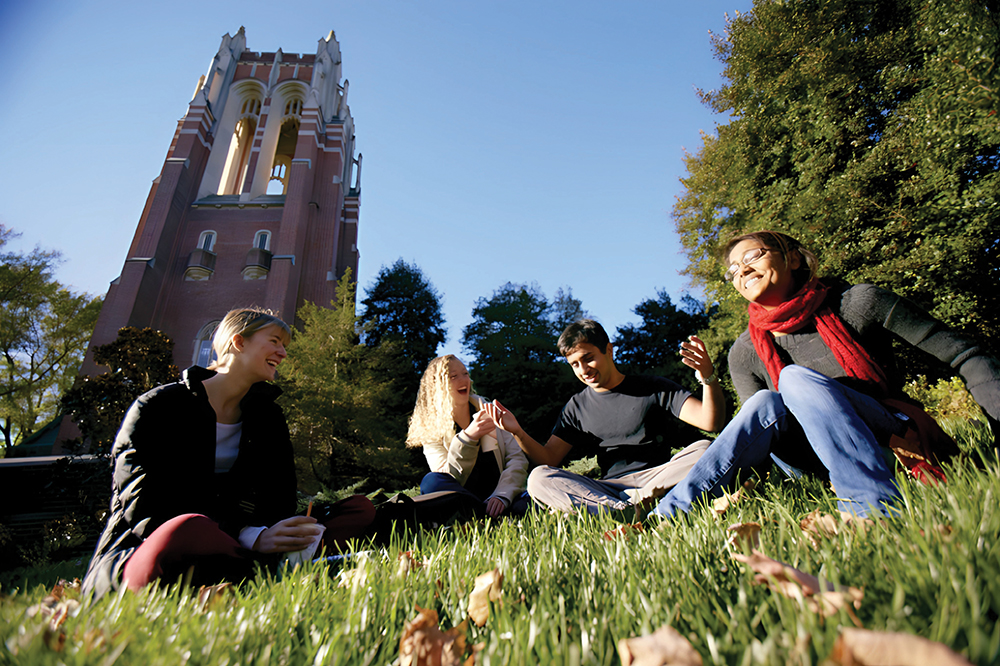
A History of Opportunity: The Beginnings of Virginia’s Oldest Colleges and Universities
1693 — College of William & Mary founded in Williamsburg as the second-oldest college in what would become the United States
1749 — Washington and Lee University founded as Augusta Academy in Augusta County; college moved to its present site in Lexington in 1780
1775 — Hampden-Sydney College, the oldest of the four remaining all-male liberal arts colleges in the United States, founded in Prince Edward County
1819 — Former President Thomas Jefferson founds his “Academical Village,” the University of Virginia, in Albemarle County
1830 — Randolph-Macon College founded in Mecklenburg County; college moved to Ashland in 1868
1836 — Emory & Henry College, now Emory & Henry University, founded in Washington County
1838 — Medical College of Hampden-Sydney, the oldest precursor to Virginia Commonwealth University, founded in Richmond
1839 — Farmville Female Seminary, now Longwood University, founded in Farmville
1839 — Virginia Military Institute, the country’s first state-sponsored and -supported military college, founded in Lexington
1840 — Richmond College, now the University of Richmond, founded in Richmond; college moved to its present site in Henrico County in 1914
1842 — Valley Union Seminary, now Hollins University, founded in Roanoke County
1842 — Augusta Female Seminary, now Mary Baldwin University, founded in Staunton
1845 — Virginia Collegiate Institute founded in Augusta County; school moved to Salem in 1847 and became Roanoke College
1859 — Union Female College, now Averett University, founded in Danville
1863 — Free Black woman Mary Peake begins teaching classes at the “Grand Contraband Camp” of escaped enslaved people in Hampton; these classes served as the foundation for the Butler School for Negro Children, which grew to become Hampton University
1865 — Richmond Theological Institute, now Virginia Union University, founded in Richmond less than a year after the end of the Civil War to educate Black freedmen to enter the ministry
1867 — Virginia Agricultural and Mechanical College, now Virginia Tech, founded in Blacksburg
1872 — Home School for Girls, now Southern Virginia University, founded in Buena Vista
1875 — Dayton High School, now Shenandoah University, founded in Rockingham County; school moved to Winchester in 1960
1882 — Virginia Normal and Collegiate Institute, now Virginia State University, the first fully state-supported institution of higher learning for Black people in the United States, founded in Chesterfield County
Reinventing Workforce Development
Workforce preparation at William & Mary is centered on combining the university’s liberal arts curriculum with the technical skills that employers demand in the age of AI.
Known for its robust liberal arts programming, William & Mary has baked technological literacy into the foundation of its curriculum. As part of core studies, students across schools can take classes related to AI literacy, data fluency, ethics, and research, with undergraduate research serving as a core component of the student experience.
As AI upends the future of work, the combination of soft and technical skills will be crucial for students to stand out in the job market. A historian who understands data and how to conduct research, for instance, will be more likely to get hired than a historian without that background. Employers look for candidates who can adapt to change in an age of rapid technological advancement. Employees who can learn new tools while also leveraging soft skills will be the ones who succeed.
“When you have students who can think critically, communicate effectively, understand ethics, and demonstrate leadership and adaptability, they can use their grounding in fundamental scientific principles to become active contributors to organizations for years to come,” said William & Mary Provost Peggy Agouris.
Beyond curriculum updates, William & Mary emphasizes hands-on experience as key for students to get hired. The university offers internships to students in every major. Students seeking careers in the technology sector can pursue degrees in the School of Computing, Data Sciences & Physics, which opened in July of 2025. It’s the newest school William & Mary has introduced in 50 years, highlighting the university’s focus on innovation as a key industry driver.
At Virginia Commonwealth University (VCU), workforce development has become increasingly tied to interdisciplinary innovation through initiatives like the Institute for Transformative Learning (ITL). Launched in 2026, the ITL houses a new academic internships office, undergraduate research, service learning, and other project-based learning courses and programs. The Institute was designed to break down traditional academic silos and prepare students to solve complex, real-world problems through cross-disciplinary collaboration.
Dr. Andrew Arroyo, senior vice provost for academic affairs at VCU and interim dean of University College, said workforce preparation increasingly requires students to move beyond classroom theory and apply skills in dynamic environments.
“This kind of interdisciplinary, hands-on work prepares students for the hard intellectual engagement with tough problems that defines the modern workforce,” he said.
The ITL’s programs are open to students across the university and increasingly integrated into general education coursework early in students’ academic careers. Students work in interdisciplinary teams on short-term, project-based assignments focused on solving the kinds of real-world challenges that matter to industry and community partners.
VCU says the emphasis on applied learning is translating into strong workforce outcomes. According to data provided by Dr. Hernan Bucheli, VCU’s vice president for strategic enrollment management and student success, 85% of undergraduate respondents in VCU’s 2025 First Destination survey reported remaining in Virginia after graduation. Nearly one-third said internships, research projects, or other applied learning experiences directly led to full-time job offers.
Innovation as Economic Development
At the University of Virginia (UVA), founded by former President Thomas Jefferson in 1819, workforce development is increasingly tied to entrepreneurship, technology commercialization, and interdisciplinary research through UVA Innovates, a university-wide initiative established in 2024 to accelerate innovation across multiple sectors.
The initiative connects engineering, business, medicine, data science, and public policy programs to help students and researchers turn ideas into enterprises in fields such as biotechnology, artificial intelligence, advanced manufacturing, clean energy, and data analytics. Through initiatives like The Foundry, UVA’s entrepreneurship hub for undergraduate and graduate students, students can access startup mentoring, venture workshops, pitch competitions, and incubator-style resources designed to help move ideas from concept to market.
Providing students with the resources to explore their talents and ambitions creates an opportunity for students to develop the leadership and problem-solving skills necessary for building thriving careers. “Entrepreneurship gives students agency to be able to do that,” said Paul Cherukuri, UVA’s chief innovation officer and Donna and Richard Tadler university professor of entrepreneurship.
UVA Innovates also oversees initiatives like the Commonwealth BioAccelerator and Enterprise Studio, which help researchers and faculty members move university-developed technologies toward commercialization.
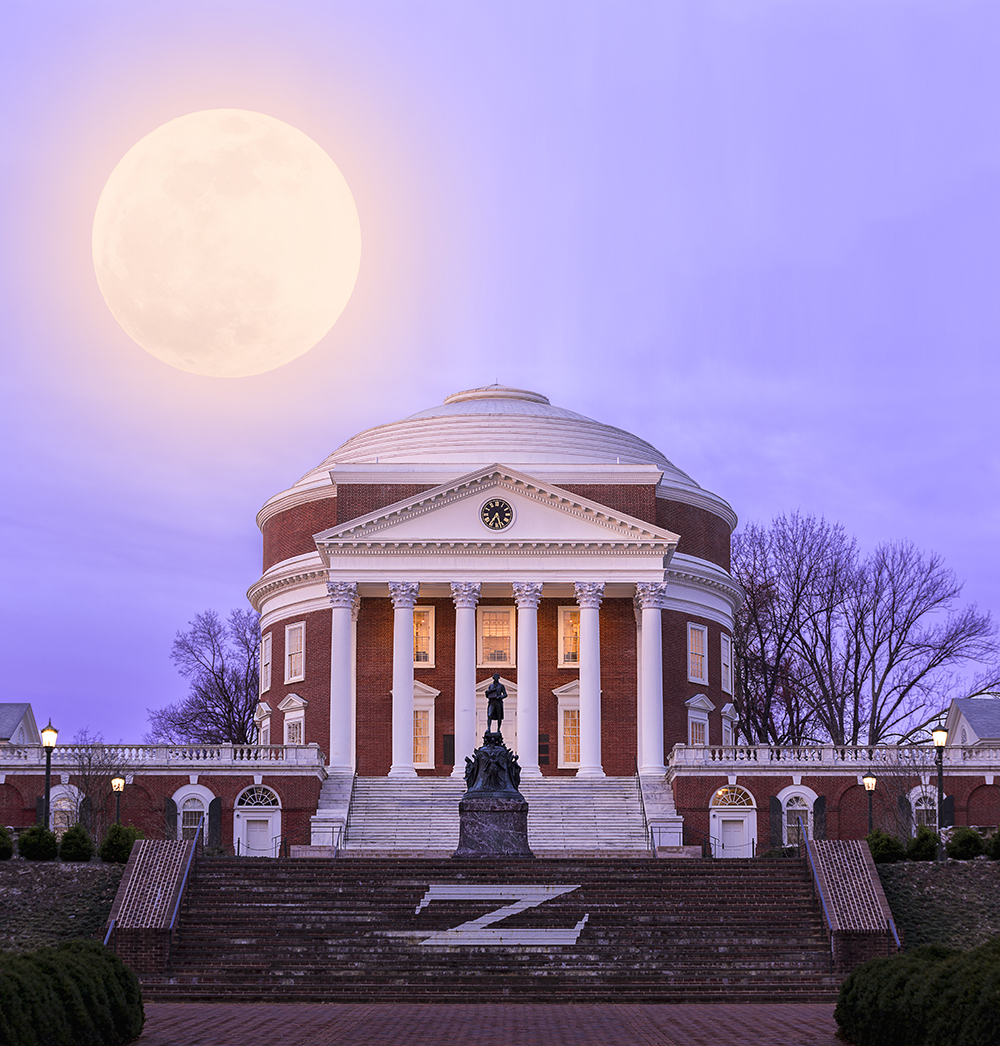
Going Beyond Traditional Internships
Career readiness at the University of Richmond, founded in 1840, incorporates hands-on consulting and project-based learning through the Spider Business Hub, an experiential education initiative.
Launched in 2021, the program pairs teams of students from the University of Richmond’s Robins School of Business with local businesses and entrepreneurs that need assistance solving operational and strategic challenges. In addition to traditional internship experiences, students lead semester-long consulting-style projects for credit under faculty supervision, helping businesses conduct financial analyses, evaluate expansion opportunities, improve operations, and develop marketing strategies.
“It’s not an internship,” said Sara Hanson, associate marketing professor at the University of Richmond (UR) and director of the Spider Business Hub. “They’re coming into the business with expertise that the company might not have.”
Most participating organizations are small local enterprises. Since launching during the 2020–2021 academic year with seven partner projects and 16 students, the initiative has expanded significantly. The Spider Business Hub supported 64 partner projects and involved more than 300 students during the 2025–2026 academic year, according to UR program data. Participating partners range from retailers and nonprofits to marketing firms and mental health organizations.
Hanson said the program gives students direct responsibility for shaping market strategy and solving real business problems while helping local entrepreneurs access expertise they might not otherwise be able to afford.
“Students are doing a lot of the work that business owners either may not have the expertise for or simply may not have the time to do,” Hanson said.
Preparing Students for the AI Economy
As artificial intelligence reshapes industries, universities are also integrating AI literacy directly into workforce preparation.
Arroyo said VCU faculty are incorporating AI tools and ethics discussions into classrooms across disciplines through initiatives like the university’s Practical AI and AI Studies minors. Students are learning how to use AI tools and how to evaluate their reliability, ethics, and limitations.
“At VCU, we can make a distinctive contribution by focusing on AI for the public good and the responsible use of AI while preparing students to use these tools in practical, applied ways,” Arroyo said.
Across town at UR, Hanson similarly encourages students participating in the Spider Business Hub to use AI tools to supplement their consulting and marketing work while learning to critically evaluate the technology’s outputs and limitations.
“AI is just going to be part of the world, so we need to have them understand how to use it,” Hanson said.