Historic Virginia Companies, Then & Now
Strategic pivots, top-notch operations help these businesses stand the test of time
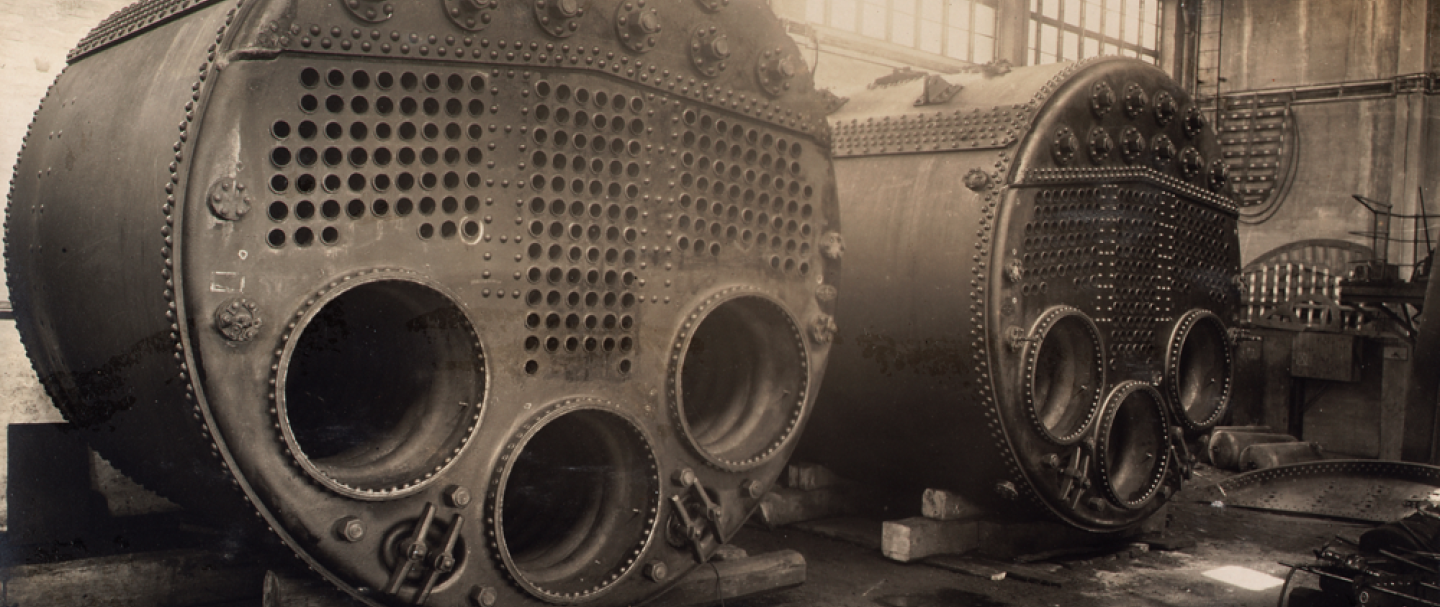
BWX Technologies, Inc., started out as a boiler manufacturer. They were top-notch boilers — no less an authority than Thomas Edison said so — but the idea that the company would one day be critical to the effort to put a man on Mars, like the Lynchburg-based nuclear component provider is today, was utterly far-fetched. Newport News Shipbuilding has seen a similar transformation from relatively humble beginnings to serve the U.S. Navy and become a key factor in the nuclear industry.
These companies have innovated, remained nimble, and offered the best of what their customers needed. They have survived periods of turbulence and change and stood the test of time to become critical components of the American economy — just like Virginia itself.
Read on to learn about the historic beginnings of companies that have put down roots in Virginia, including Fortune 500 energy giants (Dominion Energy, Inc.), iconic food and beverage companies (A. Smith Bowman Distillery, Smithfield Foods), financial companies with Reconstruction-era roots working to solve the challenges of an aging population (Genworth Financial), and more.
Focus on Good Ships
HII / Newport News Shipbuilding
NNS maintains quality amid technological change
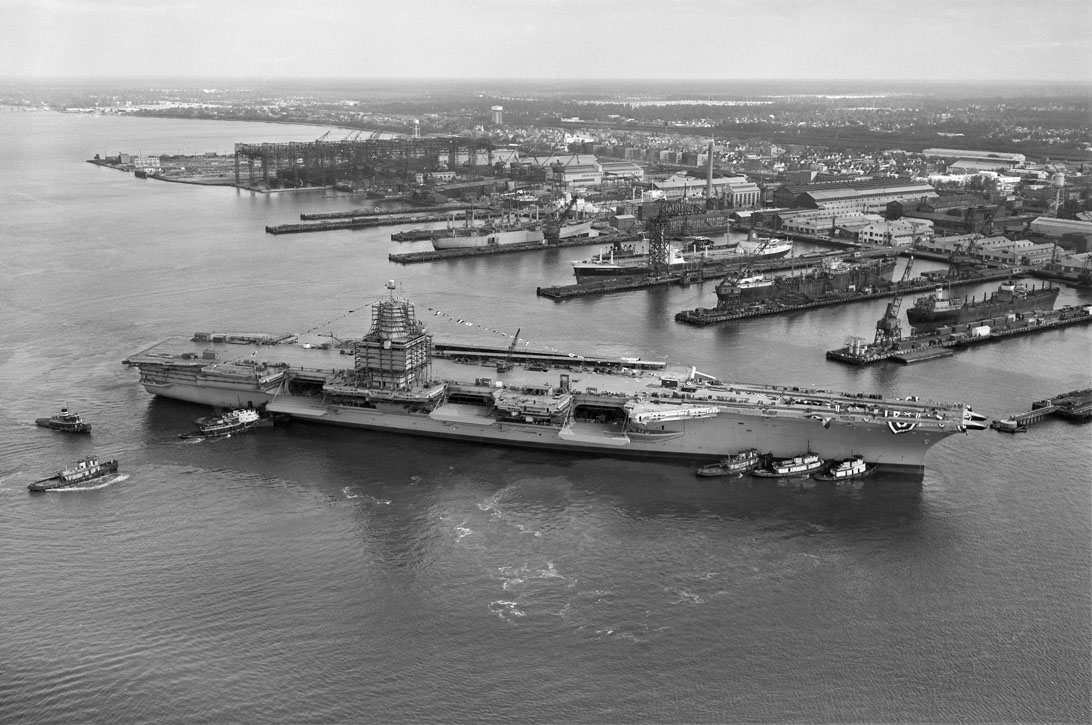
HII, formerly Huntington Ingalls Industries, marked 140 years of operation for its Newport News Shipbuilding (NNS) division in January 2026. While the company is still heavily industrial in nature, its partnership with the U.S. Navy has enabled it to become an advanced manufacturing and nuclear partner for Virginia, the Hampton Roads region, and the federal government.
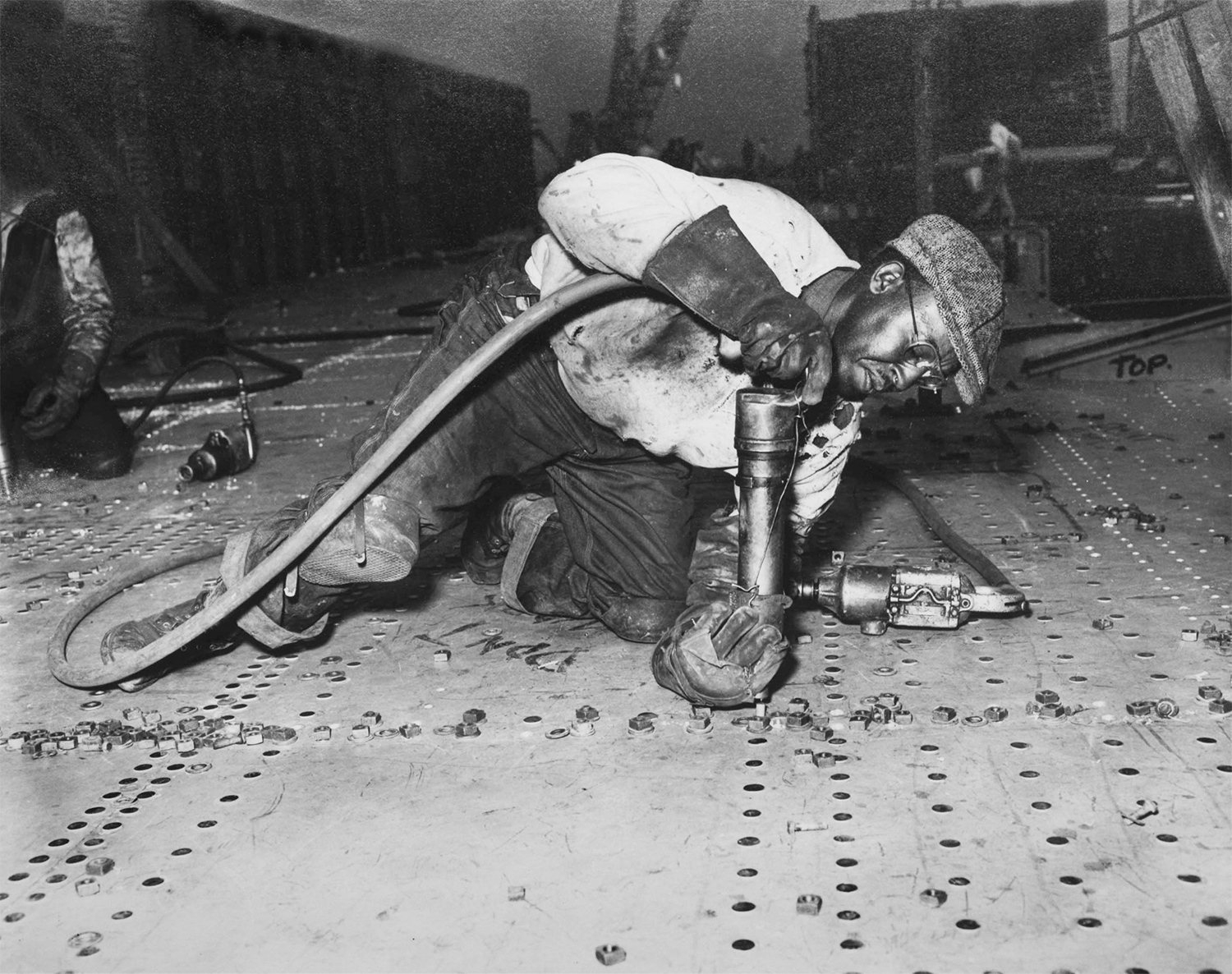
Since its founding in 1886 as the Chesapeake Dry Dock and Construction Co., NNS has delivered more than 800 ships to commercial and military customers. It designs, builds, refuels, and decommissions nuclear-powered aircraft carriers and submarines for the U.S. Navy. The shipyard is currently building Gerald R. Ford-class aircraft carriers and performing midlife refueling and complex overhaul work on Nimitz-class carriers. It also builds Virginia-class attack submarines and is a major shipbuilding partner in the Columbia-class submarine program.
The company’s work with nuclear subs has made it a key developer in the nuclear power industry, particularly through its use of small modular reactors (SMR), a key part of the push in Virginia and the United States to develop safe, clean nuclear energy sources. Currently, only two commercial SMRs are active worldwide, neither in the United States.
NNS has been building nuclear-powered vessels for the U.S. Navy for decades, including the world’s first nuclear-powered aircraft carrier, the former USS Enterprise, commissioned in 1961. All 11 of the Navy’s current nuclear-powered carriers were built in Newport News, and the company continues to deploy cutting-edge technologies to provide crucial power.
The first ship ever built at NNS, the tugboat Dorothy, now sits outside the company’s gates in Newport News. It’s a powerful reminder of the words of the company’s founder, Collis P. Huntington, that still drive its mission today: “We shall build good ships here; at a profit if we can, at a loss if we must, but always good ships.”
From Streetcars to Smart Grids
Dominion Energy, Inc.
Dominion Energy adapts to serve customers’ power needs
Richmond-based energy company Dominion Energy, Inc., traces its roots back nearly 250 years to 1787 and the Upper Appomattox Trustees, a group that was said to have included future U.S. presidents George Washington and James Madison. That group was charged with improving navigation and establishing canals on the James and Appomattox Rivers and established the Upper Appomattox Company to build dams on the Appomattox for industrial use. That company grew through mergers with other river transportation companies and consolidated several stations along the river in the late 19th century — Dominion Energy now estimates that 235 companies contributed to its corporate ancestry.
In 1901, the water rights passed to a new company, the Virginia Passenger & Power Company, which was acquired by streetcar firm Virginia Railway & Power Company a few years later. Acquisitions and rebrands created the Virginia Electric and Power Company (VEPCO), which became one of the country’s largest electric utilities by the early 1950s. The name “Dominion” came about in 1983 when VEPCO reorganized as a holding company called Dominion Resources, now known as Dominion Energy. In May 2026, Dominion announced a proposed merger with Florida-based NextEra Energy that would create the largest regulated electric utility in the country.
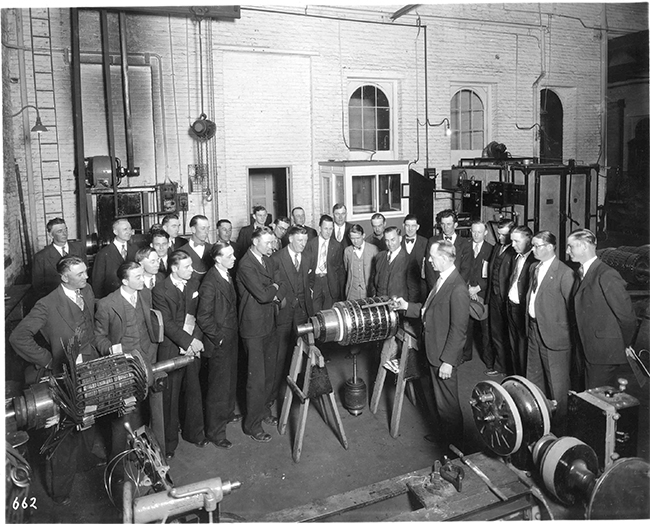
Today, Dominion Energy’s network includes nearly 30 GW of electric generating capacity from nuclear, natural gas, solar, hydro, coal, biomass, and offshore wind, more than 90,000 miles of electric distribution and transmission lines, and 20,000 miles of natural gas distribution pipeline. The company serves more than 4 million electric and natural gas utility customers in Virginia, North Carolina, and South Carolina.
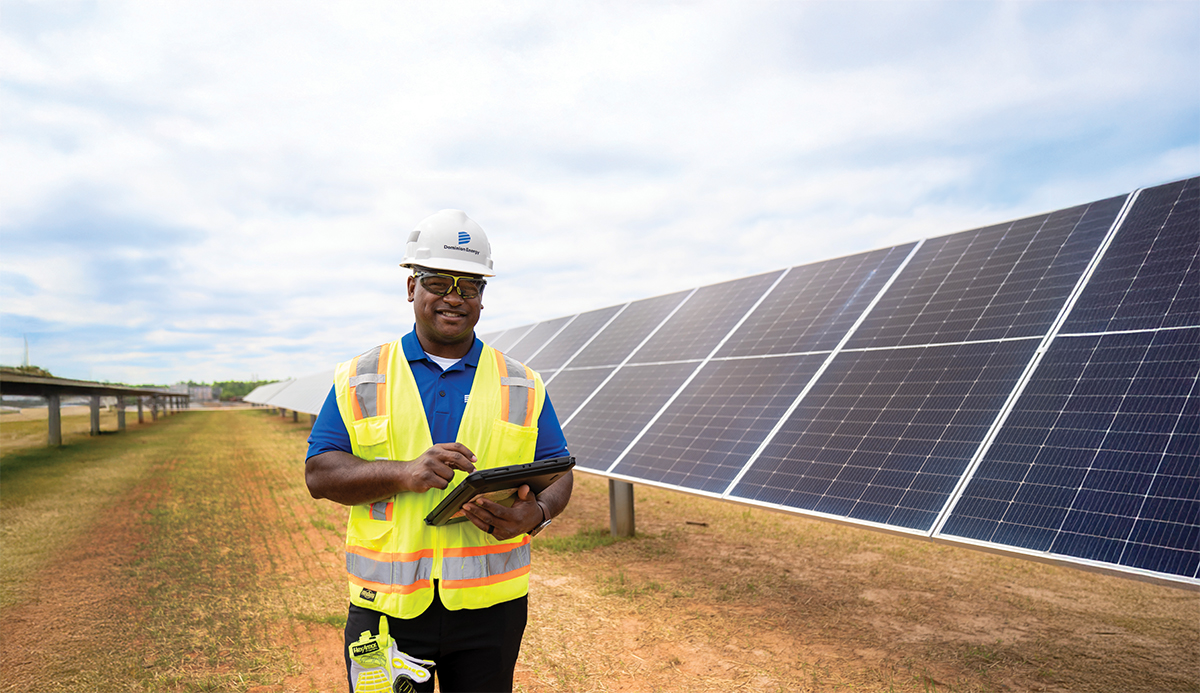
The company continues to expand its renewable energy portfolio, and the 2.6 GW Coastal Virginia Offshore Wind project is scheduled to be completed in early 2027. It owns and operates the third-largest solar portfolio among U.S. utility holding companies and is investing billions of dollars in nuclear power through the extension of the operating licenses for its nuclear stations in Virginia (North Anna Power Station in Louisa County and Surry Power Station in Surry County) and South Carolina, and through the development of small modular reactors. It also has renewable natural gas operations in 11 states, including a partnership with Smithfield Foods in Virginia.
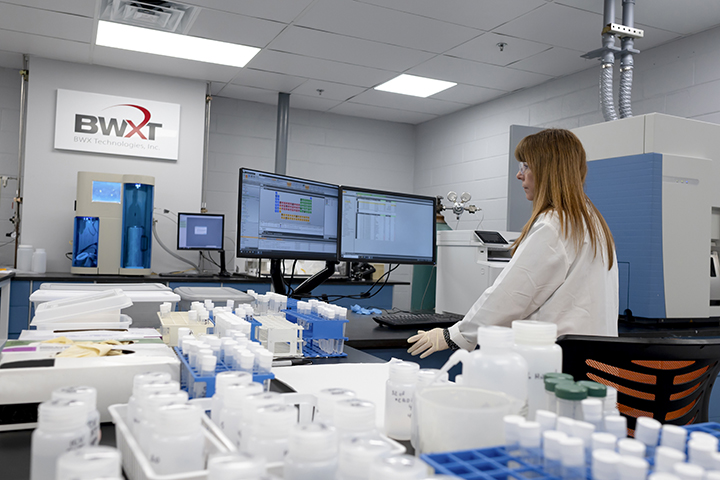
Navy Work Launches BWX Technologies to Nuclear Prominence
BWX Technologies, Inc.
Long before BWX Technologies, Inc. (BWXT), helped create a nuclear industry hotspot in Lynchburg, it was a small Rhode Island company based on a novel technology. Founder Stephen Wilcox patented his water tube boiler design in 1856 and founded the company, then known as Babcock & Wilcox (B&W), with George Babcock in 1867. The company’s boilers powered the country’s first central electrical station, in Philadelphia, and helped Thomas Edison develop the concept of a public utility through the company’s work on his Pearl Street Station in New York. Edison himself wrote that the company’s boiler was “the best boiler God has permitted man yet to make.”
B&W boilers powered the New York subway system and President Theodore Roosevelt’s “Great White Fleet” of U.S. Navy ships, and the company manufactured components for the Hoover Dam and the Manhattan Project. In 1949, B&W was awarded contracts to develop boilers and components for Navy ships — the reason the company came to Virginia in the first place.
Those contracts involved building nuclear submarines for the Navy under Adm. Hyman Rickover, which necessitated a secure location to protect sensitive materials and intellectual property. B&W eventually chose a Campbell County site just outside Lynchburg on a peninsula in the James River, surrounded by water on three sides with a wooded ridge complicating the only land route to the site. Factoring in rail access and a strong workforce, the site — which became known as the Navy Plant after opening in 1955 — was an ideal location for the sensitive, secretive work in which the company was involved.
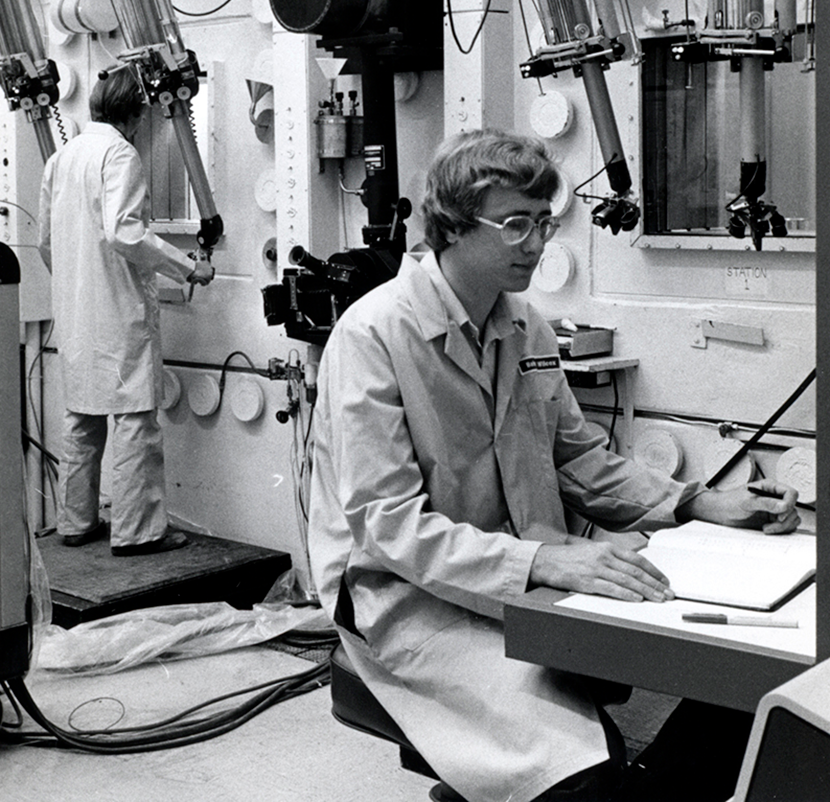
Several consolidations, acquisitions, and one name change later, BWXT remains an integral part of the United States’ nuclear plans. The company has manufactured more than 420 nuclear reactors for Navy submarines and is now working on space nuclear propulsion and fission surface power in support of the United States’ efforts to put humans on Mars.
“It all started with naval nuclear propulsion supporting Adm. Rickover and the nuclear Navy, trying to figure out how to put nuclear reactors on submarines,” BWXT CEO Rex Geveden said.
But in addition to that high-stakes mission and forays into nuclear medicine and nuclear materials processing, BWXT is continuing its efforts to meet future clean power needs, for both energy-intensive industries and personal consumption, here on Earth.
“Demand is moving from gas pumps to the electricity grid, from behind the meter to on the meter,” Geveden said. “We’re seeing a surge in demand, and nuclear is how you meet that demand.”
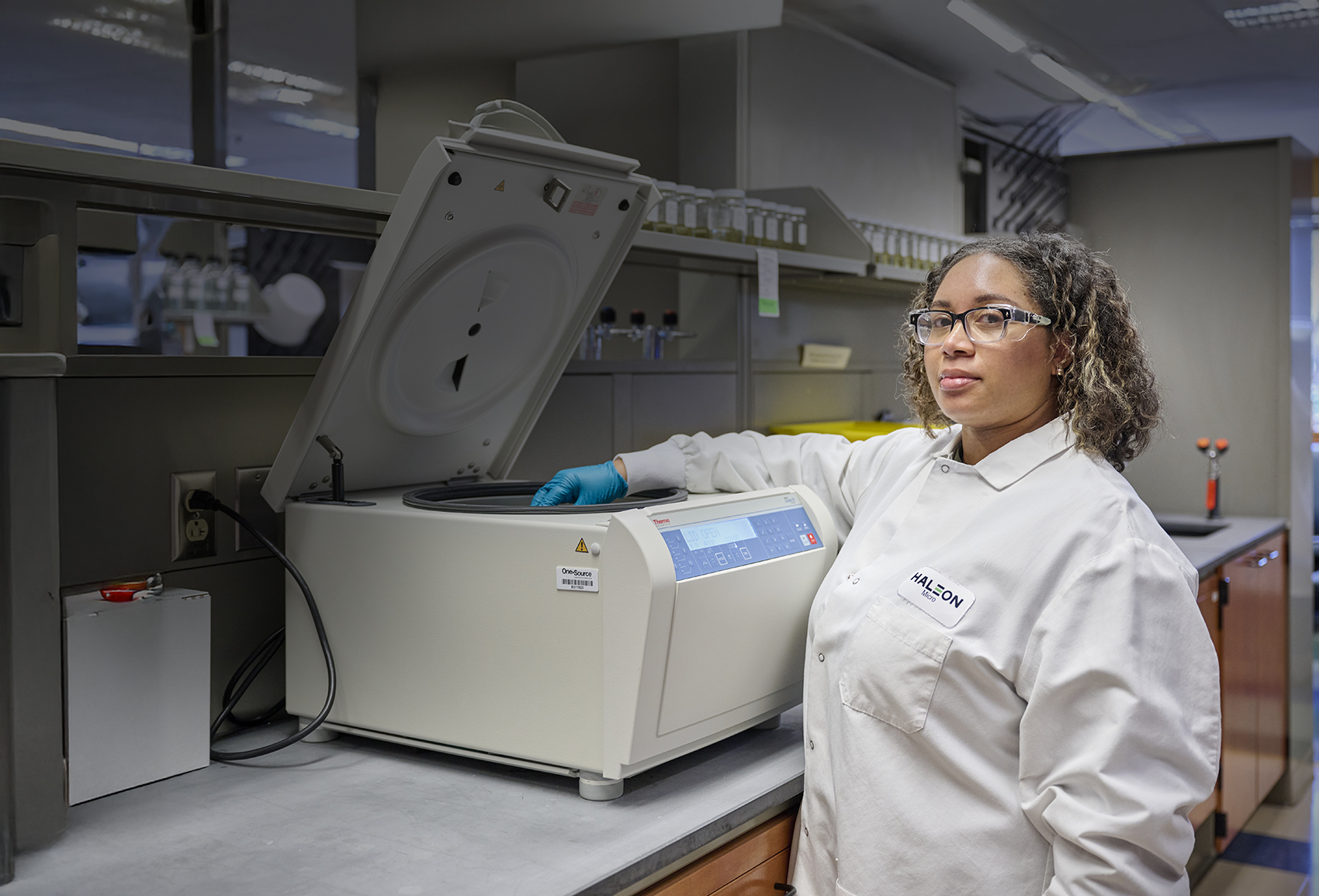
A Consumer Healthcare Powerhouse in Richmond
Haleon
Through mergers, Haleon continues developing consumer healthcare staples in Richmond
The consumer products company focused on better everyday health now known as Haleon (formerly GSK) wasn’t founded in Virginia, or even the United States. The company traces its lineage to the Plough Court Pharmacy in London in 1715. The Commonwealth entered the picture in the late 19th century, and Haleon has become a Virginia fixture since opening its Richmond research and development facility in the 1960s.
In 1866, Albert Hartley Robins founded the A.H. Robins Apothecary in a Richmond that was still recovering from the Civil War. A.H. Robins grew into international prominence over the next century and merged with Whitehall Pharmaceutical Company in 1986, kicking off a period of several mergers that ended in 2022 with the founding of Haleon as a joint venture of pharmaceutical giants GlaxoSmithKline and Pfizer. This established the company as one of the largest over-the-counter healthcare companies in the world.
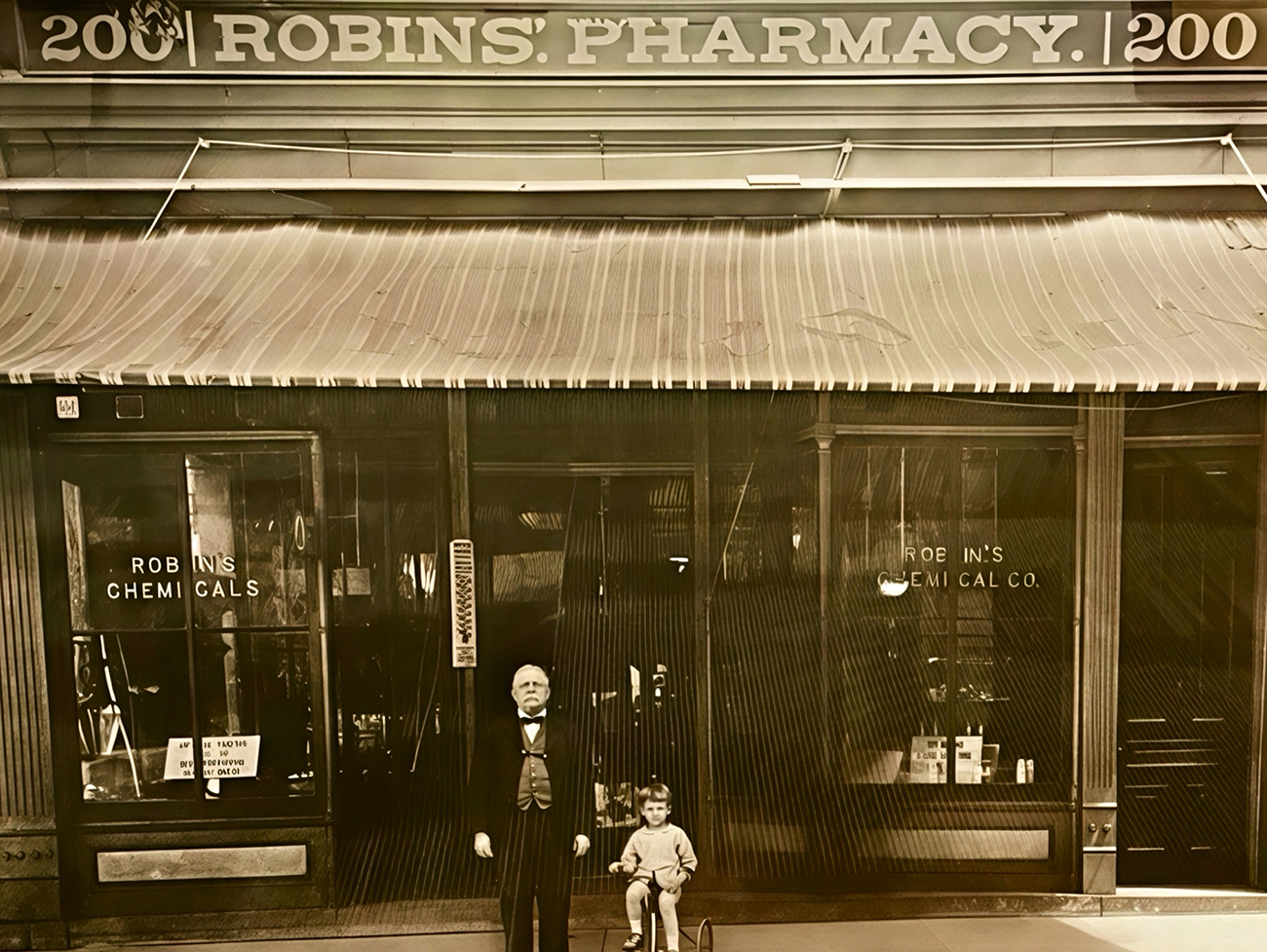
The company is associated with numerous household names in consumer healthcare, starting with two major Virginia-developed consumer healthcare products — Robitussin and Advil, both invented by A.H. Robins. The company used to produce ChapStick, invented by Charles Browne Fleet in Lynchburg in the 1880s, but sold the brand in 2024.
Haleon now manufactures numerous iconic healthcare brands including Robitussin, Advil, Caltrate, Centrum, Emergen-C, Excedrin, Flonase, Nexium, Sensodyne, and TheraFlu. The company continues to develop top-notch consumer healthcare products and announced a $54.2M expansion of the Richmond facility in 2025. In addition to the physical investments, Haleon is partnering with Virginia Commonwealth University (VCU) to launch the Haleon-Commonwealth Consumer Healthcare Internship Program for Advanced Life Sciences, offering paid opportunities for VCU undergraduates and summer internships for undergraduate and graduate students from across Virginia.
Iconic Products, Innovative Processes
Smithfield Foods
Smithfield Foods grows where it started
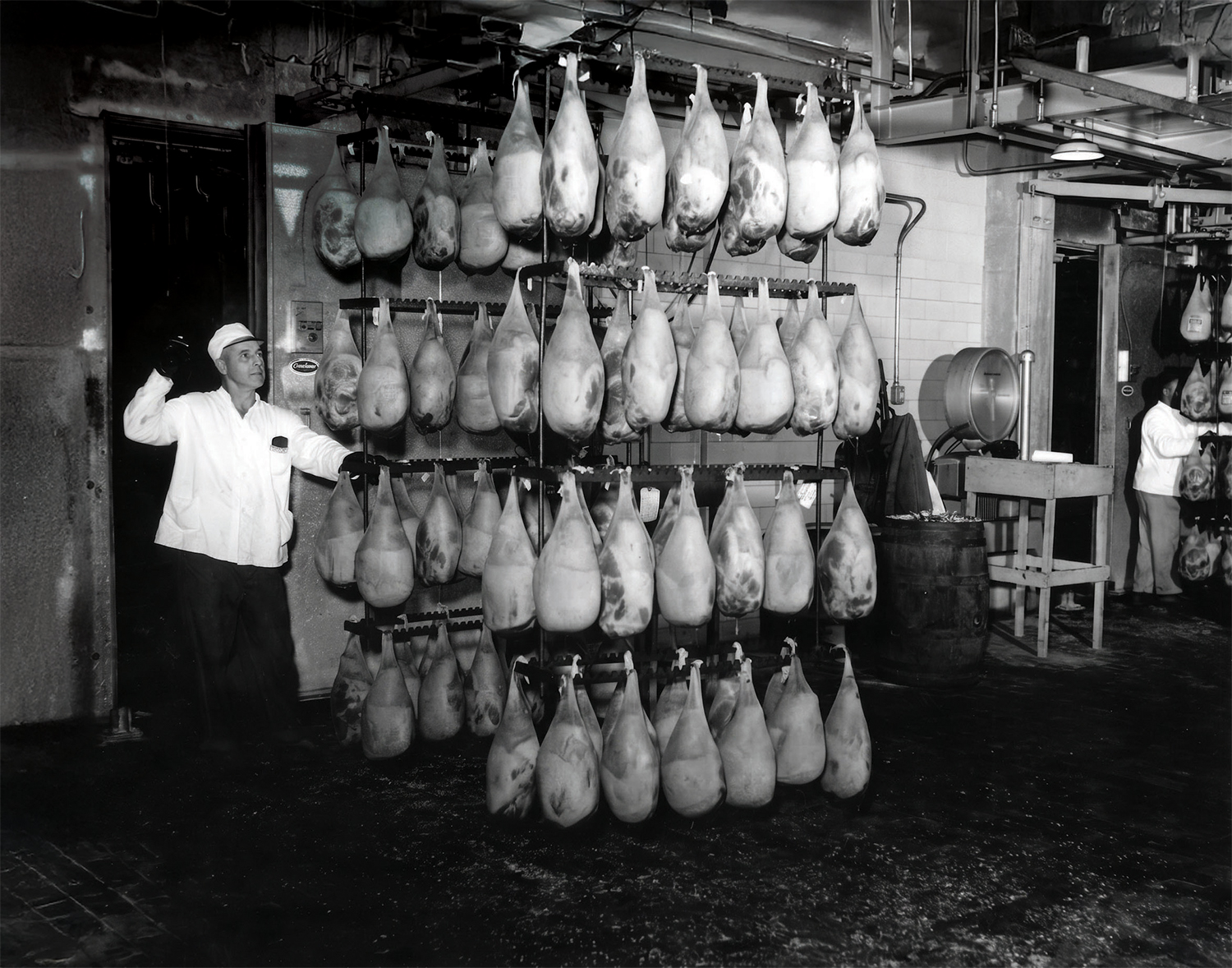
Founded in 1936 in the town of Smithfield in Isle of Wight County, Smithfield Foods grew from a small, local ham-curing operation into a global leader in packaged meats. While the business has expanded and evolved over nearly a century, its roots remain grounded in quality, craftsmanship, and a commitment to the communities its employees call home. Today, Smithfield brings that legacy to life with a simple guiding principle: “Good food. Responsibly.”
After working for P.D. Gwaltney Jr. & Company in Smithfield, Joe Luter Sr. and his son, Joe Luter Jr., started the company in the town’s wharf area, where they cured Smithfield hams. Joseph Luter III, representing the third generation of Luters in the family business, helped expand Smithfield into the world’s largest pork producer.
Innovation continues to shape Smithfield’s growth across its portfolio of iconic brands like Smithfield®, Nathan’s Famous®, and Eckrich®, among many others. In 2026, Smithfield announced plans to acquire Nathan’s Famous®, which would secure permanent rights to the brand and fuel growth across retail and food service channels.
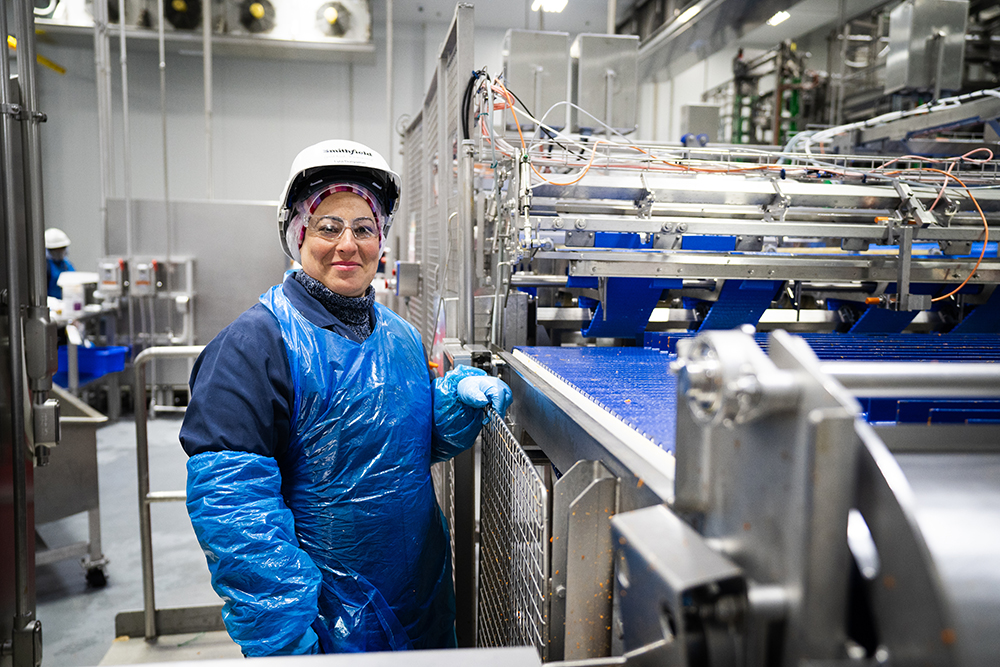
Guided by consumer insights, the company introduces new products, flavors, and packaging that reflect how people cook, eat, and shop today. At the same time, Smithfield is investing in automation and advanced technologies across its facilities to improve efficiency, increase consistency, and enhance workplace safety.
In 2018, Smithfield partnered with Dominion Energy to launch Align RNG, a joint venture to capture methane on farms and convert it to clean, renewable energy.
Virginia has always been Smithfield’s home. With deep ties, a skilled workforce, and strong community partnerships, the Commonwealth remains the place where Smithfield grows its business, supports its neighbors, and builds for the future.
150 Years of Family-Owned Growth
Colonna’s Shipyard soars from humble beginnings
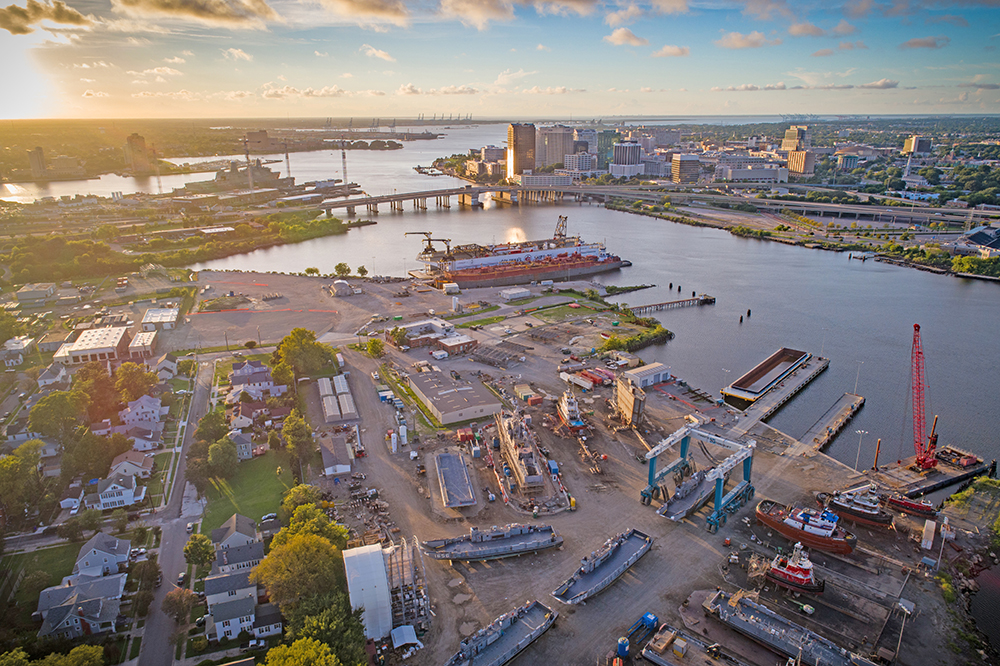
Charles J. Colonna founded the shipyard that bears his name in 1875 with a $2,000 loan from his brother. He was 26 years old. The company initially focused on servicing the sailing ships that called on the port at Norfolk and was limited to pier-side repairs. Within two years, Colonna added a horse-powered marine railway to expand his capabilities.
At the time, nearly all the ships Colonna’s served were wooden and required extensive maintenance from carpenters, caulkers, painters, riggers, sailmakers, and blacksmiths. The shipyard benefited from an advantageous location on the eastern branch of the Elizabeth River, across from downtown Norfolk, where it continues to operate today as the oldest family-owned shipyard in the United States.
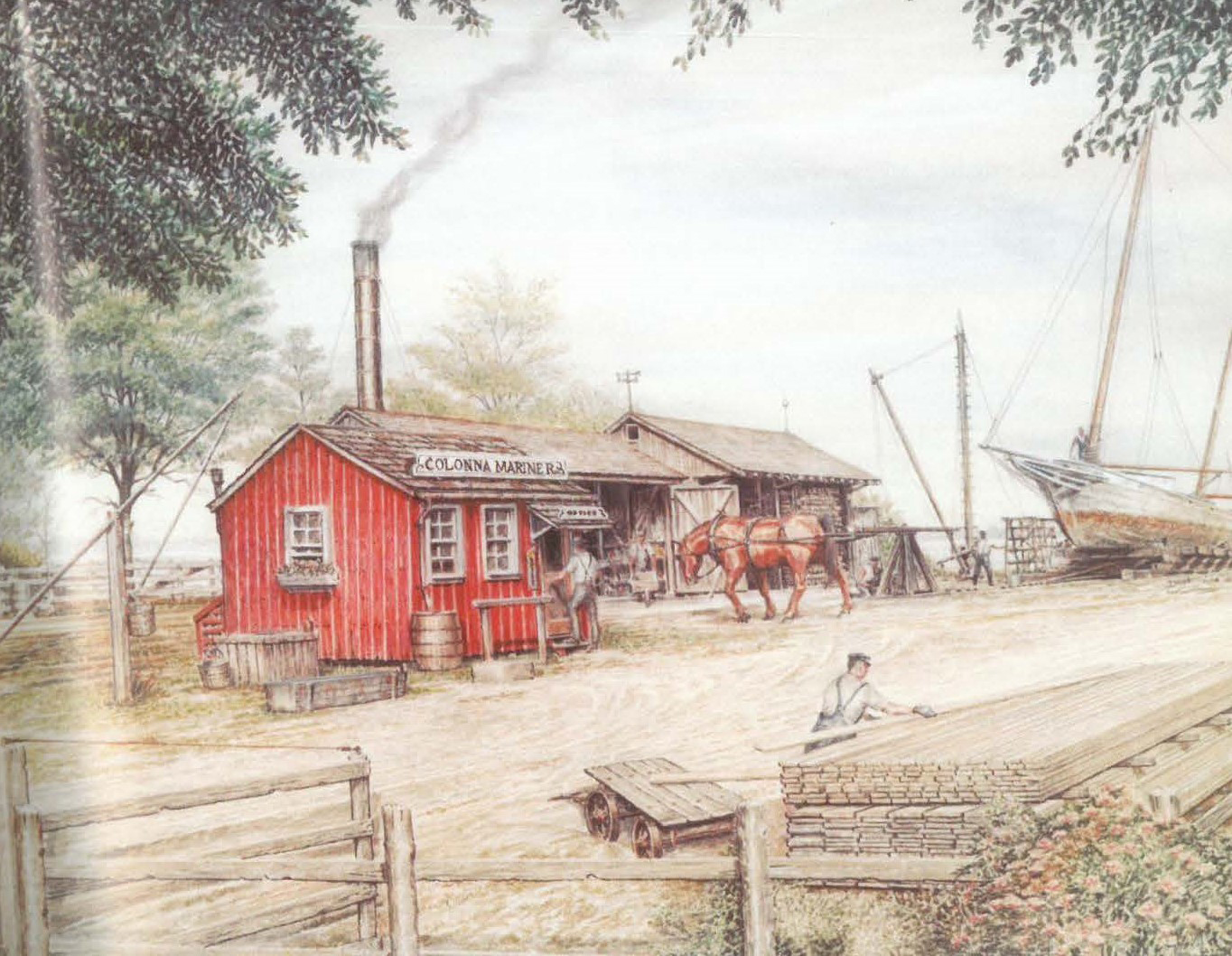
In the century and a half since its founding, Colonna’s has developed into a multi-format industrial service provider of ship overhaul, conversion, and repair, large-scale industrial fabrication, heavy machining, and industrial plant maintenance, conversion, and construction. Its industrial fabrication offerings now include modular shipbuilding for high-priority U.S. Navy programs.
To help fulfill those needs, Colonna’s is installing a fourth drydock, which will provide a platform for larger commercial and government ships to be repaired at the facility. The new drydock is part of a series of major investments from the company to help it scale its offerings more effectively.
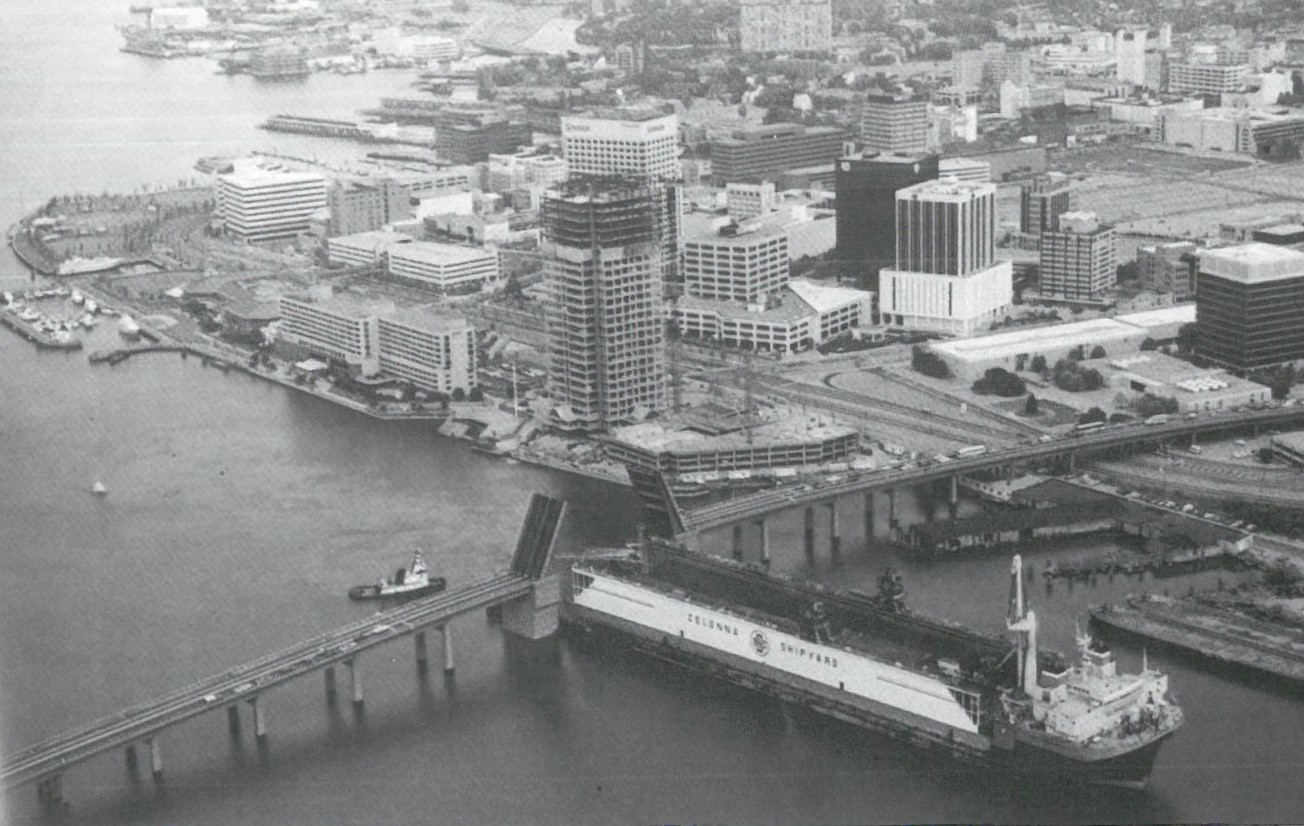
The company’s government customers include the U.S. Army, Navy, and Coast Guard, the National Oceanic and Atmospheric Administration, the U.S. Maritime Administration, and the Army Corps of Engineers. Non-federal government clients have included the New York City Department of Transportation, which previously engaged Colonna’s to maintain the Staten Island Ferry ships.
That scalability is enhanced by the other businesses under the Colonna’s corporate umbrella, notably Norfolk steel fabricator Steel America and Accurity Industrial Contractors in Owensboro, Ky. Colonna’s also operates a West Coast shipyard near San Diego.
A History of Innovation, A Future in Virginia
Alfa Laval
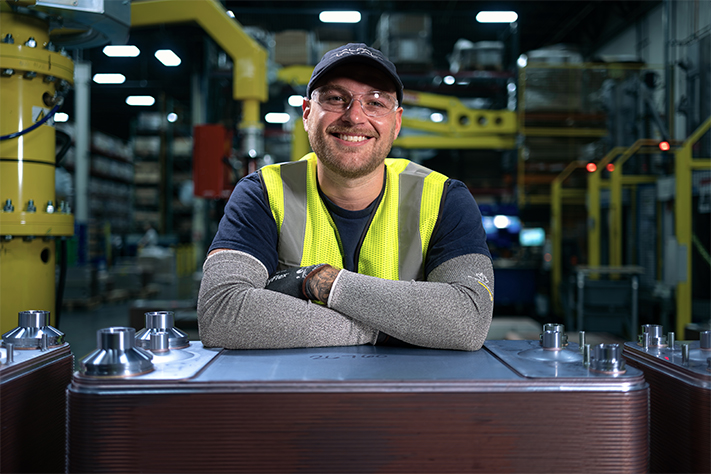
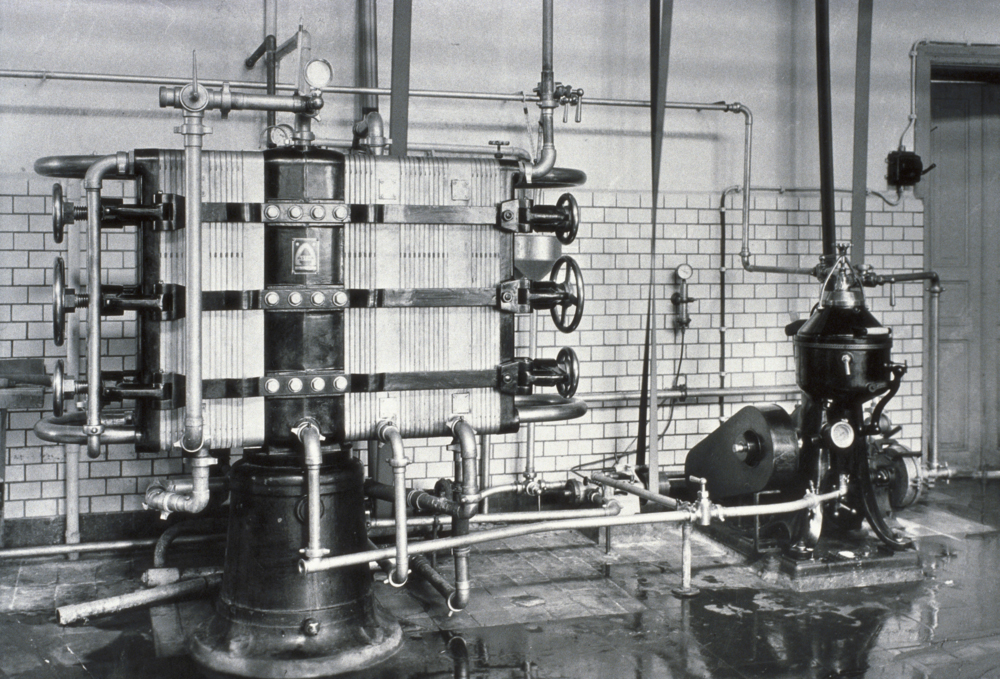
Alfa Laval is investing in what comes next. The global provider of heat transfer, separation, and fluid handling products recently announced a multi-year expansion of its Richmond-area facility in Henrico County that will double production capacity by 2028. The project includes increased automation, enhanced production capabilities, and workforce development initiatives, all aimed at meeting rising demand for its technologies across key industries.
Since its founding in Sweden in 1883 by Gustaf de Laval, Alfa Laval has been guided by a simple idea: Innovation should solve real-world challenges. The company’s earliest breakthrough, the centrifugal separator, transformed dairy production and laid the foundation for a global business that supports the energy, water, food, and manufacturing industries with products that help with heat transfer, separation, and fluid handling.
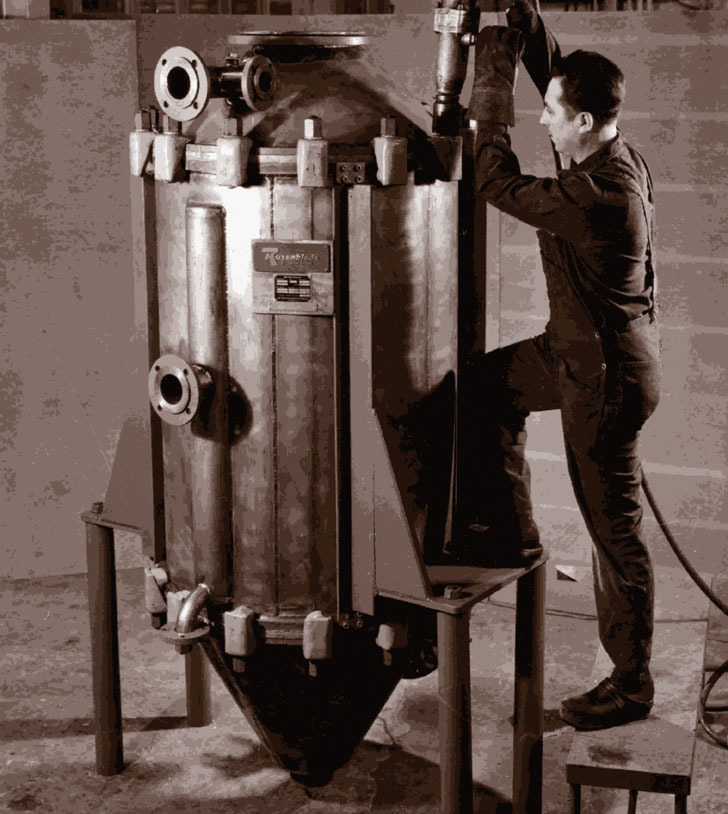
That mindset extended early to the United States, where Alfa Laval established a presence the same year it was founded. Its initial operations in New York and New Jersey supported rapidly modernizing industrial sectors. Over time, the company expanded beyond its dairy roots, developing technologies that improve energy efficiency, reduce waste, and enable more sustainable processes.
As the business evolved, so did its footprint. In 1990, Alfa Laval made a pivotal decision to relocate key U.S. operations to Henrico County, creating a centralized hub near Richmond International Airport. The move followed a competitive evaluation of locations including Baltimore and Charlotte, N.C., with Richmond standing out for its logistics advantages, access to talent, and supportive business environment.
Two decades later, Alfa Laval deepened that commitment. In 2010, the company formally consolidated its U.S. operations and established Richmond as its official U.S. headquarters, anchoring leadership, operations, and future investment in the region.
Today, the facility reflects that steady evolution. What began as a strategic relocation has grown into a dynamic hub supporting manufacturing, distribution, and service, enabling Alfa Laval to operate closer to its customers and respond more quickly to changing industry needs.
The latest expansion builds on that foundation. As industries continue to evolve, Alfa Laval’s technologies play a critical role in improving efficiency, supporting industrial processes, and helping customers operate more sustainably. By investing ahead of demand, the company is positioning Richmond to support continued growth and long-term customer needs.
“Richmond has been central to our growth in the United States, providing a strong foundation to scale and invest in the future,” said Alfa Laval President, North America Jan Debruyn. “The region’s workforce, infrastructure, and business environment enable us to evolve with our customers, advancing technologies that improve efficiency and support more sustainable solutions. As we look ahead, Virginia remains a key partner in our continued innovation and growth.”
More than three decades after establishing its presence in Virginia, Alfa Laval continues to build on its legacy — connecting a history of engineering innovation with a future focused on efficiency, sustainability, and growth.
From Prohibition to the “World’s Best Bourbon”
A. Smith Bowman Distillery
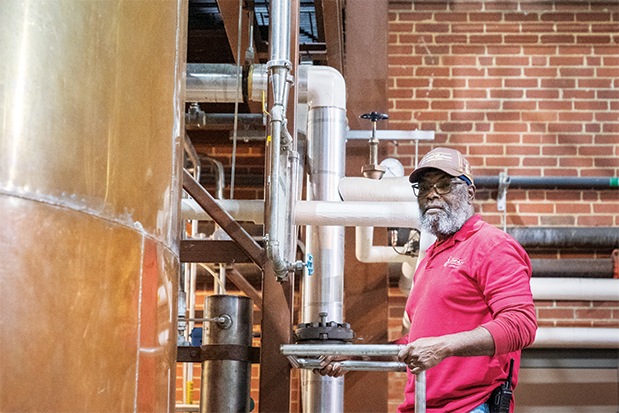
A. Smith Bowman continues to innovate in Spotsylvania County
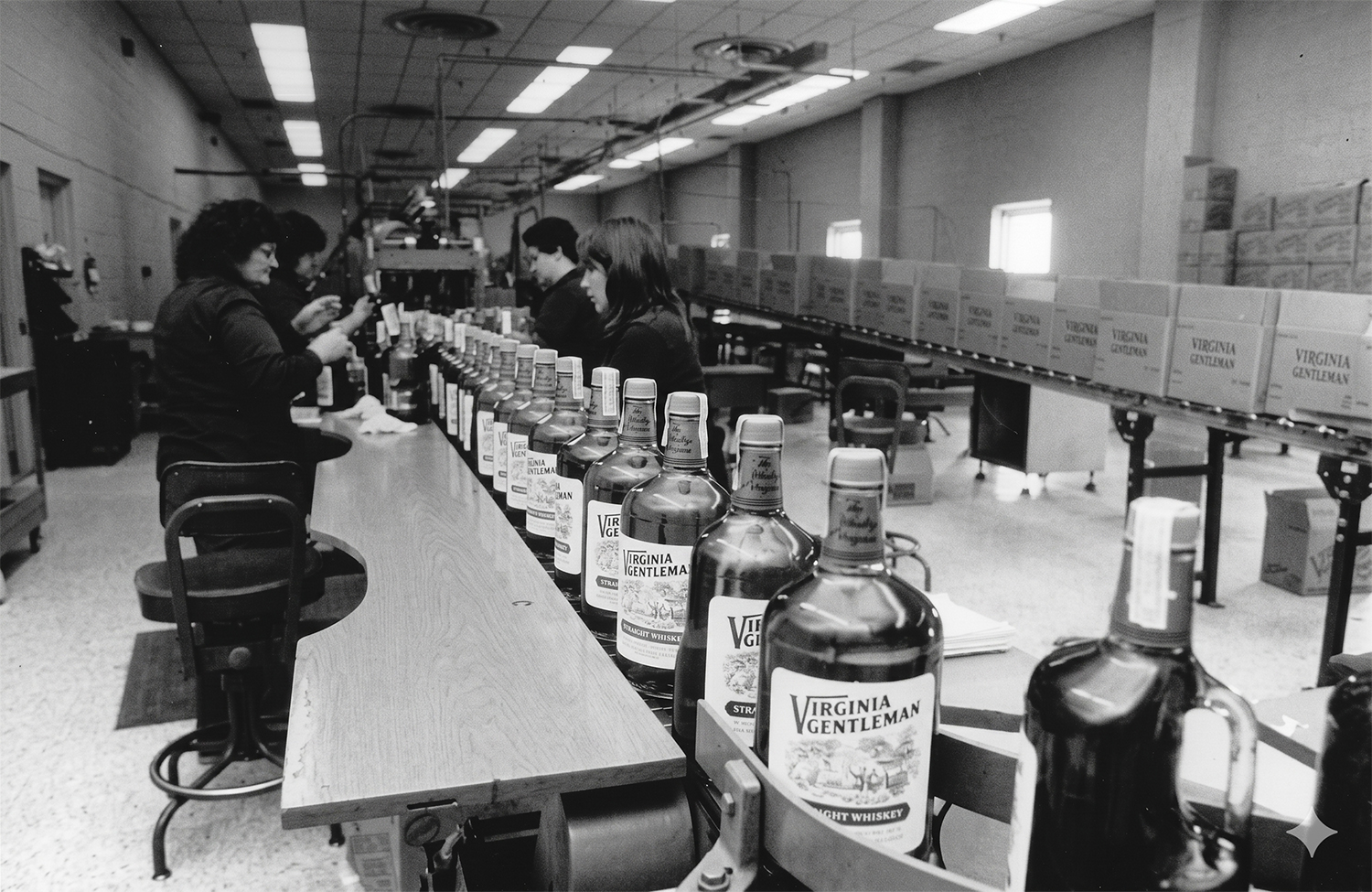
A possibly apocryphal story holds that Abram Smith Bowman, founder of A. Smith Bowman Distillery, went to the Fairfax County courthouse to register his company the day after the repeal of the 21st Amendment, which officially ended Prohibition in the United States. While that particular detail has proven difficult to confirm, what’s undeniable is that Bowman began producing what would become his signature product, Virginia Gentleman bourbon whiskey, at his property, Sunset Hills Farm, in 1934 — just about as soon as it was legal to do so.
What began as a way to make use of the excess grain produced at Sunset Hills has become one of Virginia’s most enduring food and beverage producers. A. Smith Bowman was the only producer of legal whiskey in Virginia until the 1950s. Since then, the company has undergone significant changes, notably a move from Fairfax to Spotsylvania County in 1988, into a building formerly owned by the Sylvania Industrial Corporation that was once the largest cellophane factory in the world. It still produces Virginia Gentleman but has shifted focus to premium small-batch and experimental spirits, including bourbon, vodka, gin, rum, and cream liqueur.
Those experiments haven’t always worked — Master Distiller David Bock told Virginia Living about a hot sauce whiskey that was “pretty disgusting,” but said that he kept the barrel to remind him that “it’s OK as long as you keep trying to make the best whiskey.” And through experimentation with mash bills, aging techniques, and production methods, A. Smith Bowman has done exactly that — twice. In 2016, Whisky magazine named the company’s Abraham Bowman Port Finished Bourbon Whiskey the “World’s Best Bourbon,” and bestowed the same honor upon its John J. Bowman Single Barrel Virginia Straight Bourbon Whiskey the next year.
Some of the company’s employees have worked there since the 1980s. Those ties to the past, among others — the company’s stills are named George and Mary, after Abram Smith Bowman’s parents — ensure A. Smith Bowman maintains a connection to its rich history as it innovates in its offerings.
Helping Americans Navigate Aging
Genworth Financial, Inc.
Genworth Financial evolves from Reconstruction-era beginnings
For decades, Genworth Financial, Inc., has been at the center of one of the most personal, and increasingly urgent, challenges facing American families: how to plan for and pay for aging care. The company was an early pioneer in long-term care insurance, building one of the largest blocks of business in the country and helping more than a million families prepare for a stage of life that, at one point or another, touches all of us.
Genworth traces its corporate lineage back to 1871, when the Life Insurance Company of Virginia first began serving families in Petersburg before opening a Richmond office that would become its home. Today, Genworth employs approximately 1,600 people across Virginia.
Its services are more vital than ever. More than 1.4 million Virginians are age 65 or older, representing over 16% of the population, and that number continues to grow. The fastest-growing segment over the past decade has been adults 55 and older, particularly those entering their early senior years.
The aging landscape today looks very different than it did even a decade ago. People are living longer, care is more complex, and costs continue to rise. At the same time, families are increasingly left to navigate those decisions on their own — often while balancing careers and raising children. Roughly 23% of U.S. adults now fall into the “sandwich generation,” caring for both children and aging loved ones.
That’s why Genworth is continuing to evolve and reshape its core services. Insurance remains a critical part of the equation, but it’s no longer the full solution.
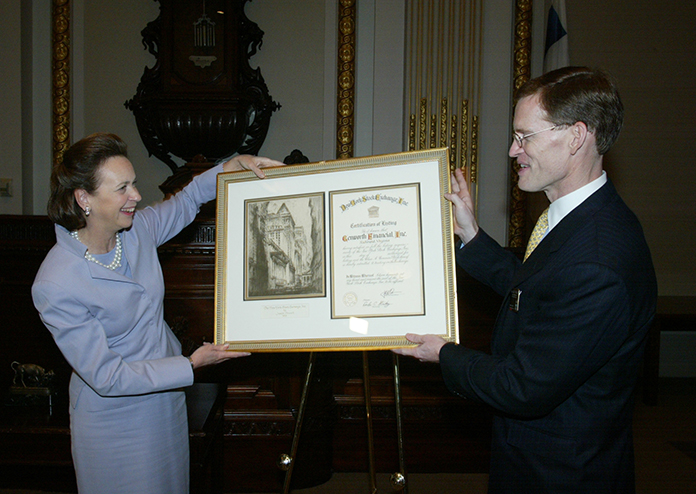
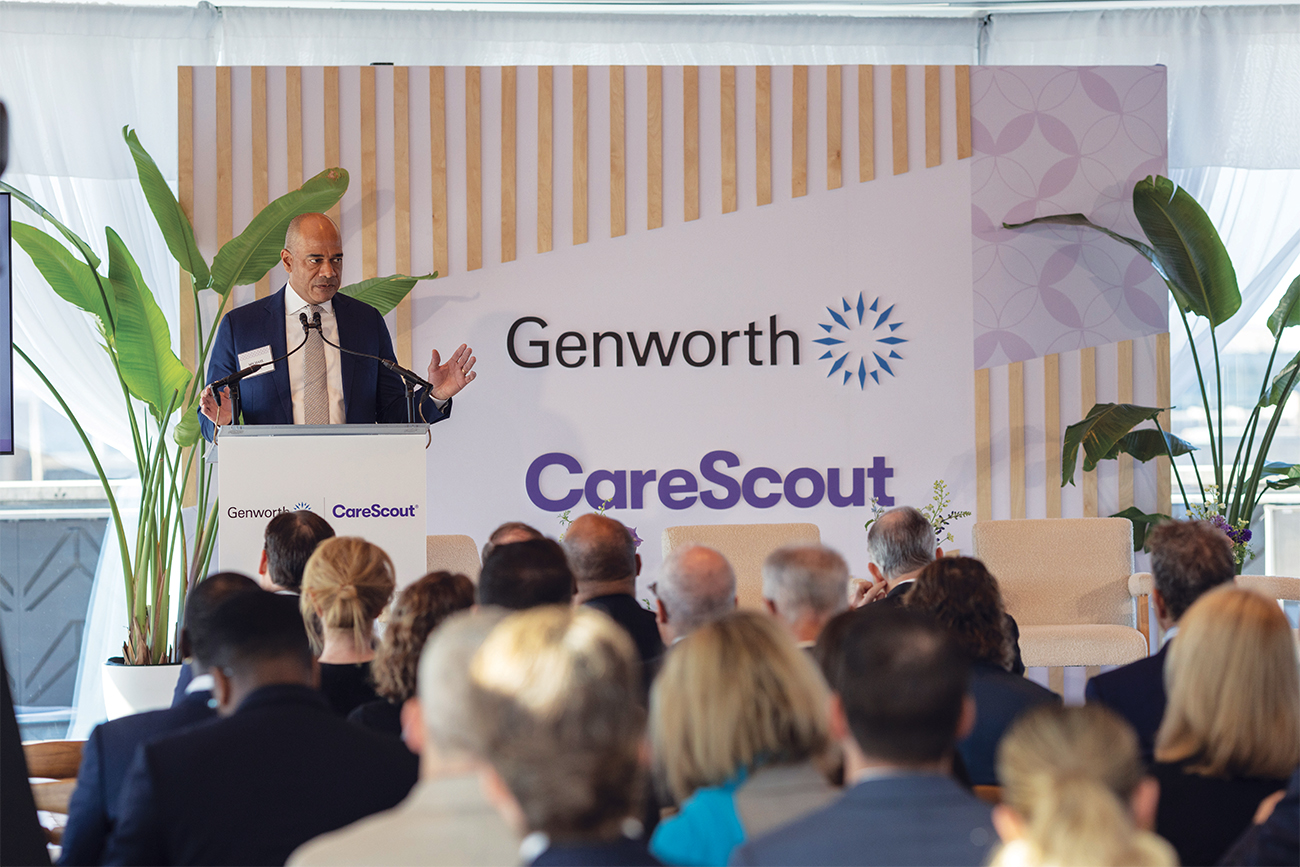
That insight is part of what led to the creation of CareScout: a next-generation business built to apply Genworth’s decades of data, expertise, and perspective to one of the fastest-growing challenges facing families, employers, and the broader economy.
Nationally, the population aged 65 and older is projected to grow by more than 40% by 2040, with the number of Americans over 85 expected to more than double. At the same time, the care system itself is under strain, with workforce shortages and limited supply already impacting access in communities across the country.
That pressure is what’s driving Genworth’s next chapter. The company is helping shape that future, using CareScout to translate decades of long-term care experience into a more modern approach to aging.
From Single-Truck Beginnings to International Service
Estes Express Lines
Estes Express Lines maintains its family atmosphere
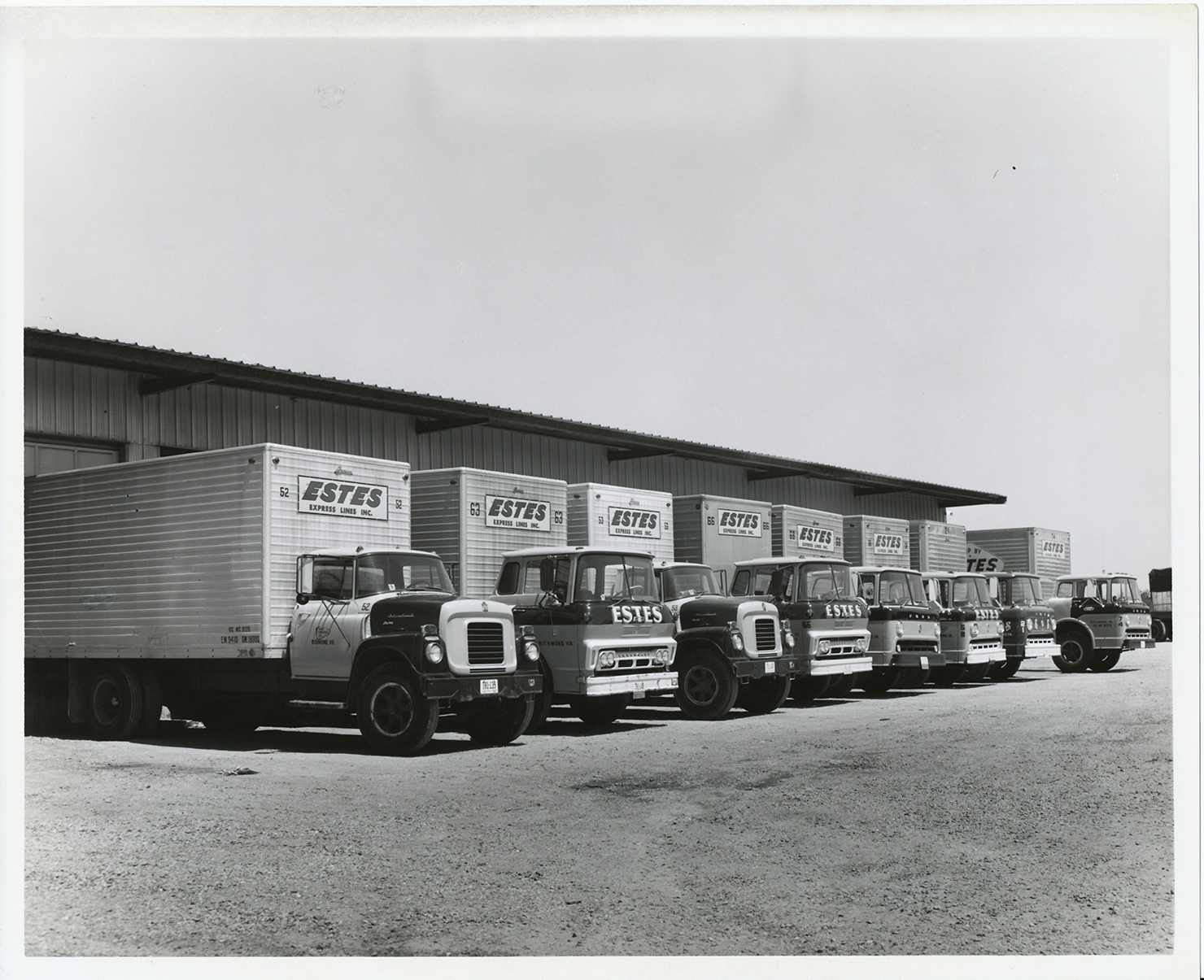
In 1931, W.W. Estes bought a used Chevrolet truck to haul livestock to market for his neighbors in rural Virginia, looking for a way to support his family during the Great Depression. He opened an office in Chase City, near the North Carolina border in Mecklenburg County, the following year. By 1937, Estes Express Lines was in business.
During World War II, Estes was able to expand the business through contracts with the U.S. military to transport and deliver military supplies. W.W.’s oldest son, Robey W. Estes Sr., joined the company full-time after coming home from World War II — and rather than inheriting a leadership position, W.W. insisted he serve as a driver, office clerk, shop foreman, and terminal manager before he became general manager. Similar expectations were later placed on current CEO Rob Estes and COO and President Webb Estes.
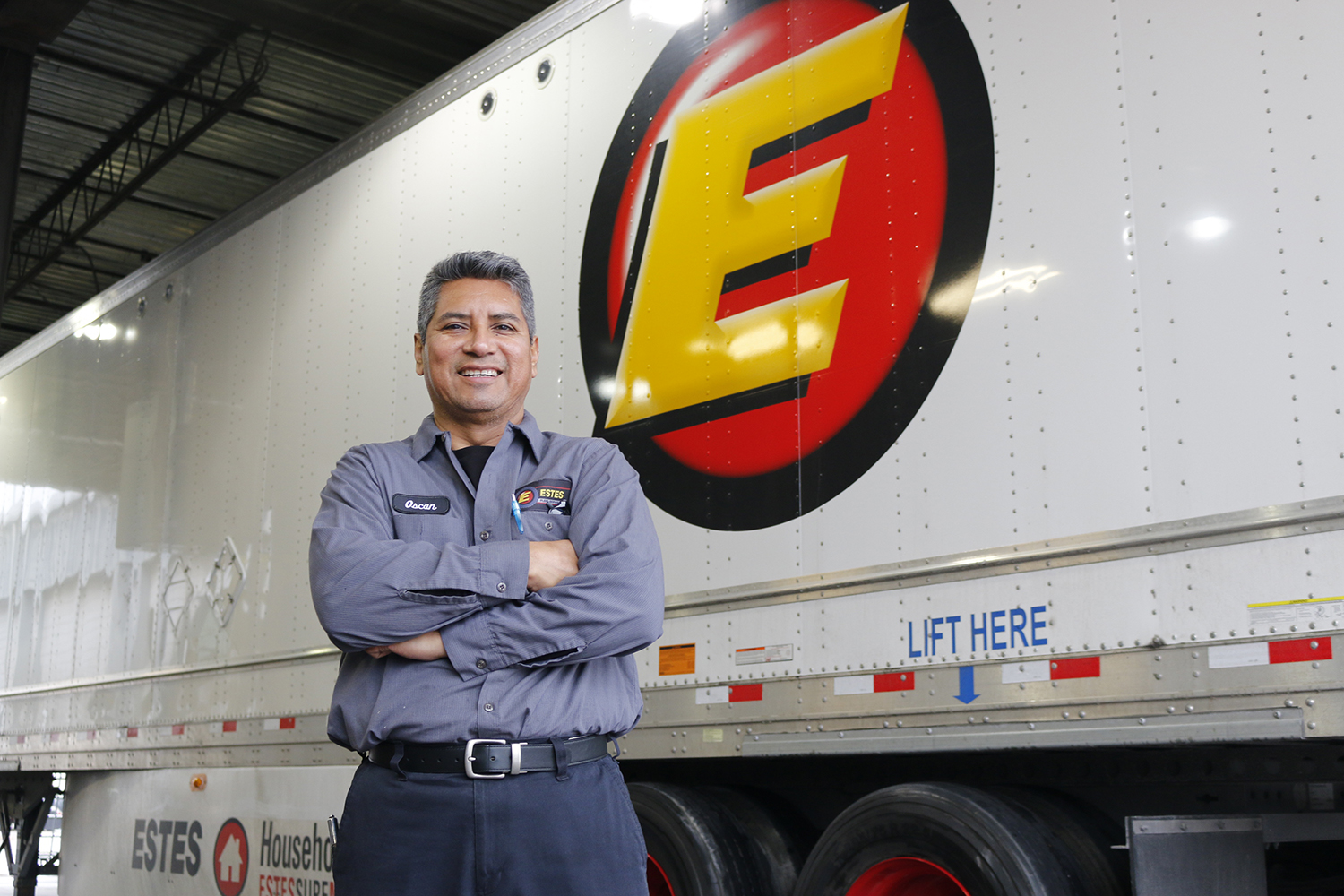
From the beginning, Estes has operated with a family-focused culture where leadership listens to employees, encourages professional growth, and celebrates accomplishments. From drivers to dock workers to headquarters employees, everyone plays an important role. Estes maintains a staff turnover rate of just 16%, well below the industry average.
While the company has evolved to provide its Time Critical Guaranteed shipping and tech tools like Pickup Visibility and the Appointment Research Tool, Estes is still focused on the same goal from 95 years ago: delivering confidence and peace of mind for its customers. Estes is also supporting its commitment to sustainability by finding ways to decarbonize, with initiatives including piloting carbon-capture systems, expanding the fleet with natural gas and electric trucks, and expanding solar capacity.
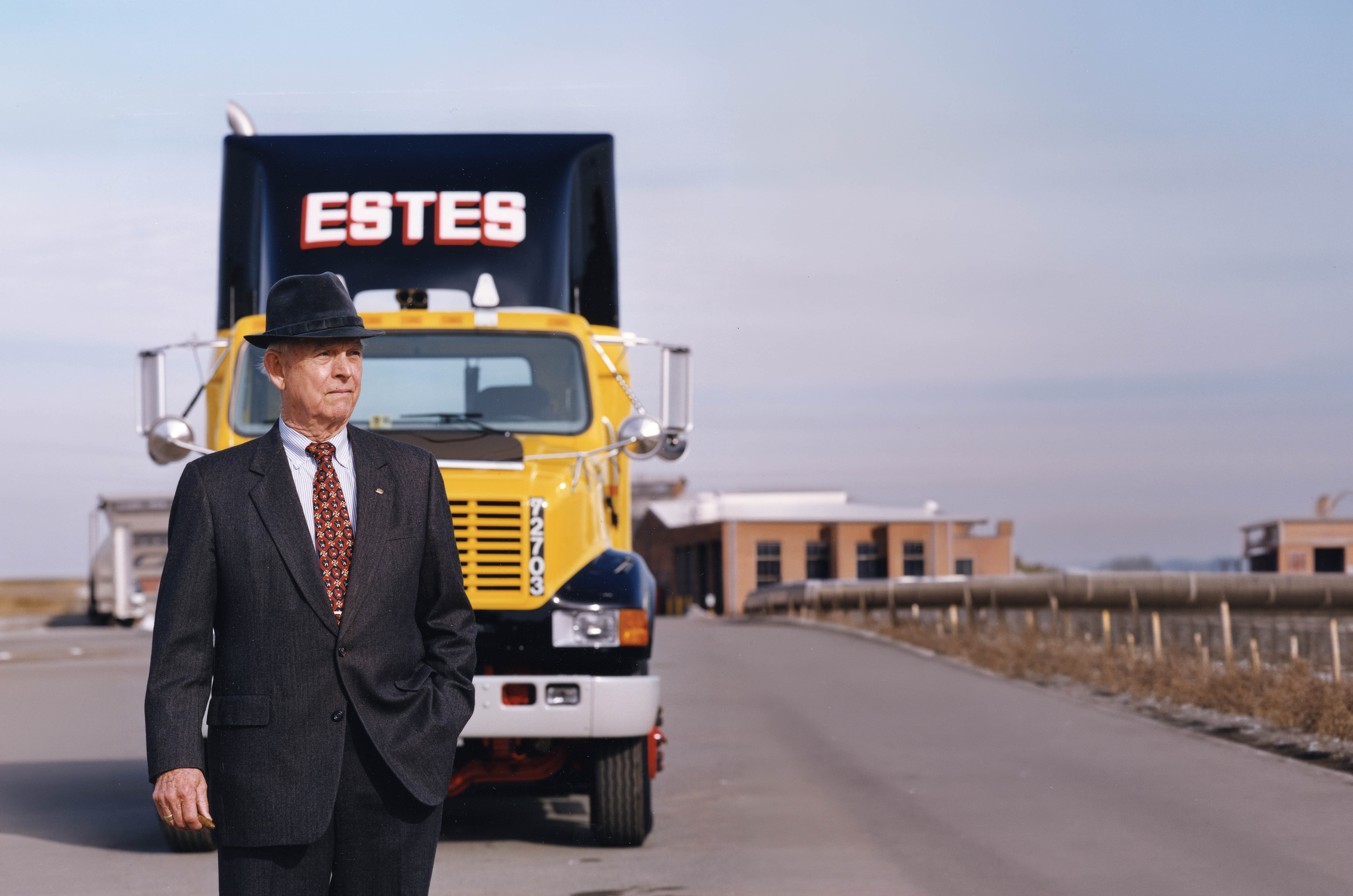
With 95 years in business and four generations of family leadership, Estes is the largest privately held less-than-truckload freight carrier in the nation. The company now boasts more than 24,000 employees, a fleet of 10,600 tractors and 42,000 trailers, and a network of more than 300 service centers with coverage in all 50 states, Canada, Mexico, and Puerto Rico, including eight Virginia locations in addition to its Richmond headquarters.