
The Importance of Agility: A Conversation With Tamara Fields
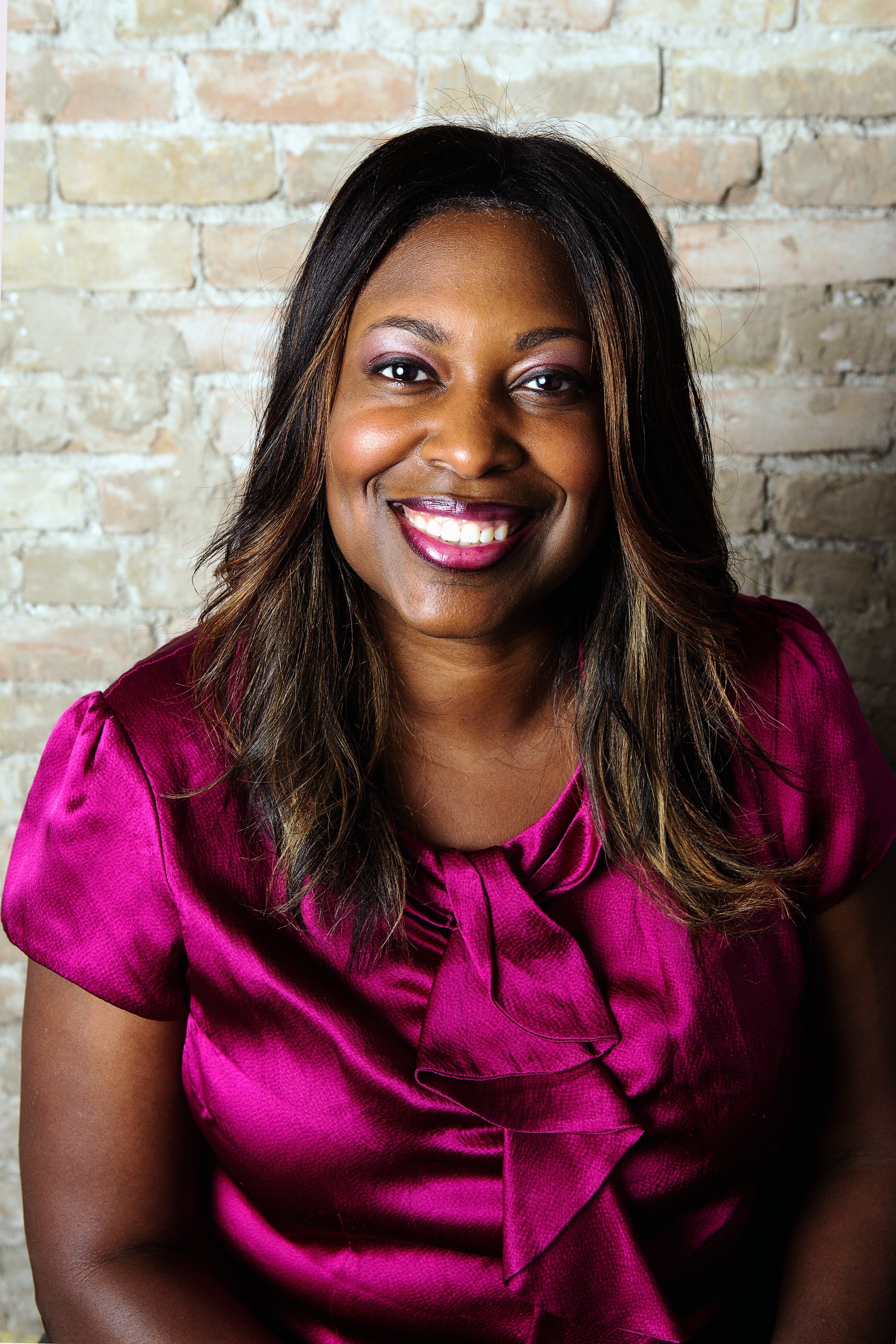
Tamara Fields is the national U.S. public service industry lead at Accenture, and managing director of the company’s Austin, Texas office. VEDP Vice President of Talent and Workforce Strategy Megan Healy spoke with Fields about new and traditional methods of upskilling, AI and its effect on the workforce, and the way companies can invest in their employees.
Megan Healy: Can you give us an overview of your work with Accenture? How does it intersect with the issue of talent in the U.S. workforce?
Tamara Fields: I’ve been with Accenture for 25-plus years, and I currently run our U.S. public service business. That includes all our state and local government entities, nonprofits, and higher education and K-12. I'm responsible primarily for helping governments, nonprofits, and higher institutions run more efficiently and accomplish their mission and goals, either through business process, strategy, or technology.
I’m responsible for serving these clients by delivering on the solutions, technology, strategies, and capabilities we've identified. I also identify and bring in talent and get them trained to be able to serve clients.
Healy: What has changed in those 25 years, and what's different about how you look at talent?
Fields: When I first started in this world, we were traditional in how we hired talent. You always had to go to a four-year institution or have an MBA or a Ph.D. Of course, we still obviously hire from a targeted set of what we consider Tier 1 schools, but over the years, because we've grown so large with our client base, we had to get innovative about talent. We shifted how we thought about skills needed and launched our apprenticeship program. That program became a big part of our talent strategy.
What's interesting about the apprenticeship program is you don't need a four-year degree. You can have a certificate from a community college or come out of some other type of certificate program. We bring you in and you shadow, do training classes, and we augment things you normally might have gotten through school. We do on-the-job shadowing, reverse shadowing, and really give people opportunities. One, they figure out if they really want to do this work, and two, we assess their skillset and capability. It gives us a new avenue of talent that can flow through our system.
The type of talent we need has really expanded. In the past, we always thought you needed computer science or some type of technical skill, but that's not the case. We hire math students. Believe it or not, we hire music students. They're really good with critical thinking.
Healy: What can companies do to deal with skill gap issues they encounter in recruiting? What do you think about upskilling and reskilling, and, to use the new hot term, next-skilling?
Fields: I think what's so interesting about skilling right now is you still have traditional formalized methods where you bring people together, sit them in a location, a city, an office, and have focused classroom learning for X number of days. You still need that for what I call enterprise skilling. But what I love about the way we approach skilling today is we really have embraced virtual skilling. We have immersive online training. We have on-your-own-time training. We have what we call just-in-time training — flash trainings where we do a spotlight Thursday and everybody jumps in and builds an agent together for an hour.
We've been using these different components and they create a full circle of training. But what I really like is on-your-own training, where they give you a platform to play in. Today, you have to be iterative, agile, and recognize that you need multiple elements and connection points of training to keep it alive and exciting for people.
Healy: You've spoken nationally about AI in the workplace. How are you implementing this at Accenture, and what does this mean for future talent?
Fields: We were the largest and fastest implementer of Copilot worldwide. We rolled it out to the world and said, “Everybody leverage and embrace Copilot,” and we activated it at the office level. We also activated it at our client project teams, and then we activated it within what we call our industry groups. At every level, we had activation moments where people came in and we’d demonstrate how you can leverage it for not just note-taking and meeting-taking, but writing emails.
I think it worked because we made it very practical. So, rather than overwhelm people, we gave them something to make their world better, easier, and more productive every day.
We have our own tool called Amethyst that anybody can use. You don't need a license, and that has really pushed adoption because people can just play. We have tools in our everyday work to manage, execute, and support technology systems. We roll those out in traditional ways and say, “Here's our new tool. We're expanding.” All of that is fueling adoption and utilization.
Healy: If you had every community college and university president in a room, what would you tell them about what's next for the workforce and what talent looks like for the future?
Fields: I'm a huge fan of public-private partnerships. What I would tell any university president is that you should be in partnership with key companies that recruit from you to say, “How can I, as part of our standard class execution, put students on the ground in your company, on a project doing work today, leveraging these technologies?” Because I want to give them real-time experience beyond just a summer internship. I want to make it active for them. I think it would be about incorporating new technology and its execution as part of the normal curriculum during the school year, fall and spring, and not just during an internship.
I would also remind them that they need to teach foundations and frameworks, but recognize that technology is moving so fast, they have to teach students how to learn quickly, pick up a technology quickly, and stay on top of rapid-moving technology, because it's coming out faster than every 90 days now. Most universities can’t turn an entire class curriculum in 90 days. What they can do is create an agile learning environment and teach students how to adapt and learn on the fly, which I think is the reality of how our alpha generation is already learning in school. They come out of the womb knowing how to operate a phone, and I think that ability continues all the way to college. You need this nimble, agile, rapid framework for learning, and I think college institutions can reinforce that with our next working generation.
Understanding how humans interact with technology is something you need to teach. We don't want them dependent. We don't want the technology to replace their innovation and critical thinking, because a lot of technology is regurgitated. Yes, it can fabricate launch pieces of data and it looks like it's creating something new, but it's still based on data frameworks. So, we don't want them to lose the originality, the creativity, the innovation that comes from us as humans at the helm of technology. We still fundamentally must teach critical thinking.
We don't want them to lose the originality, the creativity, the innovation that comes from us as humans at the helm of technology. We still fundamentally must teach critical thinking.
Tamara Fields, U.S. Public Service Industry Lead, Accenture
Healy: Your parents were both lifelong civil servants and you've spent your career serving federal, state, and local governments through your work with Accenture. How has that informed your career path?
Fields: My mother always worked in the court system — for the Court of Criminal Appeals, our highest court in Texas — and then she went to the federal court system. Seeing her be part of that, talking with her, I learned and gained understanding of the importance of the justice system to our civic responsibility and our civic reality. My father worked for the State Board of Insurance, and I saw their sense of responsibility, pride, and accountability. Showing up every day, knowing they're serving the state and the institutions and fabric by which we exist every day.
When you're in higher education, working for the state, city, or county, you’re serving the fabric of society. I'm a very faith-based individual, and I was raised with this concept of servant leadership. There’s no greater better servant leadership than civic leadership, right? I think because I went to my alma mater’s business school, the University of Texas at Austin, I recognized that I wanted to serve through a corporate lens because I like business, and I like understanding how business is aligning with service. I really love working in this consulting space because it allows me to bring the best of all of types of industries, knowledge, and market expertise and make it real on a practical level in a tactical way for governments, institutions, and those serving in that capacity.
I find it a privilege to serve those who serve. It appeals to the things that are important to me and how I was raised. I am thankful that I've had an opportunity to work in federal, in defense. I've had an opportunity to work in state and local. And now I get to see the full landscape of our country, the way our states show up. We are unique in the world. There’s no other government system like ours. It’s unique, original, complex, and it creates a lot of opportunity to have a voice. I think being part of that and knowing we can have impact is a privilege.
Healy: I love your passion for people and the mission and government. You're also so amazing at connecting the dots and having best practices you share with the country. What's the most important thing we haven't discussed that you'd like to tell us?
Fields: We’re in the middle of our own industrial revolution. The Industrial Revolution changed the way we showed up in life and work. We moved from agriculture to an urban society, we moved from large families to small families, from generational families on the same land to being spread apart. It fundamentally changed the way we functioned as people, as families. Technology now is doing the same to us, we're in the middle of it, and it's going to do that to us for the next decade. We've got to transform the way we teach and learn from kindergarten through 12, through the college systems, all the way into our government infrastructure, and we've got to set that landscape. Right now, we're a little behind the curve of what shifting needs to be done so that we're ready to embrace and leverage this technology as humans.
Healy: Thank you so much, Tamara, for being here today. We really appreciate all your insights and your advice.
Fields: Thank you for asking me.
For the full interview, visit www.vedp.org/Podcasts