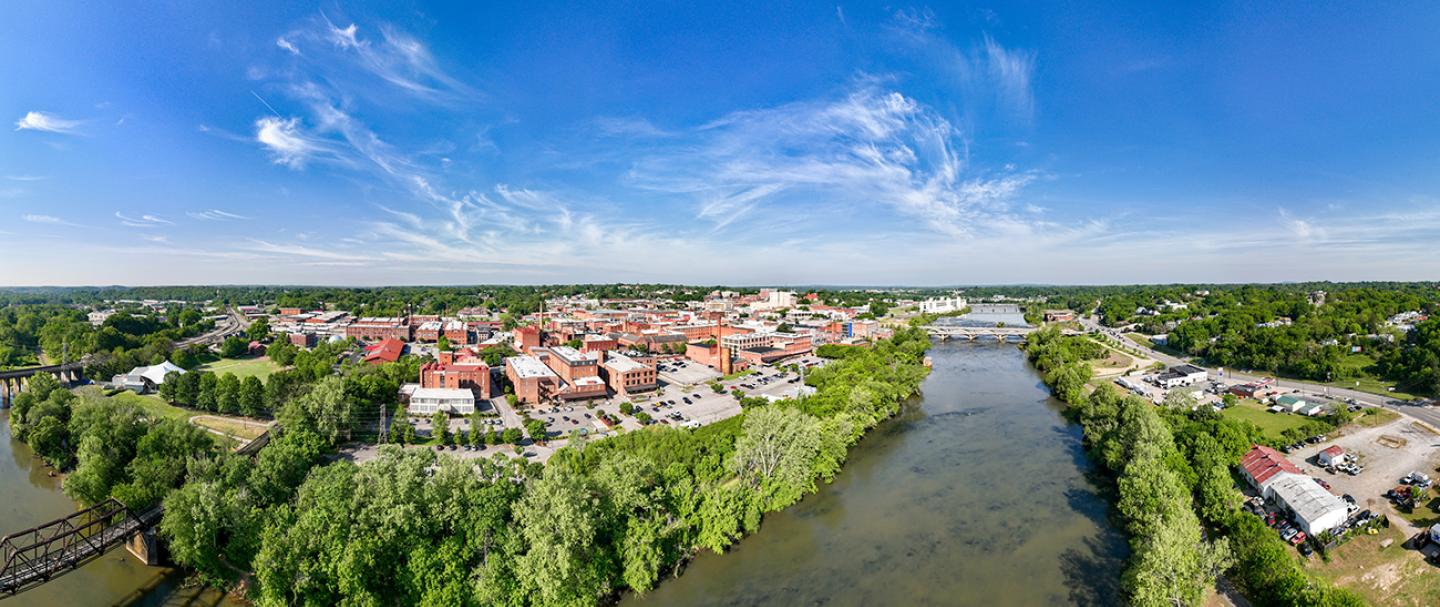
Southern Virginia’s Advanced Manufacturing Renaissance
Since Drake Extrusion opened a plant in Southern Virginia to make polypropylene fibers and yarns 31 years ago, the company weathered the collapse of the region’s traditional industry and global downturns and never laid off a worker.
“They’ll absorb the downturns to keep their workforce and not have to retrain them,” Henry County Administrator Dale Wagoner said. Drake CEO John Parkinson “would be too modest to ever say that to you.”
Soft-spoken resilience — the same could be said of the city of Martinsville, Henry County, and the Southern Virginia region.
For nearly a century, Southern Virginia residents thrived in a vibrant manufacturing center of furniture, textiles, and apparel, with the tobacco industry also providing steady employment. By the early 1990s, Martinsville’s mills produced 75% of the world’s sweatshirts.
It took less than a decade for that prosperity to unravel.
The NAFTA Effect
In 1994, the North American Free Trade Agreement (NAFTA) took hold, establishing a free trade bloc between the United States, Canada, and Mexico. Four years later, DuPont’s nylon factory, the largest in the world, closed as the company focused on ramping up its Mexico City operations. The following year, apparel manufacturer Tultex shuttered its Martinsville plant and moved its operations overseas. At the same time, the region’s once-thriving furniture industry was under pressure from Chinese competitors.
Within a decade, Southern Virginia lost an estimated 300,000 jobs, according to journalist Beth Macy of The Roanoke Times, who wrote her best-selling book “Factory Man” about the furniture industry’s collapse in the region. Many of those jobs were the sort that people in Henry County had worked from high school graduation to retirement. Unemployment rates doubled while the number of high schools was halved. “We essentially lost a generation in our community,” Wagoner said.
The nearby city of Danville and surrounding Pittsylvania County faced similar pressures with the decline of textiles and tobacco. Dan River Mills, the largest textile manufacturing facility in the South at the time, had dominated the city’s economy in the 1940s, employing roughly a third of its residents. In 2019, Danville developer Rick Barker told The Atlantic, “If you were here 10 years ago, it would have been obvious that we were a mill town without a mill. Now we’re becoming something else.”
Playing the Long Game
As the years went by, the region’s localities played the long game and diversified their economies. They purchased land, developing industrial parks and erecting shell buildings before potential investors were ready to build, sacrificing tax revenue to attract and grow industry in the future.
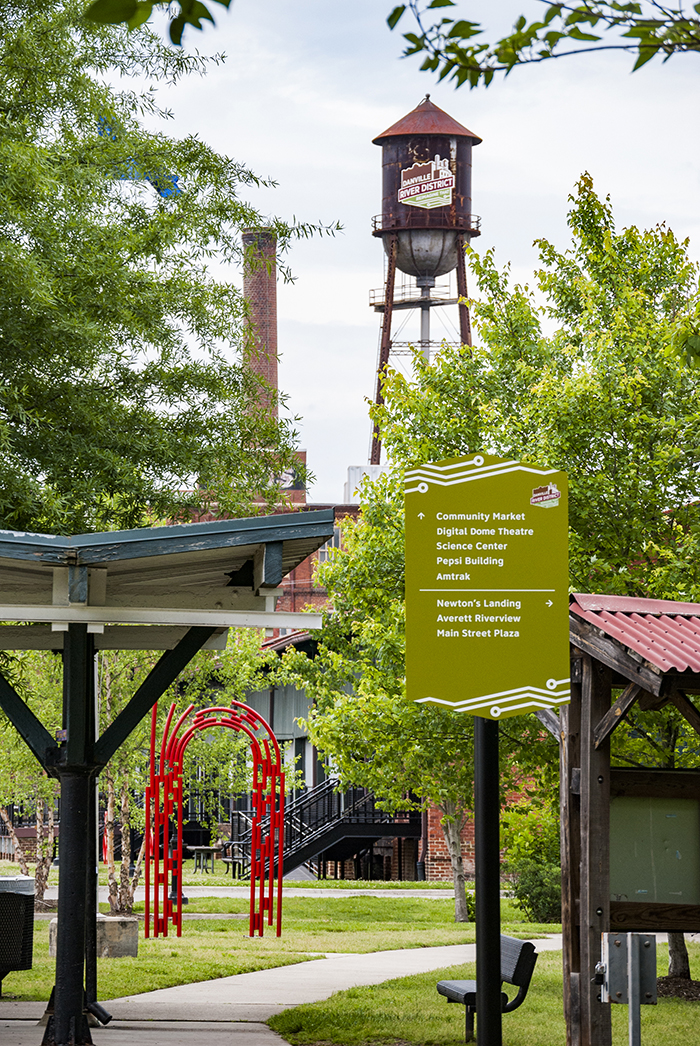
Danville’s revitalization plan focused on the huge tobacco warehouses that stood in the city’s downtown, near the Dan River. Public investment in the city’s River District was supplemented by significant private investments, reinventing the city’s downtown and earning the project the Great American Main Street Award, which recognizes successful revitalization of historic commercial districts, in 2022.
In 2012, only about 400 people worked or lived in Danville’s downtown. By 2019, that number had jumped to 6,000, according to Karl Stauber, then the head of the Danville Regional Foundation. Martinsville has seen a similar demographic shift — the city reversed its longstanding population losses over the past few years, with the biggest population swing from older to younger in the Commonwealth between 2020–2024.
In the Martinsville area, Henry County partnered with the Harvest Foundation and Patrick & Henry Community College — the foundation to invest in the community to make it an even more attractive place to work, and the college to develop training programs to support companies new to the region.
That coordinated action, supported by state and local economic development funding, made a difference because Henry County already had what has been a bedrock of its economy: residents who embrace hard work and new challenges.
In 2008, when a financial crisis shook the globe, county officials bought more land for industrial parks. “When the rest of the world was slowing down, we said, ‘Now’s the time we’ve got to invest in our future,’” Wagoner said.
The very dominance the region had once enjoyed in furniture and textiles had exposed the area to the risk of catastrophic collapse. Local officials invested to diversify the region’s industrial base.
A Boost from International Innovation
Individual companies have been nimble, too, so they can adapt to changing markets and global forces beyond their control.
That sort of innovation had its roots in the county’s traditional economy, Wagoner said. A local chemist, Julius Hermes, invented the process that led to window film, applied to glass to manage heat, block UV rays, enhance privacy, or add decorative elements. His company, Martin Processing, later became part of a global giant, Eastman, which has expanded its range of products in its Henry County facilities.
The need to innovate and diversify has led county officials to search the globe for companies that would make their home in Southern Virginia. Their search has paid off: Companies from eight countries have set up manufacturing in Henry County — and each time, Wagoner places a small replica of that country’s flag on his desk.
Southern Virginia is an attractive destination for global companies because of the local work ethic and its location, close enough to The Port of Virginia for trucks to drive round-trip in a day, and with ready access to highways in all directions.
It’s not just logistics that has placed the region’s economy on the global stage. Local leaders have learned from every industrial park and shell building created, each time making enhancements that attracted business.
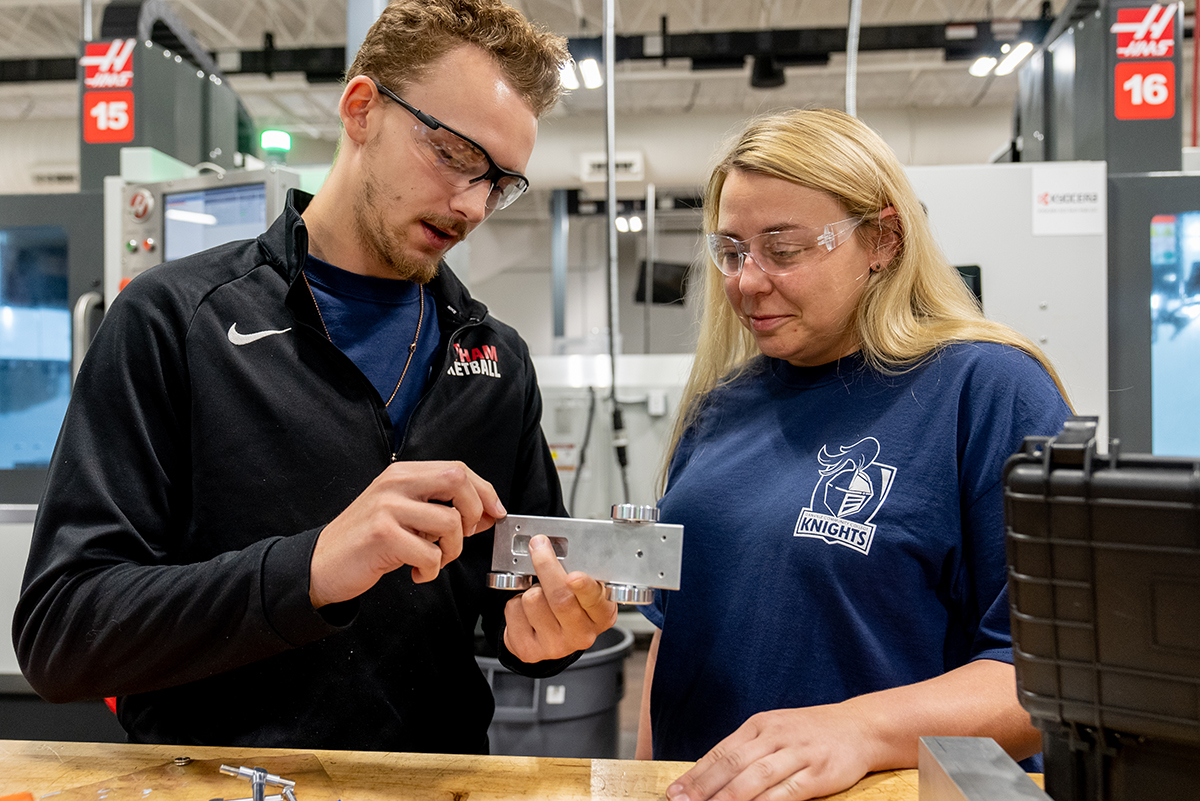
When the county built its latest industrial park along the border with North Carolina, Commonwealth Crossing, its leaders realized its community college was too far away to efficiently meet the training needs of prospective businesses, so they created the Commonwealth Center for Advanced Training (CCAT) at the park. “We built that building to give companies that want to locate there a place to begin training. That was a game-changer,” Wagoner said.
Danville and Pittsylvania County made similar investments into the Institute for Advanced Learning and Research (IALR), founded in 2002 with the goal of diversifying the region’s economy. IALR launched its Manufacturing Advancement division in 2018, offering an Accelerated Training in Defense Manufacturing program to prepare the region’s workers for jobs in the defense industry. The U.S. Navy opened an Additive Manufacturing Center of Excellence at IALR in 2022.
Shipbuilding manufacturer Austal USA runs the facility, buoyed by expertise from the company’s Charlottesville facility in laser power bed fusion, wire arc additive manufacturing, wire laser additive manufacturing, and cold spray additive manufacturing. Additive manufacturing is growing in the region, notably with the success of locally owned 3D metal printer Fastech, founded in 2018, and British manufacturer WB Alloys, which supplies Fastech and announced a new facility in Danville in 2025.
The Navy’s foray into Danville is just one example of Southern Virginia educational institutions thinking beyond the region’s landlocked geography to grow its economy. In Martinsville, the West Piedmont Higher Education Center, formerly the New College Institute, offers training programs to support the burgeoning offshore wind industry off the coast of Virginia Beach.
The economic ripples are spreading outward to other parts of the region. In September 2025, global electrification leader Hitachi Energy announced a $457 million expansion of its power transformer production facility in Halifax County that will make the plant the largest transformer manufacturing facility in the United States.
A New Breed of Manufacturers
In Henry County, CCAT’s success, along with ready sites, attracted two companies, Press Glass and Crown Holdings — the latter opening its factory in 2022 with 160 employees already trained. “We probably had one of the best startups Crown has had in the last 40 years,” said Bob Goforth, the plant manager until his retirement in April 2026.
Of its 179 Crown facilities worldwide, none have produced as many aluminum cans per minute in the past two years as the Henry County plant. Even when adjusted for the relative newness of its equipment, the plant is the second-most efficient in its division, Goforth said.
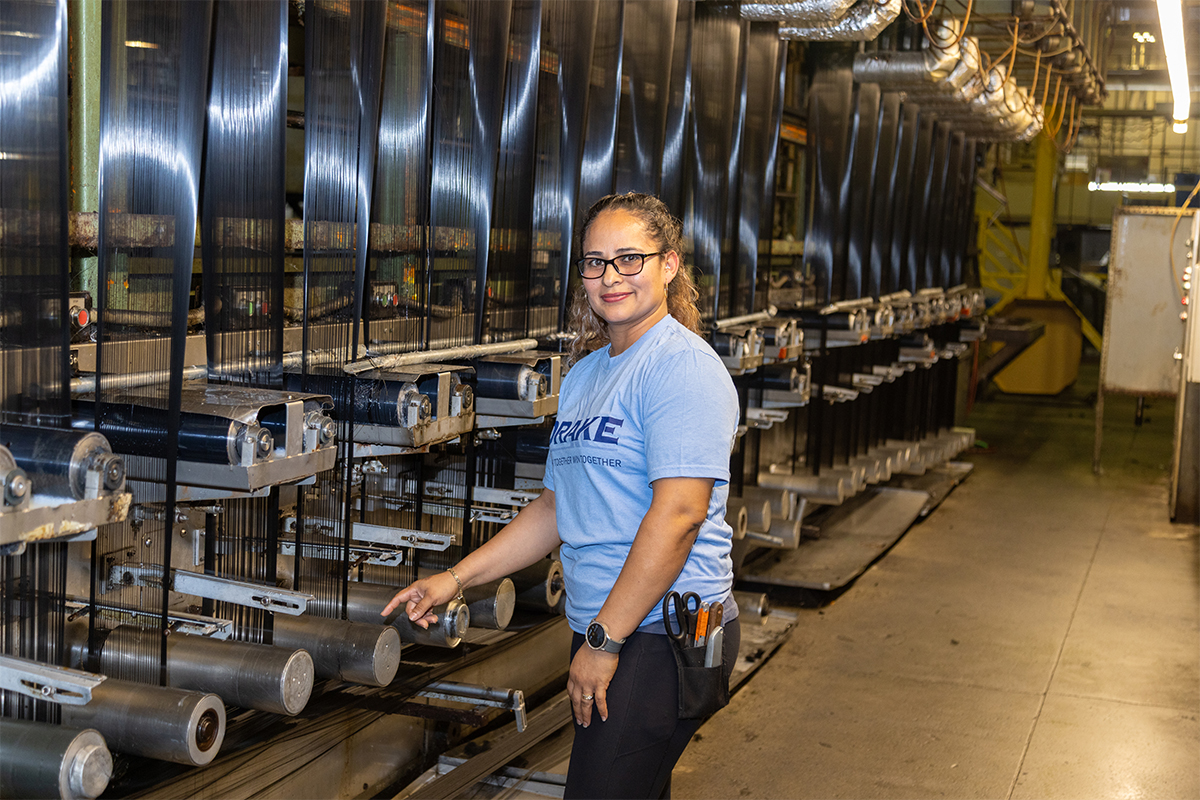
Newer manufacturers in Martinsville have joined forces with longer-time players who have proven themselves adept at adjusting to the needs of customers and the challenges of the marketplace — companies such as Drake Extrusion, which launched in 1995 and has become North America’s leading supplier of solution-dyed polypropylene fibers and yarns.
Parkinson has been there every step of the way, starting in the United Kingdom before making the jump with the company to Virginia. Within two years, Drake was making a profit as a small startup competing with subsidiaries of massive American petrochemical companies.
Being small turned out to be an advantage for Drake. The marketplace was changing and it was easier for the startup to adapt its equipment and processes to fill each new niche. Five years after it landed its beachhead in Virginia, Drake bought one of the American subsidiaries while the other was closed. “We became the largest producer in our marketplace within six or seven years of starting operations,” Parkinson said.
Drake selected Martinsville over other locations in the Southeast because the community offered training and a culture that knew and embraced manufacturing. The turbulence since was tough, but Southern Virginia survived the storm and built a wider base of manufacturing. Danville and Martinsville are reversing their economic fortunes with key investments to support a resilient workforce that was primed for reinvention.