A Broader Stage
Riggs Ward gets an export boost from VEDP’s trade assistance programs
Brent Ward likes challenging projects. As a co-founder of design firm Riggs Ward, his job is to help bring stories to life, through displays of artifacts, graphics, soundscapes, and interactive digital media. The Richmond-based company has created exhibits for museums like the Graveyard of the Atlantic Museum in Hatteras, N.C., and destinations like the Library of Congress’ new visitor experience center.
But as the business entered its third decade, Riggs Ward bumped up against one problem it seemed it couldn’t solve on its own: expanding into international markets. “We’re pretty well established in the United States,” Ward said. “But to get work overseas, it really feels like firms out of [major cities like] Boston, New York, or Washington are much more likely to get hired.”
About six years ago, Ward was asking local business contacts how he could get around this obstacle, as a firm located in Richmond. “I was told, ‘You know, VEDP offers all these wonderful programs to help you develop, expand your market, grow your business,’” he said. “And I looked online and applied for one of the programs and we got it! I was shocked.”
Since then, Riggs Ward has partnered with VEDP to explore the firm’s opportunities in the Middle East and Europe. Grant funding and expertise from VEDP have helped the company fund and power international market research, advertise in global museum trade publications and sites, and attend and exhibit at global conferences in Europe.
“It’s been a great experience,” Ward said. “Everybody is just incredibly helpful, and they give us some great information that helps us learn about different markets.”
A ‘Passion Project’ That Turned Into a Business
Riggs Ward began in 1997 as the brainchild of Brent Ward and Bob Riggs. Ward had a degree in architectural history and was working on a master’s degree researching the history of U.S. espionage in Latin America. Riggs had a design degree from Virginia Commonwealth University and had already done exhibit work for clients including the Library of Congress, Ward said. The pair met working for an advertising firm that did museum exhibition work on the side as a “passion project of the owner’s,” Ward recalled. When Ward and Riggs decided they wanted to focus exclusively on exhibit work, they left to form their own company.
In the company’s early years, budget constraints were an issue, and clients could be skeptical of higher-risk suggestions. Some clients were slow to trust them with bold ideas, because they had no track record showing they could pull off such big swings. “But it was never a big struggle,” he said. “The whole idea was to do things in a more exciting and interesting way.”
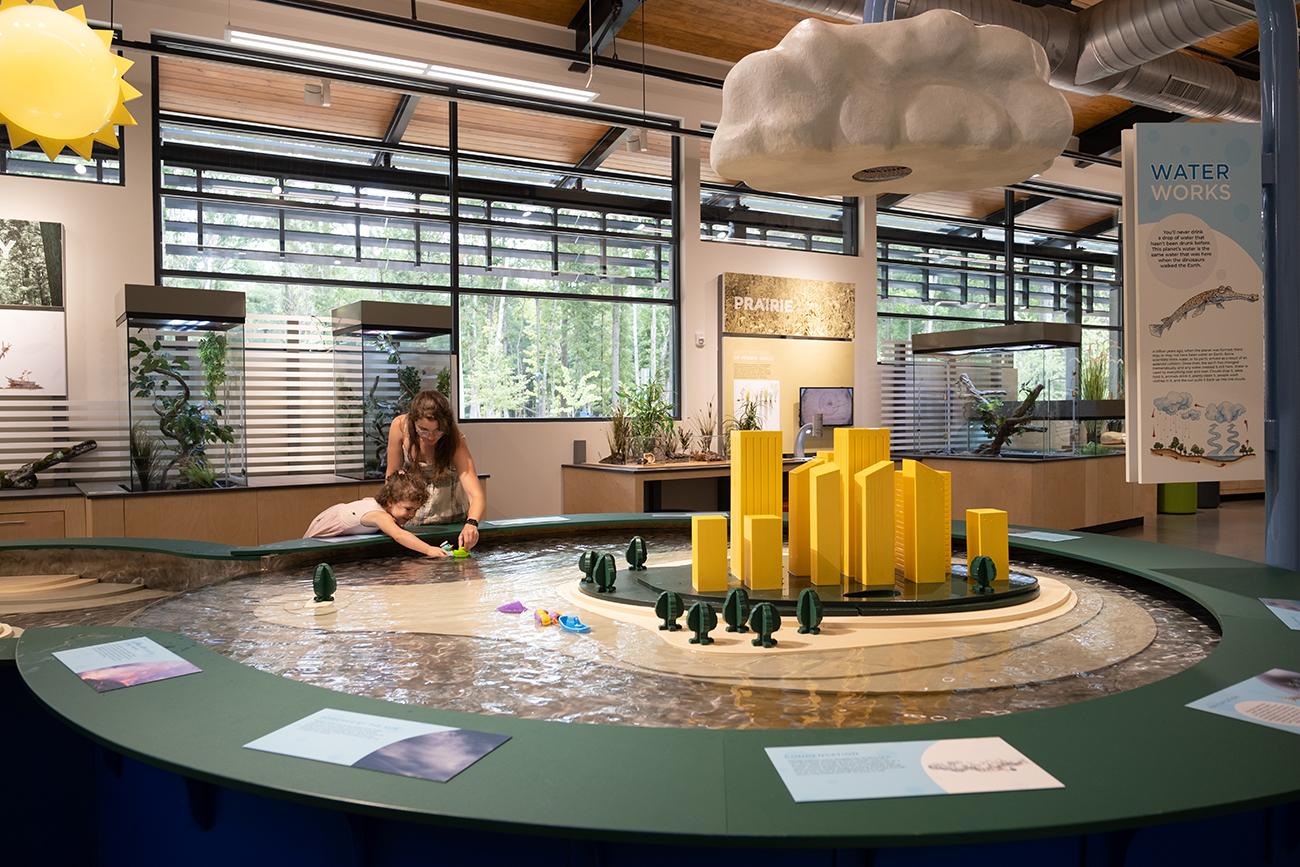
Over time, the firm’s client list has expanded from museums and visitors’ centers to universities, nonprofits, and other entities. For Feed More, a Richmond food assistance nonprofit, Riggs Ward designed a branded environment at the organization’s headquarters, including a history wall, donor wall, and other infographics meant to highlight the organization’s mission and culture. The firm has also completed more than a dozen projects for the University of Virginia in Charlottesville, including an indoor and outdoor exhibit design for the South Lawn Historic Site, honoring the original owners of the land.
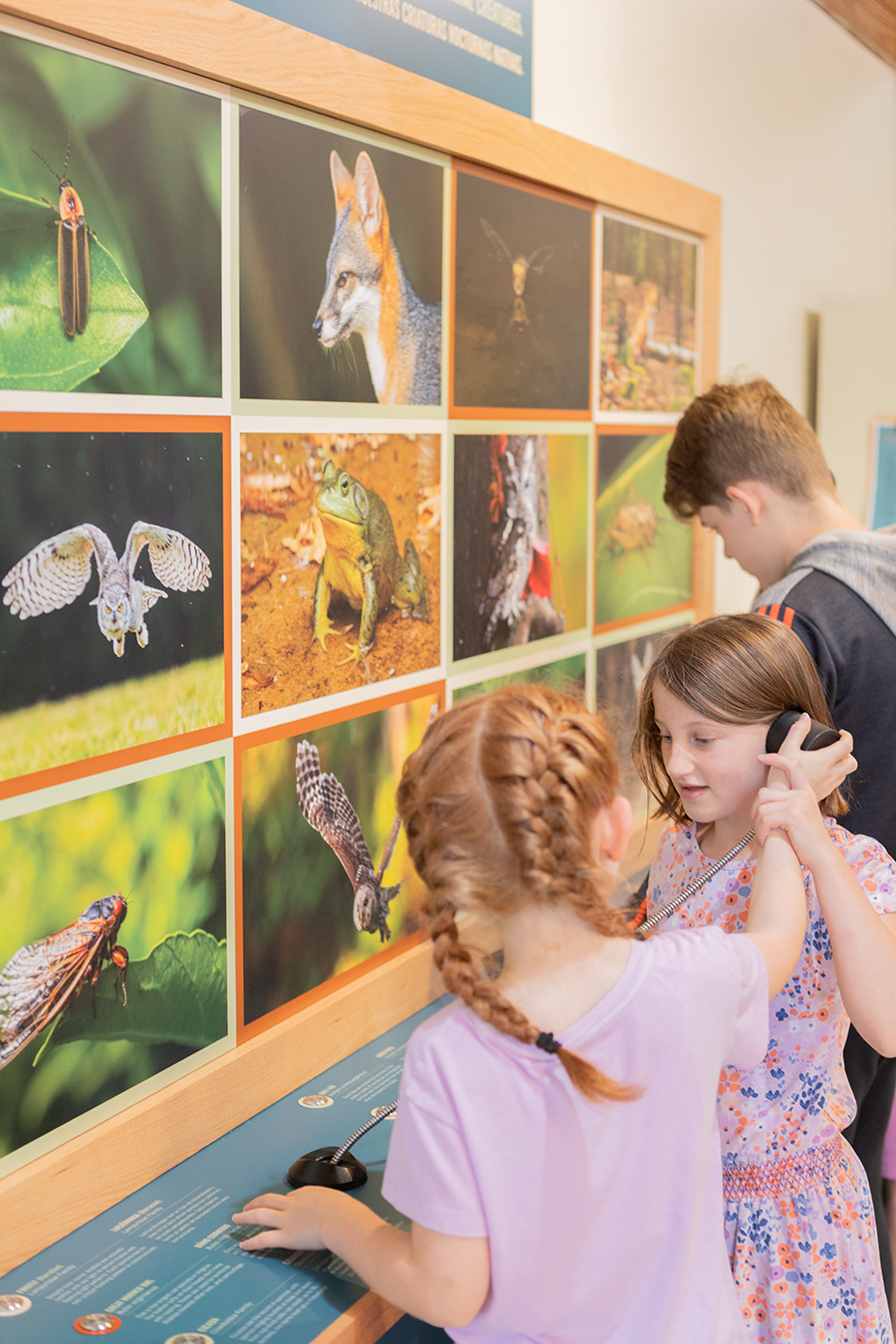
The work itself has evolved in ways they could never have predicted in the late 1990s. “We’ve morphed from being just a 3D studio, creating exhibits with casework and graphics and objects, to a studio that does a lot of interactive media as well,” Ward said. “That’s actually been pretty exciting.”
Recontextualizing History
A current project uses augmented reality to help visitors to Southampton County reach a deeper understanding of Nat Turner’s Rebellion, the 1831 uprising of enslaved people that took place there. Visitors on the Nat Turner Trail can stop at one preserved building from that era, click on the trail app on their phone, and see what that building looked like at the time of the rebellion, said Nick Gutkowski, a media and web developer at Riggs Ward. “It’s a combination of past and present in real time in a way that you can’t achieve in other formats.”
Clients approach the firm at many different points in the process, from requests as vague as a focus on a theme to specific visions involving binders of information and boxes of artifacts. Then various teams at Riggs Ward, from the designers to the multimedia experts, the historians to the content specialists, get to work fine-tuning the vision and creating an experiential story.
“We try to create something that’s impactful in the space,” Ward said. “When they give us these things, it’s our job to figure out how to make them compelling. How can we make this object come to life? How can we talk about the person who made it, or why it’s significant? How can we frame it so it gets the attention it deserves?”
Attention-Grabbing Designs
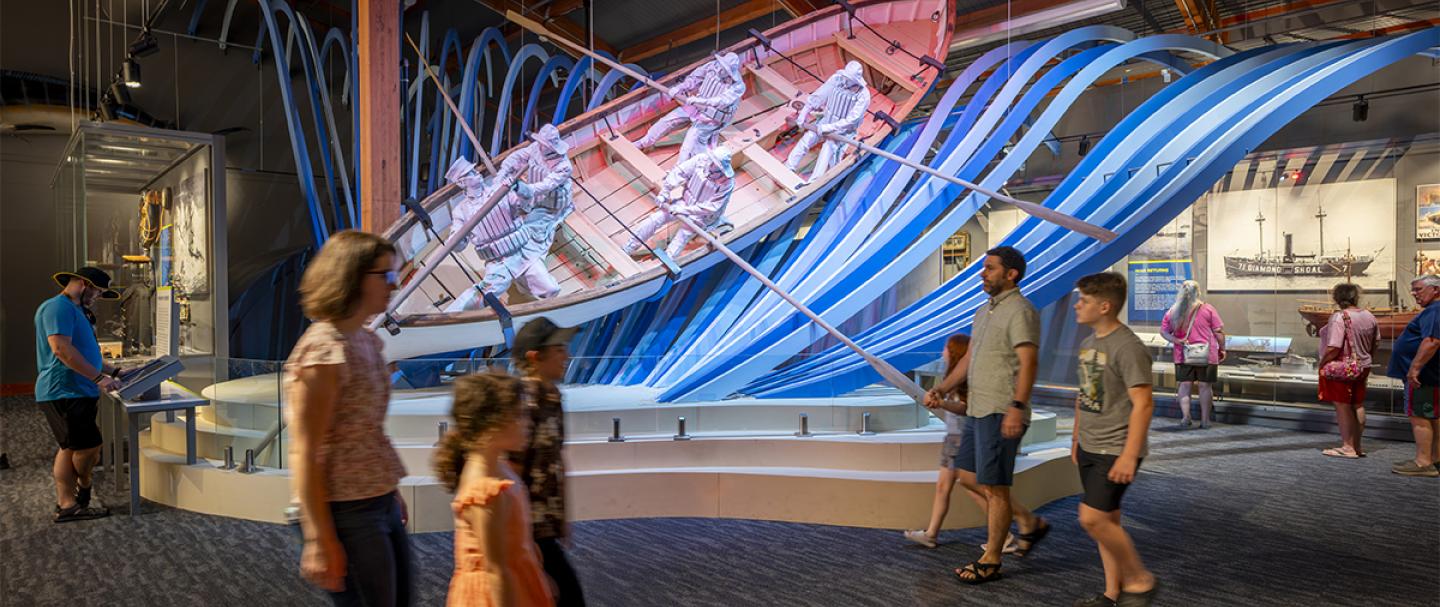
One recent example is the completed relaunch of the Graveyard of the Atlantic Museum. The museum’s name refers to the fact that the Outer Banks barrier islands have been the site of anywhere from 2,000 to 5,000 shipwrecks, making it one of the most dangerous coastlines in the world. The problem facing Riggs Ward, which designed the renovated exhibits: how to illustrate this? Specifically, what was the best way to grab visitors’ attention when they first entered the museum?
The firm decided to hang a rowboat front and center. It’s a so-called “lifesaving boat” used by locals to row out to wrecks and rescue people from the churning Atlantic. They cast figures for the boat, set wave forms underneath it, hung it from the ceiling, and shone light on it. “People just love it,” Ward said. “It’s the first thing you see and they’re like, ‘Wow!’ That makes them want to look through the museum even more.”
VEDP is now helping Riggs Ward take that expertise overseas by providing them with market research and helping the company make connections abroad. This spring, the firm will use a grant to attend a trade show in London through VEDP’s Trade Show Program, which provides eligible companies with up to $10,000 in reimbursements to exhibit at product-, service-, or industry-related events that occur outside of the United States or have a demonstrated international aspect. Such a trip would have been cost prohibitive without financial assistance, Ward said.
Setting the Stage for Global Growth
VEDP’s involvement has already yielded collaborative discussions with a large firm in Spain that does design work around the world, Ward said, and provided Riggs Ward with numerous points of connection in the Middle East. With Saudi Arabia hosting the World Expo in 2030 and the World Cup in 2034, there will be a great need for design work such as the Richmond firm can provide.
Riggs Ward can offer international clients a unique value proposition. Unlike many of its competitors, it does all the elements of the design in-house, which makes the process more streamlined and efficient. The company’s Richmond location allows it to provide value through efficiency and in-house capabilities.
Thanks to the VEDP trade grant, Ward looks forward to explaining this to potential international clients he meets in London. “In-person meetings and in-person relationships are incredibly important,” he said. “Virtual calls help, but they’re probably not going to put you over the threshold into getting work.”
Ultimately, he wants clients, both at home and abroad, to understand “we’re storytellers,” Ward said. “We like to tell stories in big ways, in authentic ways, and in truthful ways. That’s really what we’re all about.”