Behind the Rise of a Research Center in Roanoke
Investments from Virginia Tech, Carilion support critical studies in brain, heart, and cancer issues
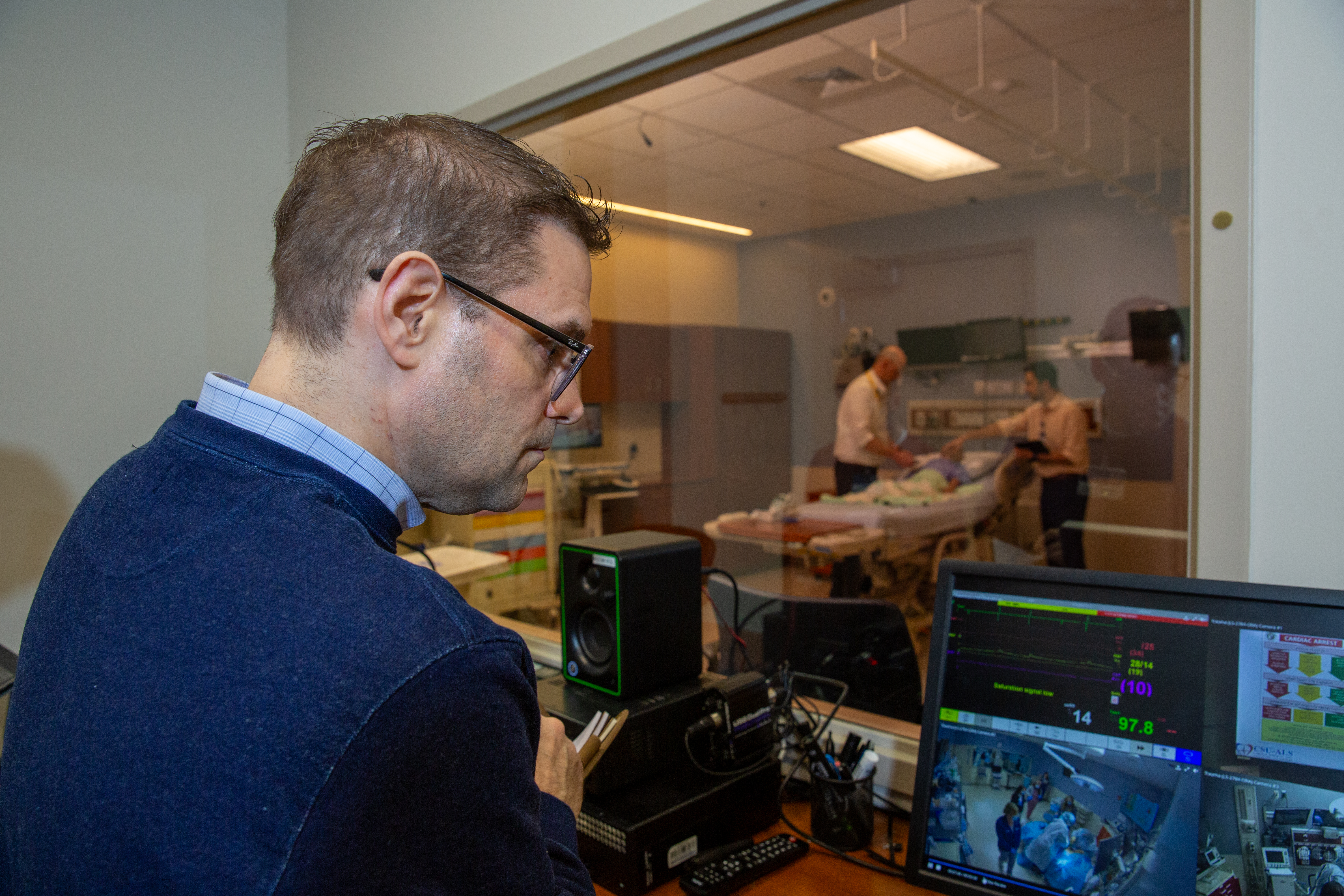
Carilion Clinic Usability Works, Roanoke
Jenny Munson has surprised herself by launching not just one, but two businesses. Neither would have happened, the scientist believes, if she hadn’t moved her research program to Virginia Tech and the western Virginia city of Roanoke.
“If I was not at Virginia Tech, I probably would not have started a company,” said Munson, a professor at the university’s Fralin Biomedical Research Institute at VTC (FBRI) and the director of the institute’s Cancer Research Center in Roanoke. She is also a co-founder of Cairina, a medical image analysis company that leverages fluid flow to guide cancer therapy, and Lympha Bio, a biotech startup that develops human microphysiological models of the lymph node to support immune-relevant drug development.
At her previous institution, she stuck to her research in biomedical engineering. After being recruited to FBRI, she saw a new way to move her research from the lab into clinical use. Once settled at the Fralin Institute, “You start hearing, ‘This person started a company, and this other person started a company,’” she said. “And then you start thinking, ‘Okay, if others are doing it, it can’t be that bad.’ And then that excitement builds and you go, ‘Sure, let’s try something new.’”
AN EMERGING MEDICAL RESEARCH HOTSPOT
Tucked away in the Blue Ridge Mountains, Roanoke’s biotech and life sciences industry has blossomed into a dynamic, research-based ecosystem that thrives on collaboration, innovation, and the freedom that comes from being a bit off the radar.
At the heart of that ecosystem is FBRI, located on the Virginia Tech Carilion Health Sciences and Technology campus the university shares with Carilion Clinic, a nationally recognized health system based in Roanoke. Founded in 2010, it now has a staff of about 700, including 44 faculty research team leaders working in the development of new technologies for human brain disorders, treatments for heart disease, and cancer therapeutics, including state-of-the-art cell and gene therapies.
At a time when other academic medical centers and institutions are shrinking their cohorts of entering grad students or freezing faculty hiring, FBRI is growing. The institute’s Translational Biology, Medicine, and Health graduate program welcomed 24 doctoral and five master’s students this year — among its largest cohorts yet. The institute also plans to add five new faculty members in 2026.
“Our philosophy is to keep going, particularly when we are on the cusp of translating foundational scientific discoveries into powerful new strategies for disease prevention, diagnostics, and therapeutics,” said Michael Friedlander, FBRI’s executive director and vice president for health sciences and technology at Virginia Tech.
Friedlander said he understands why some other institutions have taken a wait-and-see approach: federal funding that was the bedrock of scientific research for decades has become uncertain. But he noted that FBRI is continuing to build on the success of Virginia Tech’s biomedical research enterprise, confident that the research institution’s focus on major contemporary health issues such as cancer, brain diseases, heart disease, and metabolic health speak to urgent, enduring medical needs. “Sitting back is not an option,” he said. “Patients and their families are waiting for improved health from scientific innovations. If research productivity starts to slow down, the organization will also become less attractive as an educational and training destination. We are obligated to stand up and say, ‘We should keep America competitive.’”
True to his word, FBRI has plans for continued growth, while Virginia Tech launched a new clinical research enterprise in 2025. Supported by a $30.5 million state investment, the Patient Research Center accelerates patient-based clinical research through VT investigator-initiated and industry-initiated trials in neuroscience, cardiovascular health, and cancer.
CAPITALIZING ON VIRGINIA TECH’S STRENGTHS
FBRI leadership has worked to make the case to government officials and philanthropic backers alike that investing in the science underway at Fralin is investing in the future of improved health for the region and the nation.
“It’s not only good because it’s the right thing to do,” he said. “It’s a good investment on many levels.”
What makes this possible is that Virginia Tech agrees. The university “is led by people who have a long-term vision and are seriously committed to it,” he said.
When FBRI and VTC opened in 2010, it was clear they would have to develop a strategy to differentiate themselves from a backdrop of many long-established major academic medical centers. So FBRI and the VTC School of Medicine leaned into the strengths they already had in Virginia Tech and decided to focus on a few key areas where impact would be greatest.
The university boasted robust physical and life sciences and engineering programs, so the institute would encourage cross-disciplinary research and exchange. For instance, at FBRI, faculty are organized not by traditional academic departments, like chemistry or psychology, but by thematic groups like brain research or cancer. “It’s given us a real leg up to be able to be out front on a lot of things that are otherwise challenging,” he said.
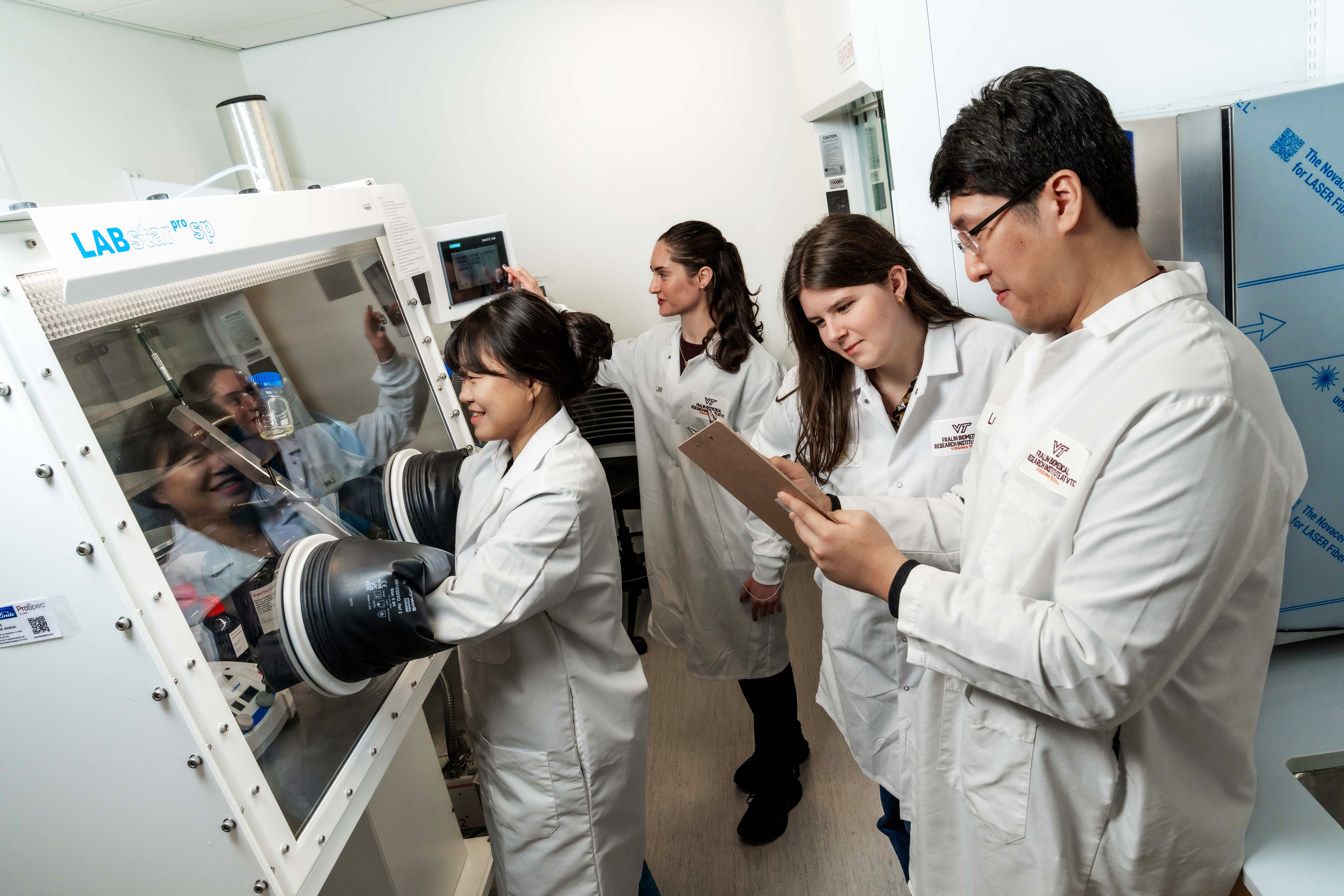
Fralin Biomedical Research Institute at VTC, Roanoke
THE POWER OF COLLABORATION
Sally Allain, FBRI’s chief health sciences growth and innovation officer, says that thematic structure makes the institute a dynamic place to conduct research and learn.
“The cross-collaborative nature of the principal investigators at FBRI is something special that you don’t necessarily see at a lot of biomedical research institutes,” she said. “Individuals are collaborating on really big research challenges, taking a multi-discipline expertise approach.”
The result is that the FBRI is one of the fastest-growing institutes in the United States.
This dynamism also extends to the institute’s entrepreneurial culture. “We have a pipeline of spinouts and small companies, and the portfolio is growing,” she said.
Among these is the Tiny Cargo Company, launched by Fralin researchers, which isolates exosomes in cow’s milk for use in pharmaceutical, cosmeceutical, and nutraceutical applications. The company recently opened a $1.5 million manufacturing facility in Roanoke that is among the first dedicated exosome manufacturing sites in the world. Tiny Cargo has raised more than $5 million in seed funding and secured over $3 million in non-dilutive funding.
Starting a company in a smaller city like Roanoke has challenges, said Robert Gourdie, director of FBRI’s Center for Vascular and Heart Research, and founder and president of Tiny Cargo. The Roanoke market is still emerging from a venture capital and expertise perspective, which affects factors as diverse as the pool of intellectual property lawyers and CEO candidates.
But the region more than makes up for those factors in vision and support, Gourdie said, with particular praise for Friedlander, a neuroscientist himself who possesses a critical understanding of the research underway at FBRI, along with an engaging personality to court potential funding.
“I’ve never come across anyone quite like him,” Gourdie said. “He’s provided a very stable home and platform, while also creating energy and surrounding us with energetic and bright people to spur us on.”
The Roanoke community has also been a significant asset.
“Most of the investors in Tiny Cargo are people within this region, and they’re very engaged and want us to do well,” he said. “It’s been extraordinary, and a privilege, to have the interest of these folks and to have their support. They are almost willing our success.”
That’s one of many reasons Robert Turner moved to Roanoke last fall, to join Carilion Clinic’s new Usability Works center as its inaugural managing director.
“It really feels like a phenomenally innovative, powerful place,” he said.
There’s an “absolute abundance” of accelerator and mentorship programs, as well as research, prototyping and development capabilities in the area.
“That’s on top of the culture already existing here that’s innovation-driven, disruption-driven, and has really rallied around the medtech, biotech industry and domain as the backbone of the ecosystem locally,” he said. “This area is on fire in terms of enthusiasm and talent.”
[There’s a] culture already existing here that’s innovation-driven, disruption-driven, and has really rallied around the medtech, biotech industry and domain as the backbone of the ecosystem locally. This area is on fire in terms of enthusiasm and talent.
Rob Turner
Managing Director, Carilion Clinic Usability Works
MAKING SURE TREATMENTS WORK FOR PEOPLE
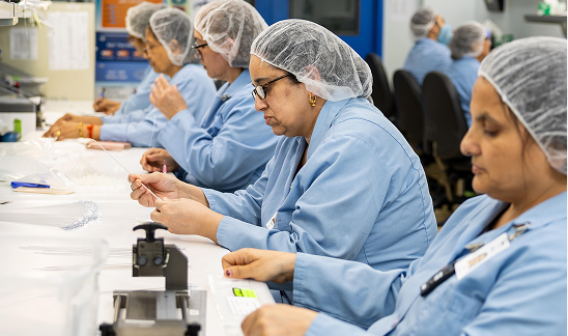
Blending human factors, cognitive science, biomechanics, and advanced simulation, Usability Works is meant to fill a key gap in regulatory and human-centered design support, helping troubleshoot issues that can arise from the way end users interact with any given product.
A joint effort of the Commonwealth and Carilion Clinic, the for-profit Usability Works helps to take clients’ ideas from concept through prototyping, toward regulatory clearance and commercialization, Turner explained. This means that local startups can stay in-house for such services and are spared the time and expense of contracting out to a third-party usability testing facility.
“That’s a direct benefit to startups and innovation groups who would normally find those things huge barriers to regulatory alignment and compliance,” Turner said.
Neither of Jenny Munson’s fledging companies is at a stage where it could use such a service, she said, but they have already benefited from what the local research and entrepreneurial ecosystem has to offer. She participated in programs like Roanoke’s Regional Accelerator and Mentoring Program (RAMP), a service from the Roanoke Blacksburg Innovation Alliance, where she was paired with a mentor and attended sessions on topics like how to run a company and how to assemble a pitch deck for potential investors. She’s also been surprised and delighted to see how many local mixers and events are directed at entrepreneurial scientists like herself. “Once you have your eye out for it, you realize how much there is,” she said.
Above all, though, she appreciates the enthusiasm and supportive nature of both FBRI and the larger community. “It is nice, when you’re doing something that’s new and a little scary to know that you have people who have your back.”