Dulles Prepares for Pharma Growth Through Brussels Partnership
Trans-Atlantic super-corridor will serve biopharma manufacturing hotspots in Belgium, Virginia
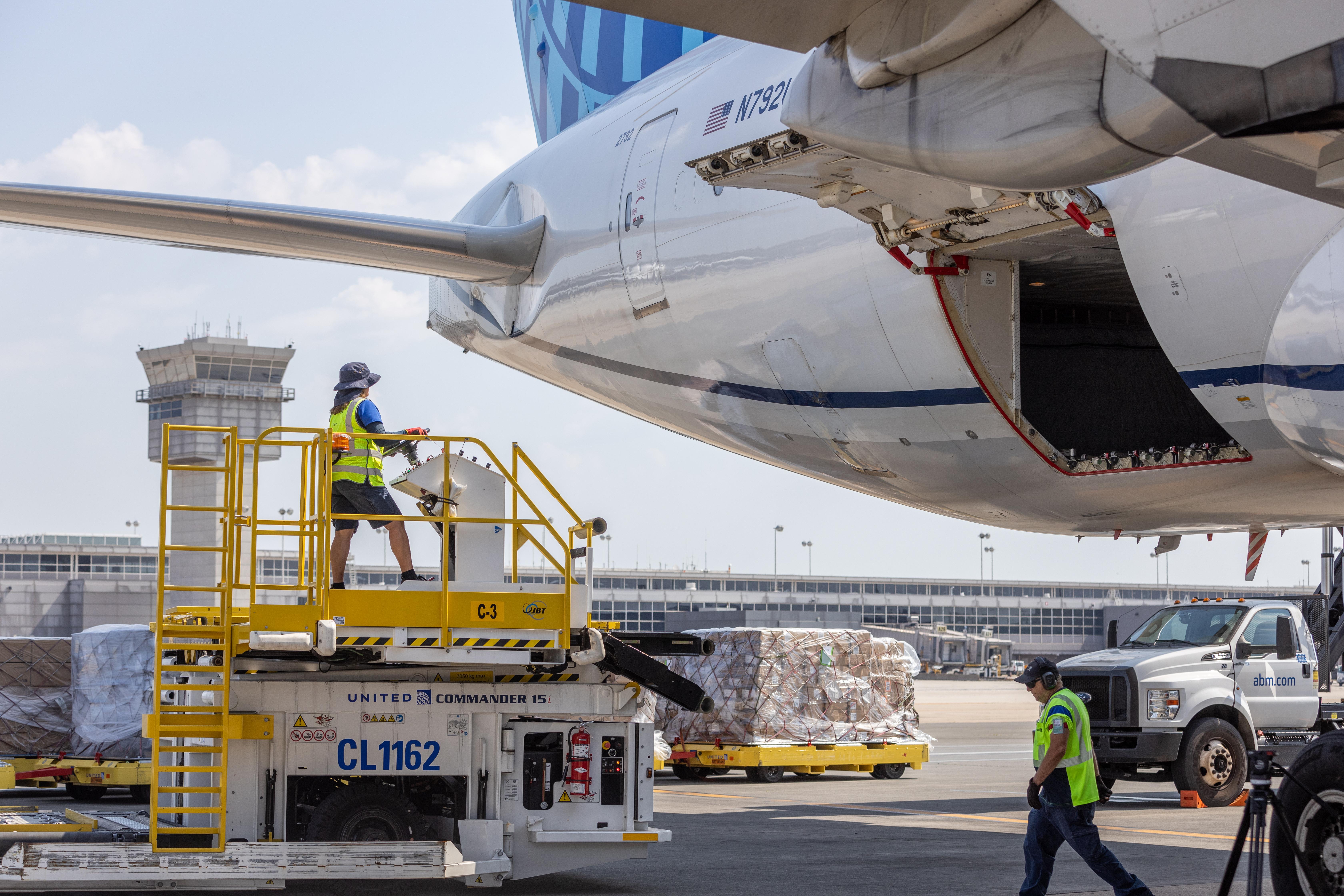
United Airlines has operated a passenger hub at Washington Dulles International Airport since 1986 and is working with VEDP and Brussels Airport to develop a pharma super-corridor between the airports.
Recent major biopharmaceutical announcements have sent a clear signal from the industry: Virginia is the future of biopharma manufacturing. Now the Commonwealth is working to position itself for further industry growth through targeted work to turn Washington Dulles International Airport (IAD) into the biopharmaceutical gateway on the East Coast, leveraging proven expertise through a strategic partnership with Brussels Airport, one of Europe’s most established pharmaceutical cargo hubs, and the support of United Airlines.
In April, VEDP signed a memorandum of understanding with United Airlines and Brussels Airport (BRU) in Belgium to affirm and document a commitment to developing a pharma super-corridor between the airports. United will be the main carrier along the route and contribute to creating an East Coast hub for shipping raw materials and finished medicines between the United States and Europe.
Currently, as United’s Managing Director, Specialty Products Manu Jacobs said, shippers and freight forwarders send their cargo “more point to point, and they take all kinds of routes.” The new partnership’s purpose would be to relieve pressure on European facilities and other American airports, standardizing pharmaceutical shipping procedures, and incentivizing pharma companies, freight forwarders, and other stakeholders to ship product between Brussels and Washington.
Since September 2025, major biopharmaceutical manufacturers AstraZeneca, Eli Lilly & Company, and Merck have announced a total of $12.5 billion and 1,750 new jobs in Virginia. Expansion of the pharma sector reflects the Commonwealth’s thriving ecosystem, featuring contract manufacturers and research and development in an ideal location for reaching the entire country, Europe, and beyond.
The new facilities create an opportunity for Virginia to manage its pharmaceutical supply chain strategically and — crucially for reliability-focused pharma manufacturers — transparently. The Brussels partnership is a step in that direction. Brussels Airport has experience and expertise in serving a dense pharmaceutical cluster. Belgium is the fourth-largest exporter of pharmaceutical goods in the world, home to facilities from 29 of the global top 30 pharma companies, and Brussels is the point where pharmaceuticals and life sciences products start their journey around the globe. Dulles can lean on that experience as it builds out its operations.
“We’ve seen similar developments at Brussels Airport over the past years,” said Brussels Airport Head of Cargo Product & Network Development Dimitri Bettoni. “A growing concentration of pharmaceutical companies has established itself in Belgium and in the surroundings of Brussels Airport, creating an ecosystem much like what’s now emerging around Washington Dulles International Airport. That similarity creates a strong basis for collaboration, allowing us to share expertise gained from comparable experiences and jointly develop an end-to-end optimized pharma lane for the benefit of our respective customers.”
Brussels Airport was the first airport in the world where cargo community stakeholders achieved CEIV Pharma certification, setting a global benchmark for pharmaceutical air cargo handling. The airport also played a pioneering role as a founding member of international cross-industry collaboration Pharma.Aero. In close collaboration with the cargo community, Brussels Airport further strengthened its pharma ecosystem by leading an initiative to develop nine airside pharmaceutical transporters that are preconditioned to ensure end-to-end temperature control between warehouse and aircraft.
Alongside the memorandum of understanding announced with Brussels Airport, Air Cargo Belgium (ACB), the nonprofit organization established in 2016 to represent the cargo community at the airport, has entered into a separate memorandum of understanding with VEDP to further strengthen trans-Atlantic cargo cooperation.
“These ideas and these frameworks have always happened because people were talking to each other,” said Nathan Goethals, a project manager at ACB, a nonprofit organization representing the cargo community at Brussels Airport. “For major projects, we always had support from the provinces. Virginia being so active in developing IAD should be a godsend for the companies there.”
Pharmaceutical manufacturing was an area of focus when Air Cargo Belgium was established in 2016, and the organization has worked closely with BRU to improve its service for pharma companies. One initiative resulted in the acquisition of nine airside pharma transporters preconditioned at the correct temperature to aid in temperature control between warehouses and aircraft.
As part of United’s continued growth and investment in the Washington metro area, a new 435,000-sq.-ft., 14-gate concourse is under construction at Dulles, expected to open later this year. Dulles is one of United’s fastest-growing hubs, having added more than 26,000 tons of belly cargo since 2022, according to analysis from global air cargo consulting firm Rotate.
United has announced plans to add approximately 20 Boeing 787 Dreamliner wide-body planes in 2026, more than any airline in nearly 40 years, enhancing its belly cargo capabilities on passenger flights. Passenger expansion at Dulles would create a commensurate amount of potential cargo to reorganize and reroute at the airport.
“Cargo is considered an important part of United’s revenue and profitability,” United Cargo Americas Vice President Chris Busch said. “We’re a passenger airline, and that’s the main reason for the destinations we serve, but the opportunity we have to put cargo on our aircraft contributes to the ability of our network.”
According to Brussels Airport, pharmaceuticals and life sciences make up nearly 17% of the total volume of goods handled at the airport. In this segment, Brussels’ export volumes are more than four times the European average. The new partnership is aimed at enabling that kind of growth at Dulles, providing for future expansions of pharmaceutical manufacturing in Virginia. According to Rotate and global transformation consulting firm FTI Consulting, expanded air cargo capabilities at Dulles will enable $138 million in increased business revenue in the pharmaceutical industry across Virginia.
“The goal for us is mutual growth,” Bettoni said. “The stronger the connections and collaboration between our airports, the greater the demand and capacity we can generate. That is beneficial for both of us. The more shipments that go smoothly through our airport, the more successful we consider ourselves.”