The History and Future of Pharmaceutical Manufacturing in Virginia
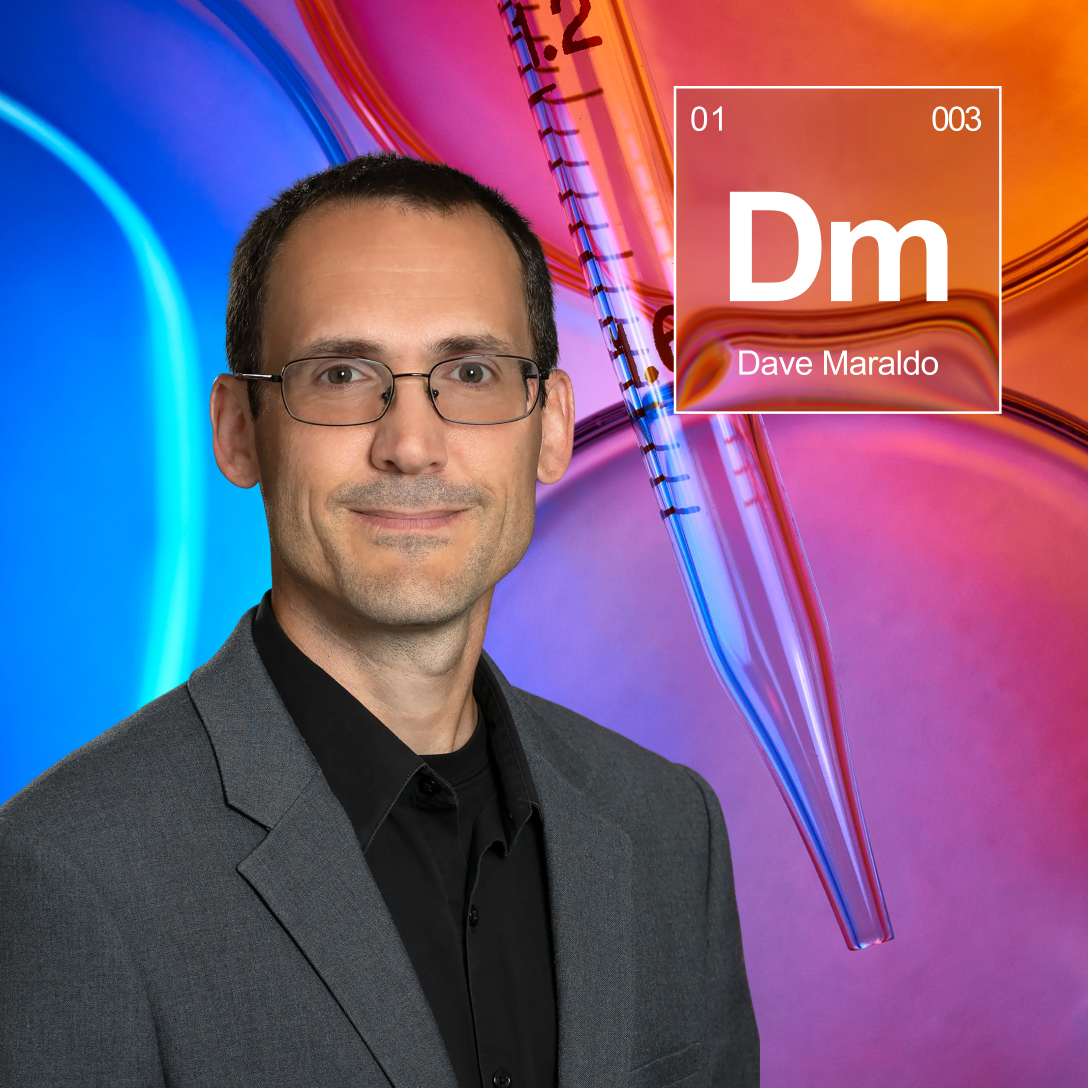
Dave Maraldo is the senior vice president of Human Health Manufacturing Operations at Merck, one of the five largest biopharmaceutical companies in the world. Merck recently announced a $3 billion investment in a new Center of Excellence for Pharmaceutical Ingredients and Small Molecule Manufacturing at its longtime Virginia site in the town of Elkton in Rockingham County. VEDP Vice President of Manufacturing Sneha Atwal spoke with Maraldo about Merck’s long history in Elkton, innovations at the new facility, and what makes Virginia an attractive destination for biopharmaceutical manufacturing.
Sneha Atwal: Virginia has seen a lot of biopharma growth lately, but Merck stands out because of its long history here. Can you tell us about the Elkton plant and how it has evolved?
Dave Maraldo: We’re having this conversation at a good time. We have a big anniversary this year, turning 85 at our Elkton manufacturing site. That’s 85 years in the Shenandoah Valley, making life-saving medicines and vaccines for patients around the world. This site has been a beacon of innovation, playing a critical role in delivering cutting-edge science for patients, and has been a notable presence in Rockingham County. The site originally started producing vitamins for soldiers in World War II. Over time, it has continued to evolve and grow as the needs of our patients and our portfolio have transformed.
We went on to make antibiotics and HIV medicines, and made significant investment in large molecules, both vaccines and biologics, including state-of-the-art innovative projects that recently added over 120,000 square feet to existing operations. We’re excited about the $3 billion investment to expand our capabilities and to continue that site’s evolution to meet the emerging needs of our portfolio of products.
Atwal: This new Center of Excellence is a major investment for Merck. What role does this facility play in the company’s broader strategy for manufacturing and growth?
Maraldo: It will have capabilities to manufacture our small molecule portfolio products, both active pharmaceutical ingredients and drug products. It will be part of our global network that supplies patients around the world. This investment in U.S.-for-U.S. manufacture allows us to produce for patients very close to where we serve them in that marketplace, and becomes a cornerstone for our U.S. manufacturing strategy.
Atwal: For a project of this scale, you clearly had choices. As you evaluated potential locations, what factors mattered most, and what made Elkton the right fit?
Maraldo: Virginia has always been a central pillar for us. We talked about site history and our presence in the community, the employees and relationships we’ve been able to form with the universities, the state, and private institutions in the Commonwealth. That created the foundational capabilities and flexibility necessary for our continued success, especially when you hone in on the broad portfolio of products produced at the site over the years. The state itself is consistently rated top for business, looking across a variety of dimensions, such as infrastructure investments, education at both high school and college levels, as well as vocational trades the state offers.
In terms of quality of life, it’s a beautiful area to do business. It fosters a very positive work environment for our employees every day. And there are the technology and innovation investments happening not only at our own plants, but within the community and provided by the state.
Atwal: Those technology and innovation investments have resulted in a lot of momentum. As you mentioned, Merck has been part of Virginia’s ecosystem for decades, generations, really. How does the state’s current biopharma momentum stand out to you, especially compared to other regions?
Maraldo: We’ve been impressed with what the state has done over the last decade or so, but particularly over the last five years, to build a modern biopharma ecosystem. A key example is the 2023 investment to help establish the Commonwealth as a major life science, biotechnology, and biopharmaceutical hub. The state continues to offer a highly skilled workforce, a strong life science corridor, and a business environment that allows manufacturing to establish itself and thrive within the community.
Merck has been part of this ambition, supporting growth through Virginia’s skilled workforce development, and expanding economic growth in the Shenandoah Valley. All of that makes Virginia such an important part of the future of the biopharmaceutical ecosystem. You can see that in not only the attractiveness for Merck to continue with our investment, but also some of the additional investments coming into this state now.
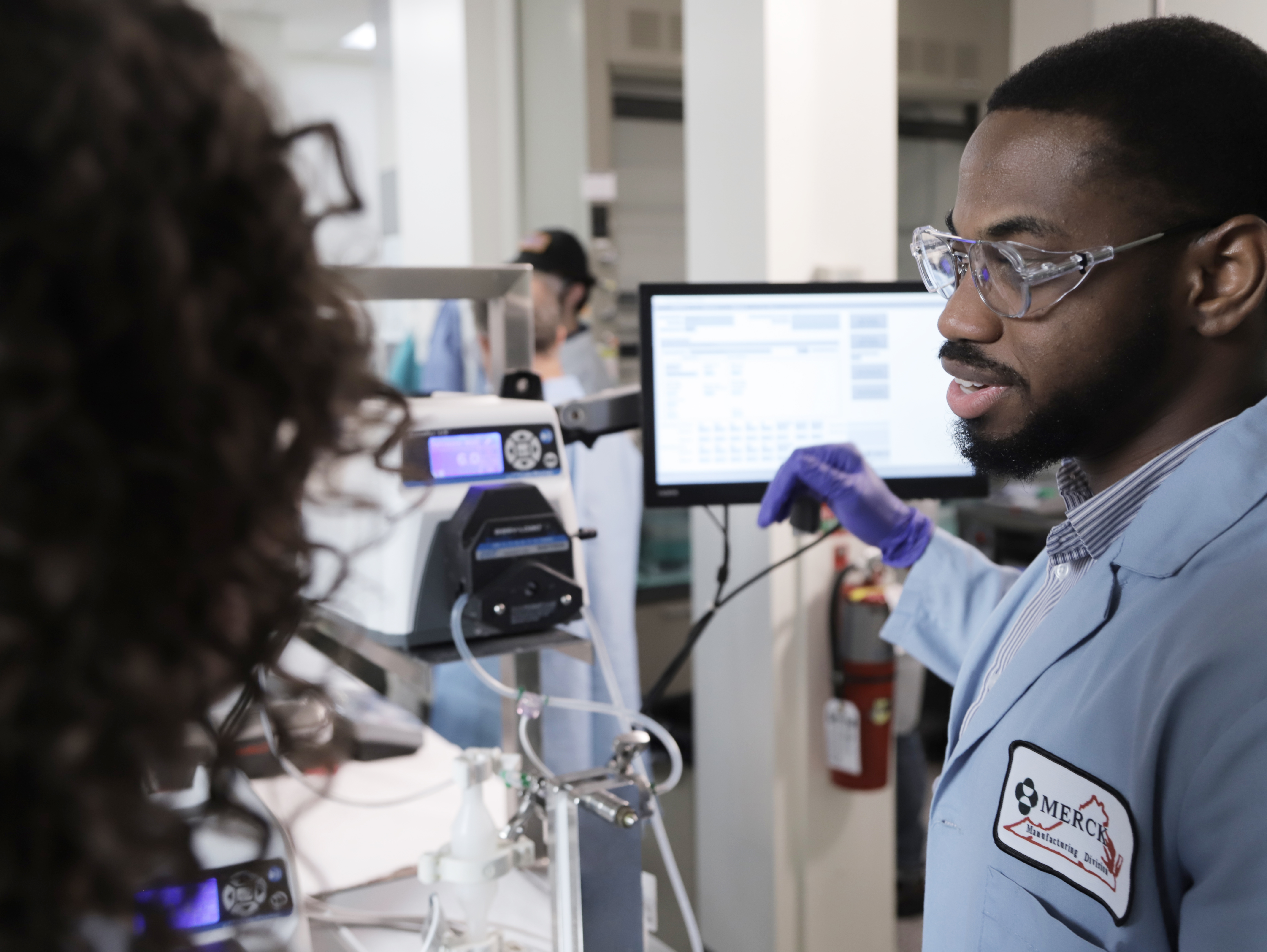
Merck, Rockingham County
Atwal: You brought up talent and workforce partnerships. With the Virginia facility playing such an important role in that, I imagine local talent is critical to your strategy and success. How did workforce, from engineers to technicians to research scientists, factor into Merck’s decision to locate the Center of Excellence here?
Maraldo: At the heart and soul of everything we do, our people remain central to our success. The Elkton site has a demonstrated track record balancing the necessary influx of new talent with the vital knowledge base of generational talent existing in the community. Generations of families work at this site.
We’re going to add 500 new full-time manufacturing jobs and 8,000 construction jobs. The local talent base gives us confidence that Virginia will continue to supply the advanced skills needed for not only manufacturing today, but the manufacturing of tomorrow. Eight major STEM universities are within two hours of the site, so we have quite a bit of talent coming into the organization as young engineers and life sciences majors at early stages of their careers.
We proactively partner with the community starting with high school and have built strong collaborations with the university system as well. We’ve also established a world-class large molecule training center in Elkton. So, in addition to being closely connected with the community as we seek talent at all career stages, we’ve spent quite a bit of time and money developing assets and the requisite know-how to train individuals when they enter our workforce. The combination of all those dimensions makes the talent available in this area extremely attractive.
Atwal: It seems like an “all of the above” strategy for workforce development. How do you view your partnerships evolving as the skills you need continue to change?
Maraldo: When I look at our history and investment in the community, it’s evident that our prior investments have driven incremental economic benefit for the area. We’ve evolved partnerships with both the private and public sector to grow talent in nontraditional ways. As an example, we have a Sprinter Program that connects local college students with real-world projects across engineering, quality, safety, and operations. It offers them hands-on experience, along with mentorship and career pathways across the Shenandoah Valley. That Sprinter Program has become an extremely important vehicle for us in hiring talent. It’s a novel approach to bringing individuals in, allowing them to intern, job shadow, and ultimately resulting in job opportunities, enabling us to hire talent from the community.
The other element of it — and we have a good partnership with VEDP on this one — is the Virginia Center for Advanced Pharmaceutical Innovation. We signed a memorandum of understanding at the end of 2025 with two other major biopharmaceutical companies, the Commonwealth, and an expansive list of universities and higher education institutes to develop a training center allowing the capabilities and workforce to continue to meet demands of the growing investments and manufacturing requirements coming from the influx of spending in the state.
Virginia [is] such an important part of the future of the biopharmaceutical ecosystem. You can see that in not only the attractiveness for Merck to continue with our investment, but also some of the additional investments coming into this state now.
Dave Maraldo, Senior Vice President of Human Health Manufacturing Operations, Merck
Atwal: We’re very excited about not only your contribution to that, but also what’s going to happen in the next few years to bring in more talent and pump out more students who are business- and industry-ready. I think it’s clear that the industry overall is rethinking supply chains and bringing manufacturing closer to home, while ensuring medicines are readily available worldwide. Where does the Virginia facility fit into Merck’s broader global manufacturing and innovation network?
Maraldo: Our mission is to provide life-saving medicines and vaccines to patients around the world. As a U.S.-headquartered company, Merck is deeply committed, and has always been committed, to supporting American scientific and economic leadership. I look at Elkton as a continuation of our extensive investment in U.S. manufacturing capabilities. It’s part of our overarching plan to invest $70 billion in U.S. manufacturing and research. The Elkton expansion is a major part of that strategy and will enable us to support our growing small molecule portfolio. What this investment allows us to do in Virginia, taken into an ecosystem of our global manufacturing footprint, is to enhance reliability and advance the scientific breakthroughs that truly underpin patient access and drive better health outcomes globally.
Atwal: Thinking about this announcement for the Center of Excellence and Virginia’s role in Merck’s global network, from your perspective, what’s going to be key to helping Merck innovate faster and make this particular investment a success?
Maraldo: Supportive environments that enable advanced manufacturing, strong workforce, and the ability to scale scientific capabilities are key elements in success, but in particular, why Virginia and Elkton will help us achieve our outcomes. Continuing to focus on higher education, from community colleges to premier research universities, is evolving and helping us identify growing talent to address capabilities needed in the future. This will be a digitally facing facility, with capabilities that don’t exist anywhere else in our manufacturing network. It’ll be a lighthouse site for a lot of those elements. Developing the workforce and continuing to cultivate a talent pool that can deliver on future technologies will be a very important demarcation of our future success.
Atwal: Dave, thank you so much for sharing your insights. You’ve provided an incredible perspective and a window into Merck’s history and future in Virginia. You used the word “generational.” VEDP is excited to continue partnering with you, not only in this investment, but for generations to come.
Maraldo: Thank you, Sneha.
For the full interview, visit www.vedp.org/Podcasts